Gen Z Embraces DeFi While Baby Boomers Cautiously Buy Bitcoin
This divide goes beyond just age differences. It shows how different generations think about money, technology, and financial freedom in completely different ways. Young People Lead the DeFi Revolution Generation Z is dr...
Archive context
Older archive item. Useful for background and entity history, but not a fresh market-moving signal.

This divide goes beyond just age differences. It shows how different generations think about money, technology, and financial freedom in completely different ways.
Young People Lead the DeFi RevolutionGeneration Z is driving the growth of DeFi in a big way. New data shows that 38% of first-time DeFi wallet users are between ages 18 and 25. These young investors are comfortable using complicated financial protocols that older generations find confusing.
DeFi platforms let people lend, borrow, and trade cryptocurrencies without traditional banks. Users can earn interest by providing liquidity to these platforms or participate in “yield farming” to maximize returns.
Young people like DeFi because it gives them direct control over their money. Unlike traditional banking, all transactions happen on public blockchains where anyone can see what’s happening. Users own their assets completely and don’t need permission from banks or other middlemen.
The DeFi market is growing fast. Experts predict it will reach $231.19 billion by 2030, up from $20.48 billion in 2024.
Social Media Drives Crypto EducationSocial media plays a huge role in how young people learn about cryptocurrency. Research shows that Gen Z members are more likely to trust financial advice from influencers than traditional financial institutions.
TikTok users sharing cryptocurrency related content has been on the rise. Young people use these platforms to learn about new DeFi protocols, share trading strategies, and build communities around specific cryptocurrencies.
This creates a cycle where successful crypto investments get shared widely, encouraging more young people to participate. The fear of missing out (FOMO) drives many to try new platforms and investment strategies.
Baby Boomers Choose Bitcoin Over GoldSomething surprising is happening with older investors. A 2024 survey found that 45% of baby boomer investors now prefer Bitcoin over gold as an investment.
This represents a major shift for people born between 1946 and 1964. For decades, this generation built wealth through traditional assets like stocks, bonds, and gold. Now they’re slowly adding Bitcoin to their portfolios.
The key difference is how they’re buying Bitcoin. Most older investors use Exchange-Traded Funds (ETFs) rather than buying cryptocurrency directly. These ETFs trade on regular stock markets and are managed by companies like BlackRock and Fidelity.
Bitcoin ETFs appeal to older investors because they work like familiar investment products. Investors don’t need to learn about crypto wallets or private keys. They can buy Bitcoin exposure through their regular brokerage accounts.
Trust and Safety Concerns PersistDespite growing interest, many older Americans remain skeptical about cryptocurrency safety. Pew Research found that 71% of adults over 50 have little confidence in cryptocurrency reliability and safety, compared to 55% of younger adults.
These concerns aren’t unfounded. Stories of people losing access to their crypto wallets or falling for fake investment schemes make many older investors cautious.
The complexity of cryptocurrency technology also creates barriers. Many older investors find it difficult to understand concepts like blockchain, private keys, and decentralized protocols.
Different Investment Goals Drive ChoicesThe generational split in crypto adoption reflects different financial goals and life experiences.
Young investors often see cryptocurrency as a way to build wealth in a system they view as unfair. Many graduated college during economic downturns and face challenges like student debt and expensive housing. Studies show that 56% of Gen Z and 62% of millennials are more likely to buy crypto after Bitcoin hit record highs.
Older investors approach crypto differently. They’re focused on preserving wealth they’ve already built rather than taking big risks for potential gains. Baby boomers control about 70% of US disposable income and 50% of total wealth, so even small percentage allocations to Bitcoin can move markets significantly.
The Future of Crypto AdoptionAs wealth transfers from older to younger generations over the next decade, cryptocurrency adoption will likely accelerate. Millennials are projected to make up 40% of the US workforce by 2025, and they’re generally more comfortable with digital assets than their parents.
However, success in the crypto market will require products that serve both groups. Companies that can satisfy conservative investors seeking stable returns and young investors looking for high-yield opportunities will capture the largest market share.
The regulatory environment will also play a key role. Clear rules from government agencies could encourage more institutional adoption, while excessive restrictions might push innovation to other countries.
What This Means Going ForwardThe cryptocurrency generation gap reveals more than just different investment preferences. It shows how economic experiences, technology comfort, and views about financial systems shape investment decisions.
As the market matures, successful crypto projects will need to bridge these generational differences rather than widen them. The future likely belongs to platforms that combine DeFi innovation with the stability and regulatory compliance that institutional investors require.
Young people will continue pushing the boundaries of what’s possible with decentralized finance, while older investors will gradually increase their exposure to digital assets through familiar channels. Both trends will shape how cryptocurrency evolves in the coming years.
Why this matters
This bitcoin story adds another data point to the current market tape and is useful when read alongside nearby source coverage.
Original source
Read on Brave New CoinRelated market context

Microsoft Copilot AI Predicts Bitcoin Will Do Something Incredible in Q4 2026
Microsoft Copilot AI predicts a wild move for BTC in Q4 2026, calling it one of the strongest asymmetric risk-reward positions ava...
Institutions See Bitcoin Like Gold but Invest in It Like Tech: Bitwise
Major institutional bitcoin investors “often” pair bitcoin with gold, but they still largely keep it in a technology bucket alongs...
Institutions Held Their Bitcoin Through Crash — and Some Bought More: Report
Bitcoin Magazine Institutions Held Their Bitcoin Through Crash — and Some Bought More: Report When crypto prices were cut in half...

Crypto News Today: XRP, Dogecoin Signal Long-Term MVRV Discounts as Bitcoin Holds $82.5K Neckline
On-chain analytics firm Santiment reported that XRP’s 365-day Market Value to Realized Value (MVRV) stood at approximately -11.75%...
![[[alloc] init] Releases Shielded Bitcoin Proposal For Private Bitcoin Transactions](https://bitcoinmagazine.com/wp-content/uploads/2026/09/shielded2-scaled.jpeg)
[[alloc] init] Releases Shielded Bitcoin Proposal For Private Bitcoin Transactions
Bitcoin Magazine [[alloc] init] Releases Shielded Bitcoin Proposal For Private Bitcoin Transactions Shielded Bitcoin is a proposal...
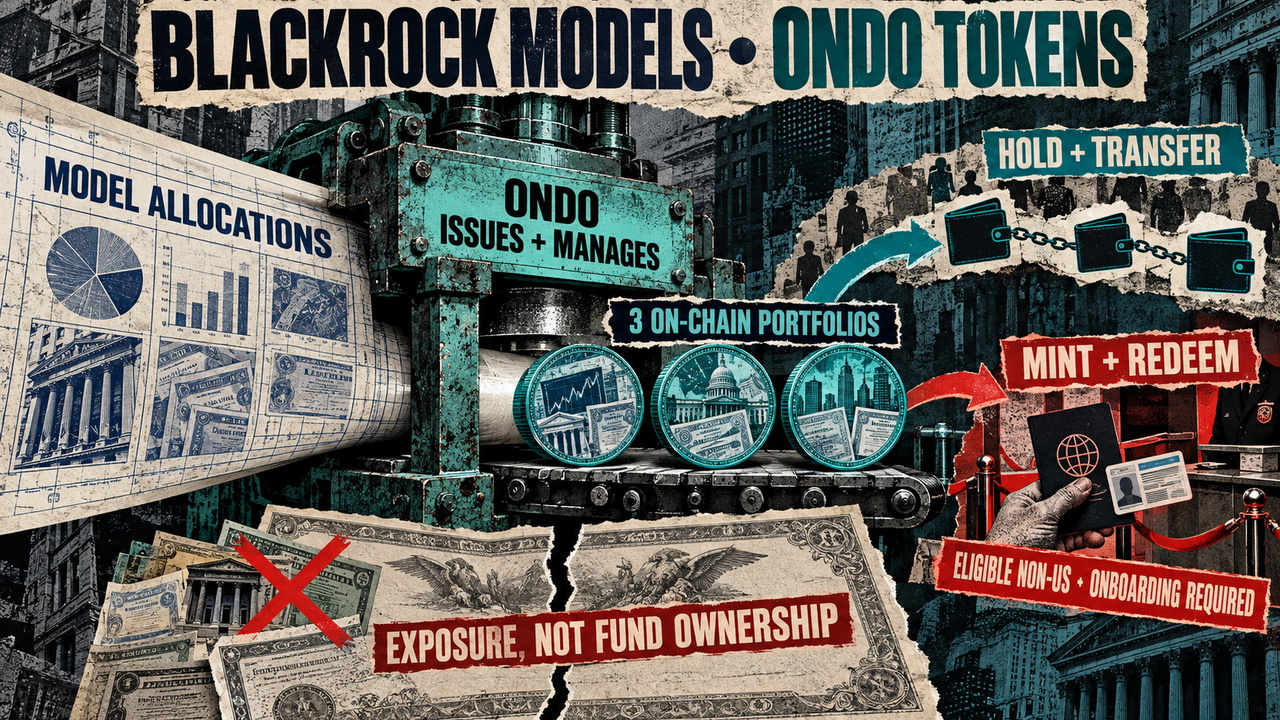
Ondo unlocks BlackRock portfolio strategies, but only non-US traders benefit
Ondo Finance launched three on-chain portfolio tokens on Sept. 24 using investment strategies BlackRock developed for the company....