Glassnode Report Reveals Why The Bitcoin Price Dropped Below $50,000
Bitcoin crashed below $50,000 on August 5 in a sudden dip that saw many positions liquidated in the crypto market. This sudden dip, which cascaded into other cryptocurrencies, took the market by surprise. As such, Bitcoi...
Archive context
Older archive item. Useful for background and entity history, but not a fresh market-moving signal.

Bitcoin crashed below $50,000 on August 5 in a sudden dip that saw many positions liquidated in the crypto market. This sudden dip, which cascaded into other cryptocurrencies, took the market by surprise. As such, Bitcoin fell to its lowest price in six months, and many other altcoins followed suit. Although Bitcoin has since recovered by 20% and now finds itself trading around just below $60,000, many short-term holders are still sitting in unrealized losses.
A recent report from Glassnode, a leading blockchain analysis firm, sheds light on the factors contributing to this abrupt market downturn. The report suggests that the crash was largely driven by an overreaction from short-term holders, who were quick to liquidate their positions in the face of the initial decline.
Bitcoin Short-Term Holders Quick To CapitulateShort-term holders are typically defined as those investors who hold onto their cryptocurrency assets for a relatively brief period, often around a month or so. As such, they are quickly prone to capitulating during periods of price corrections. This trend has particularly been evident in the latest Bitcoin price correction/consolidation, which has lasted far longer than many investors expected.
According to Glassnode’s most recent on-chain report, a key metric known as the STH-MVRV (Market Value to Realized Value) ratio has fallen below the critical equilibrium value of 1.0. When the STH-MVRV ratio dips below 1.0, it suggests that, on average, new investors are holding their Bitcoin at a loss rather than a profit. These unrealized losses, often referred to as paper losses, occur when the market value of an asset is lower than the price at which it was acquired, but the asset has not yet been sold. This is different from realized losses, which arise from completed trades.
While periods of brief unrealized loss are common during bull markets, they tend to put selling pressure on the price of Bitcoin. This is because sustained periods of STH-MVRV trading below 1.0 often lead to a higher likelihood of panic and capitulation among short-term holders. Notably, this phenomenon contributed to the Bitcoin crash earlier in the month.
Furthermore, Glassnode’s report reveals this correlation and selling pressure might already be taking place, with the STH-SOPR (Spent Output Profit Ratio) also trading below 1.0. The STH-SOPR ratio measures the profitability of spent outputs, indicating whether assets are being sold at a profit or loss. What this essentially means is that many short-term investors are more taking realized losses than profit. This follows the claim that many short-term holders have been overreacting to the price corrections.
While short-term holders have carried most of the losses across the recent downturn, long-term holders remain strong. At the time of writing, Bitcoin is trading at $59,540 and is down by 2.15% in the past 24 hours.
Why this matters
This bitcoin story adds another data point to the current market tape and is useful when read alongside nearby source coverage.
Original source
Read on NewsBTCRelated market context

Bitcoin rally delivers $4.1 billion tax windfall for Strategy
Strategy estimated a $4.1 billion income-tax benefit after Bitcoin's fair value rose above cost as of Sept. 30, according to its O...

The Real Estate Market Is Dead in Spain. Long Live Bitcoin.
Bitcoin Magazine The Real Estate Market Is Dead in Spain. Long Live Bitcoin. Spain has just shown every property owner in Europe t...

Ondo’s New Tokenized Notes Tie Payouts to an Unnamed Pre-IPO AI Company
Ondo Finance is extending its tokenization business from public stocks and Treasuries to companies that have not yet listed. The f...
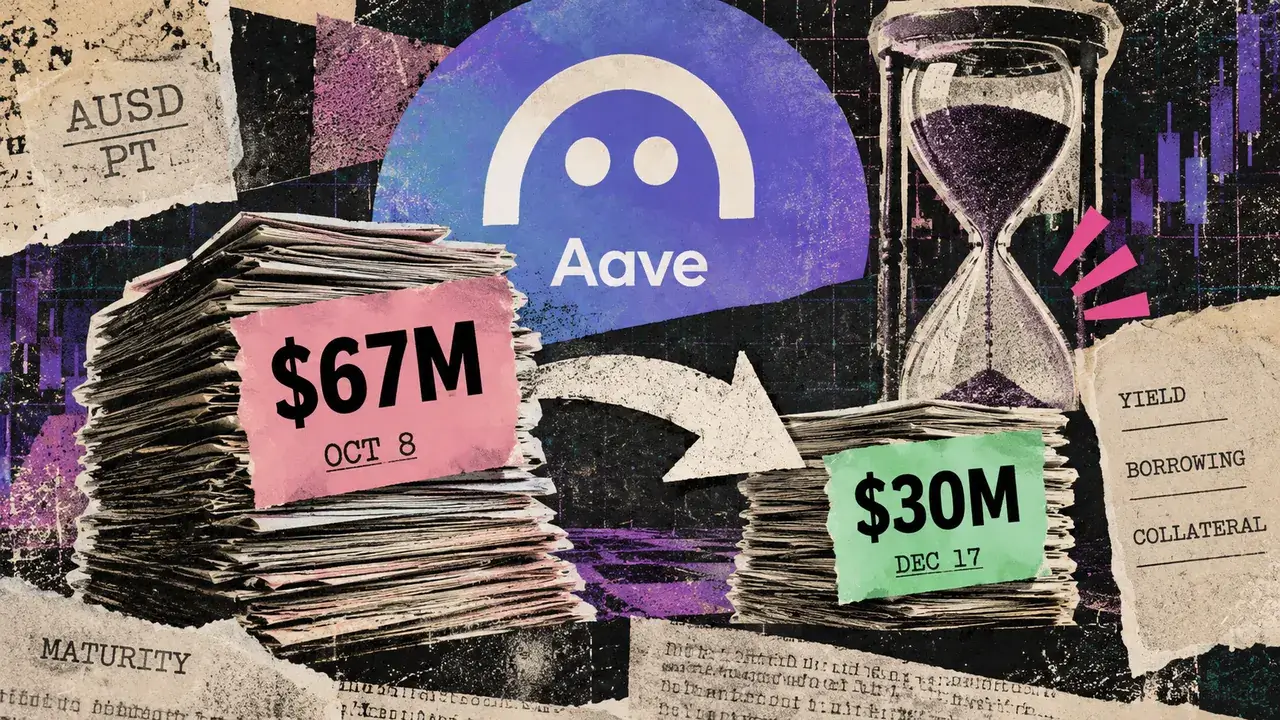
Aave and Pendle may have found a way to keep yield capital from ever leaving DeFi
Aave is approaching a $67 million collateral rollover as one of its fastest-growing fixed-yield trades reaches maturity. About 67....

Coinbase revives Pro branding as Deribit integration reshapes its global exchange
Coinbase's integration with Deribit could redefine global trading dynamics, enhancing liquidity and competition in the derivatives...

SEC drops to 2 members, and 1 hidden rule shifts crypto power
Hester Peirce’s Oct. 2 resignation has left Paul Atkins and Mark Uyeda as the SEC’s two listed commissioners. A new rule permits o...