Goldman Sachs Backs the Clarity Act, Splitting Wall Street Over Crypto Rules
Bitcoin Magazine Goldman Sachs Backs the Clarity Act, Splitting Wall Street Over Crypto Rules Goldman Sachs chairman and CEO David Solomon has thrown his support behind the Clarity Act, the crypto market-structure bill m...
Watchlist
Archive context. The story has cross-source confirmation.

Bitcoin Magazine
Goldman Sachs Backs the Clarity Act, Splitting Wall Street Over Crypto Rules
Goldman Sachs chairman and CEO David Solomon has thrown his support behind the Clarity Act, the crypto market-structure bill moving through the Senate, a stance that sets one of Wall Street’s largest banks apart from rivals lining up against it.
“I’m very supportive of moving the Clarity Act forward, so we can get some market structure in place and start to move the innovation process along,” Solomon said in an interview with Politico. He called the bill imperfect, and said its value lies in creating “a level playing field to enhance market stability and allow these markets to develop appropriately.”
Solomon spoke after Senate Republicans began circulating new text of the bill this week, ahead of a possible floor vote. His endorsement lands against a wave of opposition from other bankers, chief among them JPMorgan chief Jamie Dimon, who declared war on the bill and, in May, upbraided Coinbase CEO Brian Armstrong over the industry’s lobbying.
Banks split over stablecoin yieldThe split runs along business lines. The fight centers on a provision that governs stablecoin yield, the rewards crypto platforms can pay users who hold dollar-pegged tokens. Commercial and community banks warn the language would pull deposits out of insured accounts and cut into local lending.
Six of the largest banking trade groups, including the American Bankers Association, published a statement Wednesday that called the Clarity Act and its provisions a risk to “the local lending that drives economic activity in the U.S.” The ABA has pushed to strip the yield language, and labor unions have joined the opposition.
Investment banks like Goldman, less reliant on consumer deposits, have trained their focus on other parts of the bill.
Solomon pointed to language that would let “regulated institutions that have been on the sidelines participate more actively,” a green light for old-guard firms to use digital assets and blockchain rails. “Goldman Sachs’s position is that we believe strongly that we need one system where everybody can participate,” he said, and declined to weigh in on other bankers’ views.
The stance fits Goldman’s own turn toward the asset. The bank has disclosed a $1.1 billion position in a spot bitcoin ETF, called the funds an “astonishing success,” and Solomon has revealed a small personal bitcoin holding.
The bill’s stablecoin section holds the Tillis-Alsobrooks compromise, which bars passive yield on idle balances while it permits narrow activity-based rewards, a line the banking lobby says leaves too much room.
The measure has moved through bipartisan talks for months. The House passed its version in July 2025, and the Senate Banking Committee advanced its text in a 15-9 vote in May.
The Clarity Act still faces an uphill battleThe path to the floor for the Clarity Act stays murky. Republican senators John Curtis of Utah and John Cornyn of Texas told Punchbowl News they share the banks’ worry over deposit flight. “Crypto is not going to be loaning any money for small businesses,” Cornyn said. Bill Cassidy of Louisiana hinted at concerns of his own.
The sharpest problem is ethics. The new Clarity Act draft would bar federal officials from issuing digital assets, language negotiated between Senators Cynthia Lummis, Bernie Moreno, and the White House. Democrats call it too weak, in part because they distrust the Trump Justice Department to enforce limits on the president.
President Trump and his family made more than $1 billion from crypto ventures over the past year, a windfall that has fueled Democratic demands for reform. A group of seven Democrats led by Angela Alsobrooks said Wednesday the text “falls short” on consumer protection, illicit finance, and conflicts of interest.
Lummis framed the Clarity Act standoff without illusion. “There’s not going to be a provision that makes opponents of the president happy that also makes the president happy,” she said to Punchbowl. Majority Leader John Thune aims for a vote in the coming week, a window that lawmakers say may decide whether the bill lives or dies before the August recess.
This post Goldman Sachs Backs the Clarity Act, Splitting Wall Street Over Crypto Rules first appeared on Bitcoin Magazine and is written by Micah Zimmerman.
Why this matters
Bitcoin is showing up inside the Bitcoin ETF theme, so this story is worth tracking for follow-through rather than treating it as a one-off headline.
Original source
Read on Bitcoin MagazineRelated market context

XRP’s next Wall Street expansion comes with an unexpected complication from Ripple
Evernorth is preparing to begin trading on Nasdaq on Monday, bringing approximately 473 million XRP into a publicly traded treasur...

Xash’s Kevin Huynh Pitches Stablecoin Issuers on Gold Rewards Instead of Passive Yield
Kevin Huynh, introduced on Unchained Premium as co-founder and CEO of Xash, said the startup wants stablecoin issuers to pay for t...

USDC traded $40.2 billion on DEXs during Q3 weekends while banks were closed
USDC's weekend DEX trading highlights the growing shift towards decentralized finance, challenging traditional banking's operation...
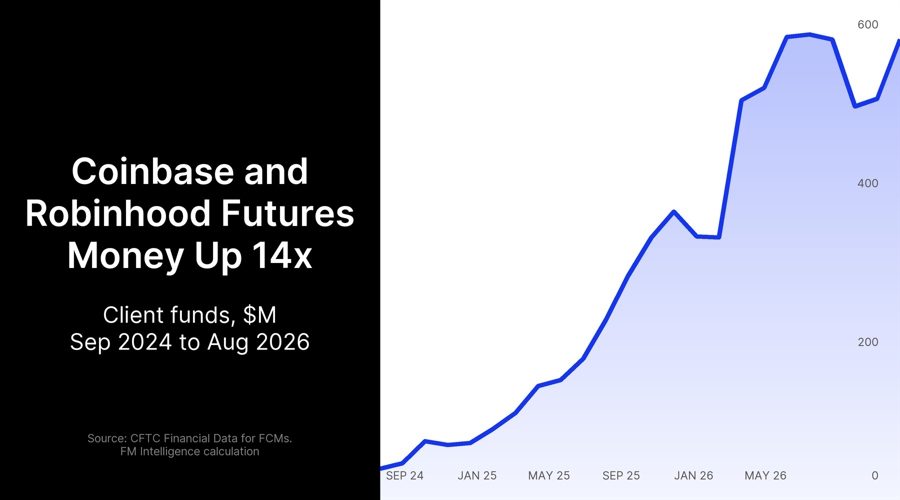
Coinbase and Robinhood Futures Arms Now Hold More Client Money Than the US Retail Forex Pool
The futures brokers of Coinbase and Robinhood held $581.4 million of segregated client money at the end of August. That is more th...
IMF Warns $65 Billion Tokenization Market Has a Dangerous Catch
Tokenized assets have climbed to $65 billion, but the technology promising to make Wall Street faster and cheaper carries an uncom...

Thailand wants a piece of the $120 billion Bitcoin and Ethereum ETF market, but on its own terms
Thailand has finalized rules allowing domestic Bitcoin and Ethereum ETFs while restricting retail access to competing overseas inv...