Governments Could Still Hamper Money And Energy, Even On A Bitcoin Standard
Even after Bitcoin inevitably becomes the world reserve currency and bitcoin mining solves our energy problems, governments will intervene.This is an opinion editorial by Will Szamosszegi, founder and CEO of bitcoin mini...
Archive context
Older archive item. Useful for background and entity history, but not a fresh market-moving signal.
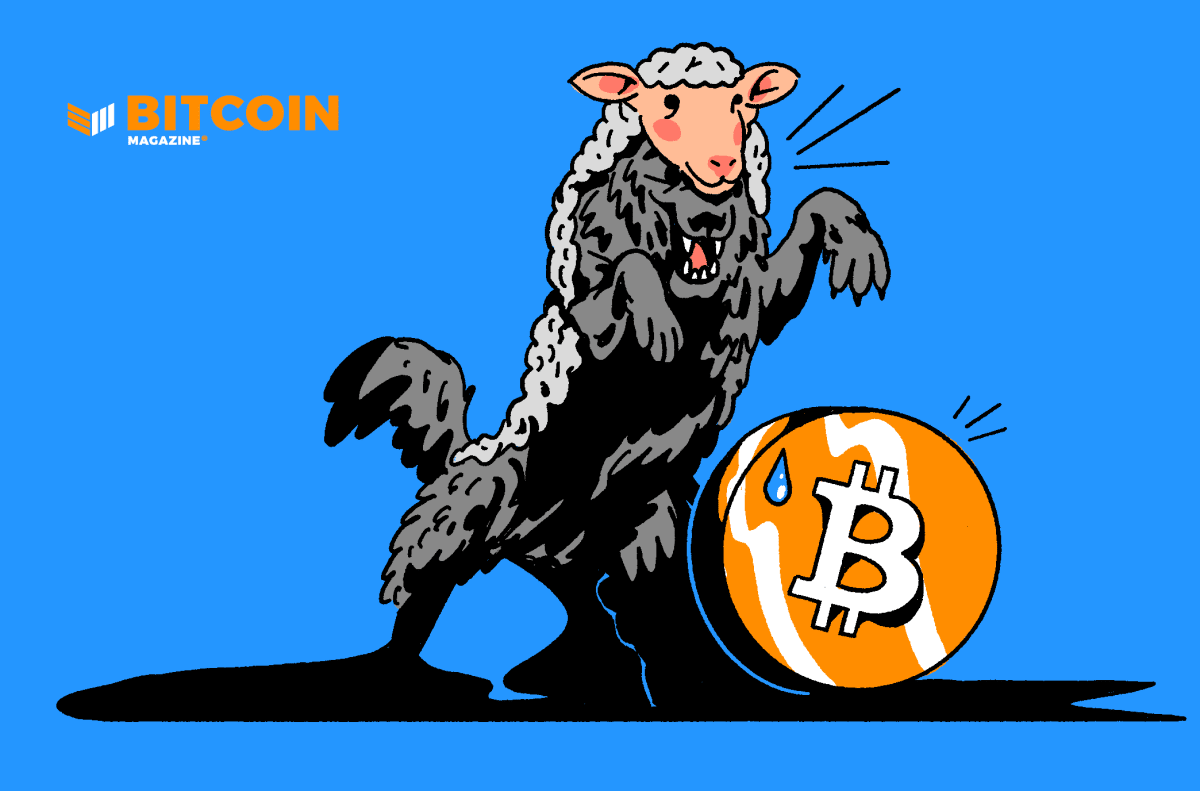
Even after Bitcoin inevitably becomes the world reserve currency and bitcoin mining solves our energy problems, governments will intervene.
This is an opinion editorial by Will Szamosszegi, founder and CEO of bitcoin mining hosting service Sazmining.
Money and energy are two of the most fundamental aspects of an economy because both are universal. Energy is required to transform raw materials into final consumer goods and services. Money is required to store wealth, calculate revenue and losses and trade for goods and services that you couldn't acquire through barter.
Although Bitcoin drastically improves humanity's relationship with both energy and money, the problems that plague both energy and money are likely to survive a Bitcoin standard, even if they become lesser in severity. With respect to energy, government regulations, subsidies and bans will continue to have sway. With respect to money, governments will, in all likelihood, continue to employ second-layer fiat money that citizens are forced to use.
Government Meddling In EnergyThe United States government has been trying to centrally plan the energy sector since 1789, well before fiat currency reached its “final form” in the fateful year of 1971. In extensive research on the topic of the U.S. government’s history of subsidizing the energy sector, DBL Investors managing partner Nancy Pfund and economics graduate student Ben Healey made several sober discoveries (though they favor government intervention in the energy sector, to be sure):
Although not a direct subsidy, the U.S. government raised a tariff on the sale of British coal in 1789 to benefit the American coal industry. This was only two years after delegates at the Constitutional Convention explicitly fought to include the “gold and silver clause” in the U.S. Constitution. This clause made its way into Article One of the founding document, where it lives on as stating that individual states were not allowed to “make any Thing but gold and silver Coin a Tender in Payment of Debts.” In other words, the political apparatus of the time, though far more monetarily constrained than our present-day Leviathan State, was still able to exert its will over the energy sector.
To be fair, tariffs are easier for a government to enact than subsidies, since only the latter requires the government to have money to spare. But history shows subsidies, too, have existed before the fiat standard went into full effect in 1971. For example, the Price-Anderson Act of 1957 forced the federal government to subsidize nuclear energy by paying for the damages incurred by a nuclear disaster.
Hydropower, too, has been federally subsidized since at least the 1890s, though quantifying the size of these subsidies is challenging. Earth Track, a think tank that works to standardize energy subsidy data, estimates that the U.S. federal government has provided about $2.7 billion (in 2010 dollars) to hydropower from the nation’s inception until 2010. Naturally, this timespan covers a range of different monetary regimes.
Government Meddling In MoneyAs much certainty as many in the Bitcoin community have about bitcoin becoming the next global reserve asset, governments are unique institutions and can damage our relationship with money, even after bitcoin becomes the new gold.
Governments also wield the threat of violence and incarceration via the military-industrial complex to retain economic power.
For example, imagine that the U.S. government/central bank accepts the new bitcoin monetary regime and even holds it on its balance sheet. Surely by this time, the global economic order will have vastly changed for the better — however, if governments are still around, they are likely still using the threat of violence and/or incarceration to collect taxes. To keep some Layer 2 fiat currency alive, all they have to do is mandate that taxes be paid in said fiat currency. People will then have no choice but to obtain this currency in order to hand it over to the tax man.
To be sure, there are several reasons that such a scheme may not work. For one, “competition” between governments might pressure them to ease up on forcing fiat currencies on citizens who are using Bitcoin and Bitcoin-based Layer 2 technologies in their daily lives. Secondly, ideological pressure from citizens might pressure politicians to give up on creating their own fiat currencies for fear of career suicide. And finally, governments themselves may view such a scheme as being more trouble than it is worth, since a Bitcoin-based economy has the potential to grow at a much greater rate than a Bitcoin-fiat hybrid economy would.
We Must Remain VigilantWith respect to both energy and money, the government may still intervene after bitcoin has become the next global reserve asset and after Bitcoin mining has forever improved our relationship with money. In this sense, Bitcoin’s inevitable victory is only the beginning — we may still have to fend off meddling bureaucrats. To be sure, freedom-loving Bitcoiners will be in a much better position to do so then than we are now. Nevertheless, we must not rest on our laurels.
What can we do to truly exorcize the State from money and energy? The same thing that we do now: explain our ideas.
We want a free market in energy so that the most cost-effective forms of energy are discovered and made profitable over inefficient alternatives. Furthermore, subsidies, tariffs and regulations in the energy sector hamper innovation. For all we know, absent so much intervention throughout the centuries, our world would be powered by cold fusion, oceans and nuclear energy by now.
And government-imposed money, even if somehow backed by bitcoin, would throw sand in the gears of capital accumulation and economic calculation. The cost of accumulating capital would rise, since we’d need to keep some garbage money in our back pocket for tax season. In other words, the production of all sorts of goods and services would never come to pass, since they’d no longer be affordable. And entrepreneurs' ability to calculate profits or losses becomes more difficult, since there is no longer a single immutable measuring stick (bitcoin), but also an unpredictable fiat currency still trading alongside Satoshi Nakamoto’s creation.
Our job will not be finished, even after Bitcoin wins the money game and Bitcoin mining wins the energy game, as governments won’t quit. But our ideas will be so much easier to sell by that point, that I, for one, am looking forward to the battles ahead.
This is a guest post by Will Szamosszegi. Opinions expressed are entirely their own and do not necessarily reflect those of BTC Inc or Bitcoin Magazine.
Why this matters
This bitcoin story adds another data point to the current market tape and is useful when read alongside nearby source coverage.
Original source
Read on Bitcoin MagazineRelated market context
JPMorgan Expands Tokenized Money Market Funds To Solana
TL;DR: J.P. Morgan Asset Management says qualified U.S. investors can now access MONY and JLTXX tokenized money market funds on So...

Parker Lewis: Bitcoin Will Settle 100% of Global Payments
▶Bitcoin Magazine Parker Lewis: Bitcoin Will Settle 100% of Global Payments Parker Lewis says Bitcoin will settle 100% of global p...

CME Posts Record Q3 Revenue As Crypto Derivatives Push Continues
TL;DR: CME reported record third-quarter revenue of about $1.74 billion on October 21. The results provide a fresh look at a major...
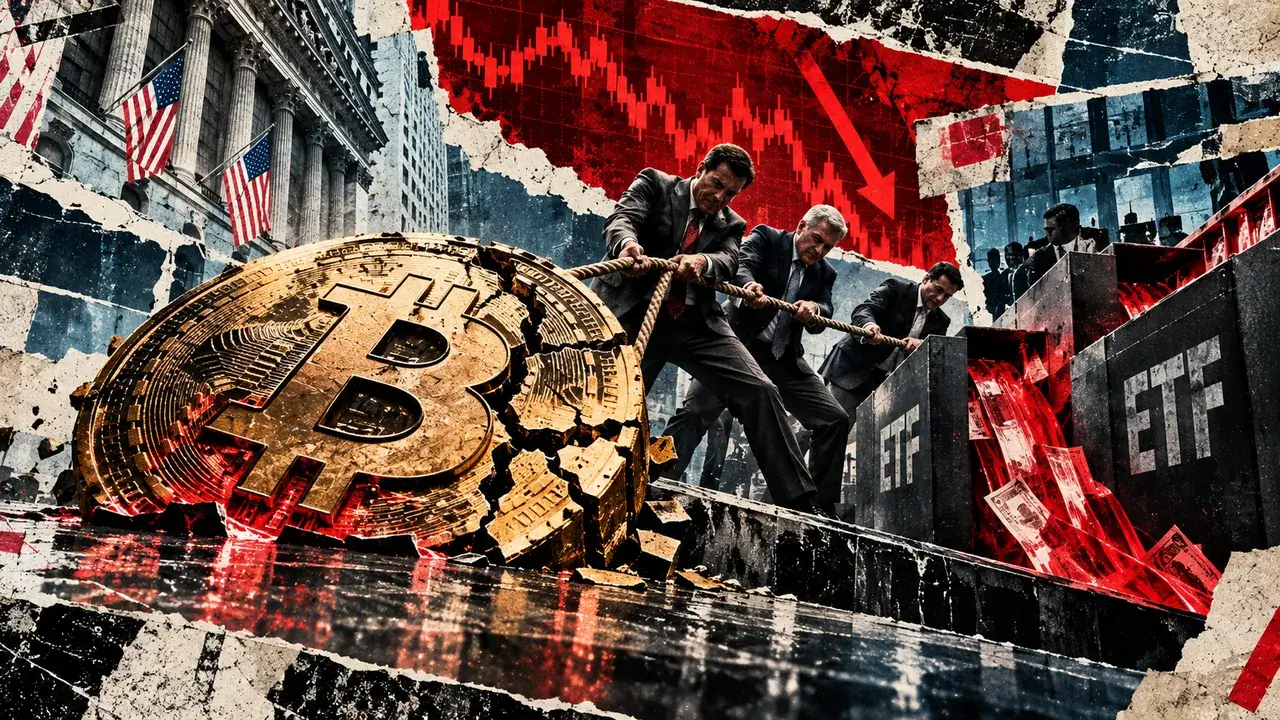
Bitcoin ETFs sold through 7 of 8 crashes even as Wall Street makes BTC selloffs less violent
Bitcoin ETFs recorded outflows during seven of eight major selloffs, challenging expectations that Wall Street investors would sup...

Bitwise Dogecoin ETF Reaches Scheduled Liquidation As Holders Face Cash Redemption
TL;DR: Bitwise’s BWOW Dogecoin ETF reached its announced October 22 liquidation distribution date, with remaining shareholders due...
Irish Central Bank Fines Coinbase Unit €3.25 Million Over Customer Fund Safeguards
TL;DR: Ireland’s central bank imposed a €3.25 million penalty on Coinbase Ireland over electronic-money safeguarding and outsourci...