Harvard Economist Who Predicted Bitcoin Crashing to $100 Admits He Was Wrong
Harvard economist Kenneth Rogoff publicly admitted his decade-old prediction that Bitcoin would crash to $100 was fundamentally flawed, acknowledging three critical miscalculations in his assessment. The former Internati...
Archive context
Older archive item. Useful for background and entity history, but not a fresh market-moving signal.

Harvard economist Kenneth Rogoff publicly admitted his decade-old prediction that Bitcoin would crash to $100 was fundamentally flawed, acknowledging three critical miscalculations in his assessment.
The former International Monetary Fund chief economist posted on X that he underestimated Bitcoin’s role in the $20 trillion global underground economy, failed to anticipate pro-crypto U.S. regulatory developments, and never expected government officials to accumulate massive crypto holdings while setting policy.
Rogoff’s 2018 CNBC prediction that Bitcoin was “more likely to be worth $100 than $100,000 ten years from now” has proven spectacularly wrong as Bitcoin currently trades above $115,000.
His original thesis centered on the belief that government regulation would eliminate Bitcoin’s primary use cases of money laundering and tax evasion, causing prices to collapse.
Almost a decade ago I was the Harvard economist that said that bitcoin was more likely to be worth $100 than 100k. What did I miss? I was far too optimistic about the US coming to its senses about sensible cryptocurrency regulation; why would policymakers want to facilitate tax…
— Kenneth S Rogoff (@krogoff) August 19, 2025 Three Miscalculations That Doomed the $100 PredictionWriting in his new book “Our Dollar, Your Problem,” Rogoff identified his first major error as being “far too optimistic about the U.S. coming to its senses about sensible cryptocurrency regulation.“
Instead of the expected crackdown, the Trump administration enacted landmark pro-crypto legislation, including the GENIUS Act, CLARITY Act, and CBDC Anti-Surveillance State Act.
The GENIUS Act established the first federal regulatory framework for stablecoins, mandating full backing with U.S. dollars while creating formal consumer protections.
US Treasury seeks public input on AI tools to detect crypto money laundering as criminals stole $3B in 2025 with 4-second attack speeds.#Crypto #Securityhttps://t.co/wHuMM4vb5k
— Cryptonews.com (@cryptonews) August 19, 2025Meanwhile, the CLARITY Act transferred digital asset jurisdiction from the SEC to the Commodity Futures Trading Commission, providing clearer oversight roles for crypto exchanges and dealers.
Rogoff’s second miscalculation involved Bitcoin’s unexpected dominance in the global underground economy.
He acknowledged not appreciating “how Bitcoin would compete with fiat currencies to serve as the transactions medium of choice in the twenty-trillion dollar global underground economy.“
This demand creates a price floor for Bitcoin as it captures market share from traditional cash-based illicit transactions.
Source: BitboThe underground economy has historically relied on U.S. dollar cash, but Bitcoin increasingly serves these unregulated markets despite ongoing regulatory pressure.
This transactional utility provides real-world value beyond speculation, undermining Rogoff’s original assumption that removing illegal use cases would devastate Bitcoin prices.
His third error involved underestimating political conflicts of interest.
Rogoff expressed surprise at “a situation where regulators, and especially the regulator in chief, would be able to brazenly hold hundreds of millions (if not billions) of dollars in cryptocurrencies seemingly without consequence given the blatant conflict of interest.“
Trump’s Crypto Empire Validates Economist’s Conflict ConcernsPresident Trump’s extensive crypto holdings have validated Rogoff’s concerns about regulatory conflicts of interest.
Trump maintains $1.2 billion in crypto wealth across multiple ventures, including $430 million in various wallets, $390 million from World Liberty Financial, and $315 million from his $TRUMP meme coin.
Source: CryptonewsTrump Media & Technology Group holds approximately 18,430 Bitcoin worth $2.1 billion, representing 40% of the company’s market capitalization and making it the sixth-largest corporate Bitcoin holder globally.
The timing of Trump’s crypto accumulation aligns with his administration’s regulatory reforms, including appointing pro-crypto SEC officials and establishing strategic Bitcoin reserve plans.
Approximately 20% of current Trump advisors actively hold cryptocurrencies, including Vice President JD Vance and seven Cabinet members with collective holdings exceeding $2 million.
Democrats on the House Financial Services Committee have criticized Trump for rewriting “the rules, then cashed in on the chaos he helped create.”
The crypto industry contributed over $26 million to Trump’s political action committee, with major donors including Blockchain.com ($5 million), Marc Andreessen and Ben Horowitz ($3 million each), and Gemini Trust ($3 million).
These financial relationships raise questions about policy independence, especially as the government considers Bitcoin reserve initiatives.
Rogoff, who has changed his stance, contrasts with other prominent Bitcoin skeptics who have maintained their positions despite the crypto’s growth.
Back then, Warren Buffett continued calling Bitcoin “rat poison squared,” while Jamie Dimon maintained his “fraud” assessment despite recently softening toward blockchain technology.
Similarly, Paul Krugman and Charlie Munger were consistent critics, dismissing Bitcoin as lacking intrinsic value.
However, concerning government involvement, industry critics like ZachXBT recently argue that government dependence contradicts cryptocurrency’s founding principles of independence.
The blockchain investigator criticized how the industry has “normalized thefts” while relying on often-incompetent law enforcement to recover stolen funds.
He highlighted the ongoing structural problems that government involvement cannot solve, or even make worse.
The post Harvard Economist Who Predicted Bitcoin Crashing to $100 Admits He Was Wrong appeared first on Cryptonews.
Why this matters
This bitcoin story adds another data point to the current market tape and is useful when read alongside nearby source coverage.
Original source
Read on CryptonewsRelated market context
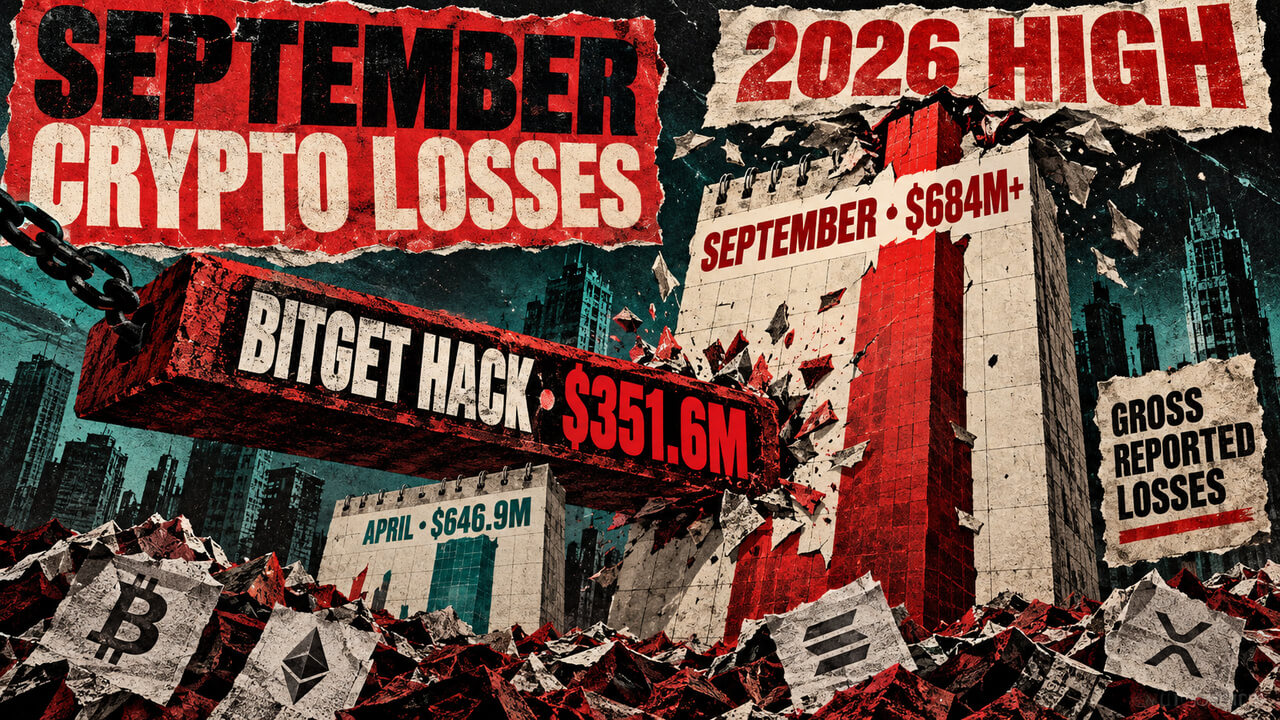
Bitget’s $351.6 million hack pushes September crypto losses to 2026 high
Bitget has suspended withdrawals after unauthorized transfers drained about $351.6 million from a limited number of its hot and wa...

Bitget’s Hot and Cold Wallets Hit in Suspected Hack Worth More Than $180 Million
Crypto exchange Bitget appears to have suffered a major, still ongoing, wallet breach on Thursday afternoon. A newly created addre...

Bitget faces hack concerns after over $180 million in crypto moves: Onchain data
The incident underscores vulnerabilities in exchange security, potentially eroding trust and prompting stricter regulatory scrutin...

Coinbase Impersonator Who Drained Nearly $16 Million From Users Heads to Prison
A Brooklyn judge on Wednesday sentenced a local man who posed as Coinbase staff and drained nearly $16 million from about 100 of t...

Base Activity Climbs To 7.5 Million Transactions In A Day
TL;DR Base network activity reached roughly 7.5 million transactions over a single day in the validated September 22 data. The cou...

Blockchain.com and NYSE Target 24/7 Tokenized Stocks for 44 Million Crypto Accounts
Key Takeaways: Blockchain.com made a deal with NYSE to test 24/7/365 access to tokenized U.S. stocks and ETFs. Subject to regulato...