How a Bitcoin Treasury Converts Idle Reserves Into Strategic Capital
Bitcoin Magazine How a Bitcoin Treasury Converts Idle Reserves Into Strategic Capital The next evolution of corporate finance isn’t diversification—it’s financial refinement In the oil industry, reserves are only the beg...
Archive context
Older archive item. Useful for background and entity history, but not a fresh market-moving signal.

Bitcoin Magazine
How a Bitcoin Treasury Converts Idle Reserves Into Strategic Capital
The next evolution of corporate finance isn’t diversification—it’s financial refinement
In the oil industry, reserves are only the beginning. What powers the world isn’t raw crude—it’s the refined outputs: jet fuel, diesel, gasoline, heating oil. Each serves a different market, use case, and risk profile.
Public companies that hold Bitcoin are now discovering something similar.
Bitcoin, held on the balance sheet, is not just a passive reserve. It is a raw monetary resource—one that can be refined into multiple financial instruments designed to meet the specific needs of different market participants. From structured debt to yield-bearing assets to equity tied to Bitcoin appreciation, the treasury is no longer just a place to store value. It becomes a refinery, capable of producing diverse capital market outputs from a single, scarce input.
This shift is subtle, but transformative. And it represents a new paradigm for capital formation, investor access, and corporate treasury strategy.
From Idle Reserves to Active RefiningTraditional treasury strategy has long centered around capital preservation. Corporations hold cash, short-term bonds, and liquid equivalents as a defensive buffer. While this conservatism may preserve optionality, it often erodes shareholder value in real terms—especially in inflationary or low-yield environments.
Bitcoin changes the equation.
Bitcoin is liquid, globally fungible, and transparently auditable. More importantly, it is programmable capital—a bearer asset with no counterparty risk and a fixed supply. When placed on the balance sheet, it enables new forms of financial expression.
Just as oil companies refine crude into differentiated energy products, corporations can now refine their Bitcoin reserves into structured financial products that meet demand across the capital stack. This turns the treasury from a static safety net into a strategic source of capital access.
Four Outputs of a Bitcoin RefineryWhen Bitcoin is the reserve, the treasury can produce refined outputs designed for different investment mandates, risk tolerances, and regulatory constraints. These outputs fall into four core categories:
1. Convertible Debt Instruments
Bitcoin-backed convertibles offer exposure to BTC upside, often with capped downside. They appeal to institutional investors who want long-term optionality but are constrained from direct Bitcoin exposure. These structures can be calibrated for volatility, duration, and dilution profiles.
2. Yield-Bearing Instruments
Corporations can structure instruments that generate predictable yield, collateralized by Bitcoin reserves. This opens access to fixed-income markets while retaining treasury flexibility. These are especially attractive to allocators seeking returns without navigating custody or BTC volatility.
3. BTC-Linked Equity
When equity performance is visibly tied to the growth of BTC reserves, public shareholders gain a clear, directional thesis. Investors seeking asymmetric upside can participate via equity that tracks Bitcoin exposure, combining macro conviction with liquidity and governance.
4. Future BTC-Backed Income Streams
Products like $MSTY and Bitwise’s new covered call ETFs are paving the way. These generate income from Bitcoin-linked equities—offering downside protection, monthly yield, and mandate-friendly exposure for pensions, insurers, and endowments.
Each product is a refined output—a market-facing instrument designed to deliver value from the same underlying reserve.
Serving Investors Who Can’t Hold Bitcoin—But Want ExposureA major, often overlooked dynamic in capital markets is the regulatory constraint on asset mandates.
Large institutional allocators—pension funds, endowments, insurance companies—are often prohibited from directly owning Bitcoin due to internal policies or custodial limitations. Yet many of these same allocators seek indirect exposure to Bitcoin’s long-term upside.
Refined bitcoin treasury products offer a bridge. They deliver tailored BTC exposure through familiar structures, removing the operational risk of custody. These instruments allow allocators to participate in the thesis—while remaining compliant with existing mandates. For the issuing company, this unlocks entirely new pools of capital and enhances investor reach without changing the underlying business.
The Refinery Model Requires No Pivot in Core BusinessOne of the most compelling aspects of this model is that it does not require a company to become something it’s not. The refinery model is complementary to existing operations. A company’s products, services, and business lines remain intact. What changes is how it manages and mobilizes its treasury.
A Bitcoin treasury unlocks the balance sheet:
- New capital formation tools: Securities that were previously unavailable, now built on BTC collateral
- Broader investor reach: Including institutions that can’t hold BTC directly but can hold refined instruments
- Alternative valuation frameworks: Moving from traditional earnings per share to Bitcoin per share as an emerging metric of capital density
- Stronger capital markets narrative: A story that aligns with macro trends and investor conviction around scarcity
This model also avoids pitfalls common in traditional treasury strategy—such as currency debasement, reliance on underperforming fiat reserves, or excessive dilution during capital raises. It delivers optionality without operational complexity.
The result is not disruption—it’s a strategic upgrade.
Conclusion: A New Era of Capital FormationBitcoin is the first digitally scarce monetary asset. When held at the corporate level, it enables a form of capital refinement that was never possible with fiat or traditional reserves.
This isn’t just about holding Bitcoin. It’s about unlocking its potential—turning a single reserve asset into multiple financial expressions, each calibrated for different investors and strategic outcomes.
The corporate treasury is no longer static. It is now programmable. Refined. Strategic.
The refinery is open.
The resource is scarce.
The question is: what will you produce?
Disclaimer: This content was written on behalf of Bitcoin For Corporations. This article is intended solely for informational purposes and should not be interpreted as an invitation or solicitation to acquire, purchase, or subscribe for securities.
This post How a Bitcoin Treasury Converts Idle Reserves Into Strategic Capital first appeared on Bitcoin Magazine and is written by Nick Ward.
Why this matters
This bitcoin story adds another data point to the current market tape and is useful when read alongside nearby source coverage.
Original source
Read on Bitcoin MagazineRelated market context
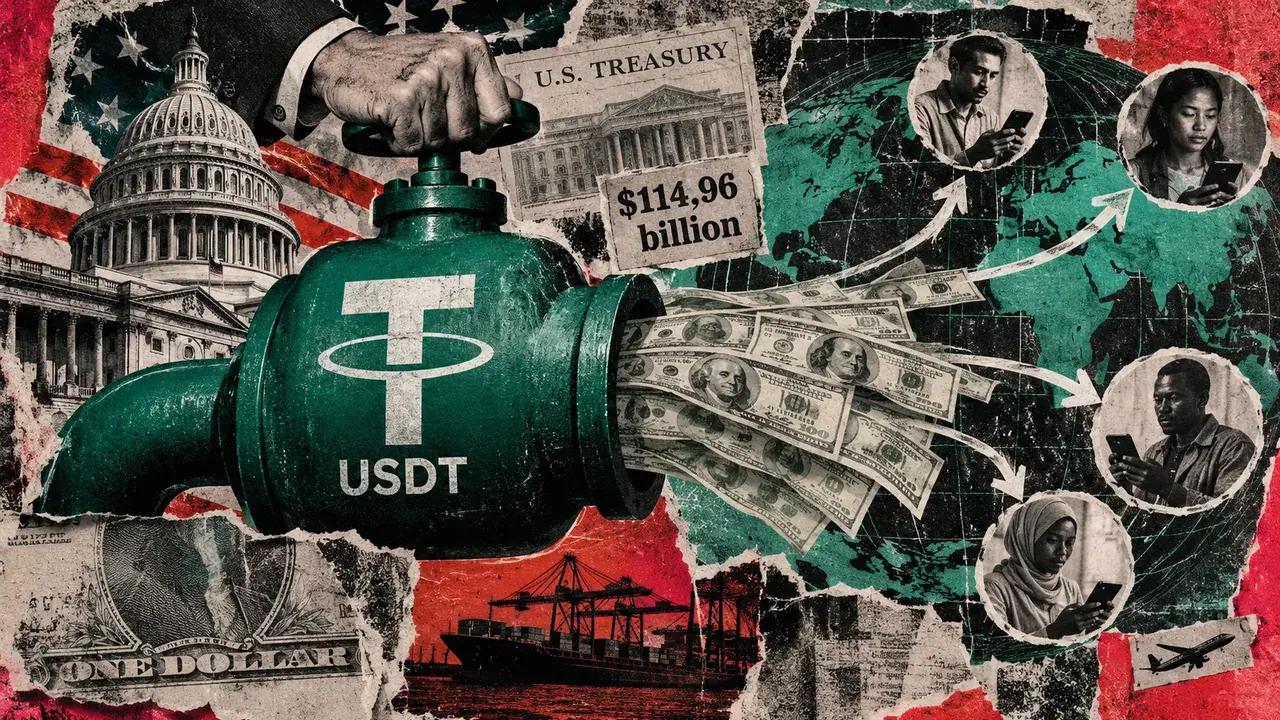
Washington has $114 billion reasons to want Tether around
Not that long ago, Washington fined Tether for misleading people about the dollars behind its tokens. Today, the company's insatia...
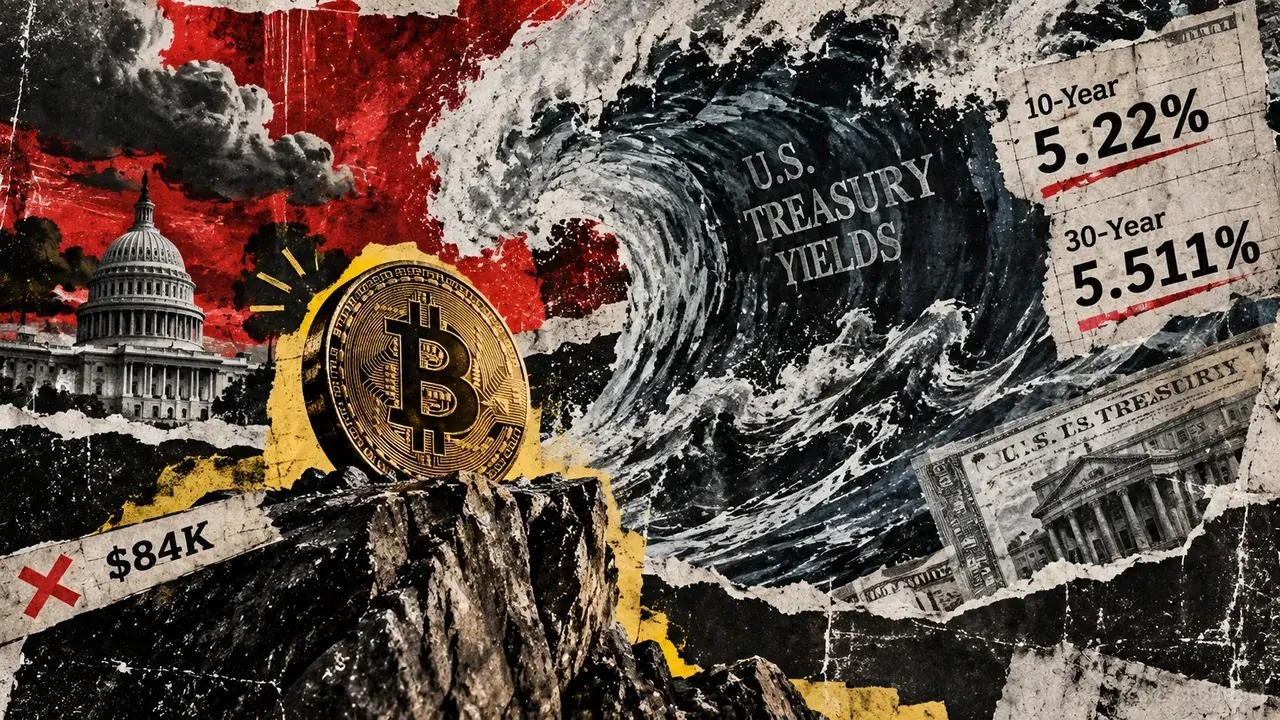
Bitcoin survives a 5.2% Treasury shock as traders slash $1.7 billion in leverage
Bitcoin is holding near $84,000 even as a historic US bond selloff pushes Treasury yields to decades-high levels. The benchmark 10...

Crypto Investors Can Now Buy Into Cathie Wood’s Fund Holding SpaceX, OpenAI and Kalshi
Cathie Wood’s ARK Invest and tokenization firm Securitize announced on Sept. 24 that they have tokenized the ARK Venture Fund (ARK...

Jupiter Exchange COO says DeFi needs 5-10x improvement, not incremental tweaks, to attract real capital
DeFi must significantly outperform traditional finance to attract institutional capital, potentially reshaping financial systems a...

Fed proposed stablecoin rule could trigger a 48-hour liquidation run
The Federal Reserve's proposed rules for the payment stablecoin issuers it supervises include a crisis clock measured in hours. An...

Bitcoin (BTC) Price Today: BTC Holds Uptrend as $84K FVG Shapes Intraday Setup
The setup comes as on-chain data shows that profit-taking remains relatively contained despite the latest Bitcoin price recovery....