How To Identify Bitcoin Price Bottoms
Looking at the metrics that help us determine bitcoin price bottoms.The below is from a recent edition of the Deep Dive, Bitcoin Magazine's premium markets newsletter. To be among the first to receive these insights and...
Archive context
Older archive item. Useful for background and entity history, but not a fresh market-moving signal.
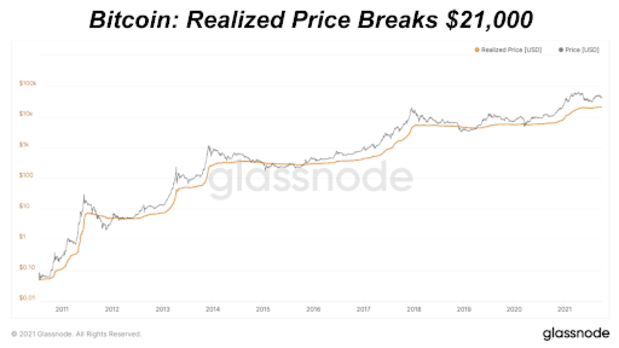
Looking at the metrics that help us determine bitcoin price bottoms.
The below is from a recent edition of the Deep Dive, Bitcoin Magazine's premium markets newsletter. To be among the first to receive these insights and other on-chain bitcoin market analysis straight to your inbox, subscribe now.
In today’s Daily Dive we will dig into a new metric for timing bitcoin bottoms. This metric will use the realized price of two separate cohorts of bitcoin investors; long-term holders and short-term holders.
First, before digging into the metric, let’s define some of the terms:
Realized Price: Realized price is the average price that every coin (technically: UTXO) was moved on the network. For some, realized market capitalization is an easier metric to understand. Realized market capitalization, which is nearly an identical metric as realized price, takes the aggregate of every bitcoin on the network at the price it last moved. Realized price is currently $21,100, while realized capitalization is $397.4 billion. Realized price can otherwise be thought of as the cost basis for everyone across the network on average.
Source: GlassnodeLong-Term Holder: A long-term holder is defined as someone whose bitcoin has not moved wallet addresses in 155 days. While 155 days may seem like somewhat of an arbitrary threshold, the time was chosen because the statistical probability of a UTXO being spent decreases the longer it is held. The chart below shows the probability that a UTXO is spent within the specified time in days as a function of its coin age.
Source: Quantifying Short-Term And Long-Term Holder Bitcoin Supply - GlassnodeWith long-term holders defined, anyone whose coin has been dormant for less than 155 days is classified as a short-term holder.
Using Glassnode’s suite of data, we can construct a realized price for both long and short-term holders. While Glassnode does not provide the realized price for these two groups of investors, it is easily calculated using data that is provided. Using the market-value-to-realized-value ratio (MVRV) for the two seperate groups, you simply divide price by the MVRV ratio of the two groups to backwards-calculate the realized price.
Below is the history of MVRV for long-term holders (LTHs) and short-term holders (STHs):
*Note that LTH MVRV is in log scale, while STH MVRV is in linear scale.*
Calculating LTH And STH Realized Price Source: GlassnodeSource: Glassnode
So, how can the realized price rice of LTHs and STHs help us to identify bitcoin bottoms, and *potentially* help to identify bitcoin tops? Let’s dive in.
Why this matters
This bitcoin story adds another data point to the current market tape and is useful when read alongside nearby source coverage.
Original source
Read on Bitcoin MagazineRelated market context

Bitwise Dogecoin ETF Reaches Scheduled Liquidation As Holders Face Cash Redemption
TL;DR: Bitwise’s BWOW Dogecoin ETF reached its announced October 22 liquidation distribution date, with remaining shareholders due...

Bitcoin’s wealthy holders turning to loans and yield as investment habits mature: Xapo CEO
Borrowing against bitcoin and earning income to build their BTC holdings are becoming priorities for long-term investors, Xapo Ban...
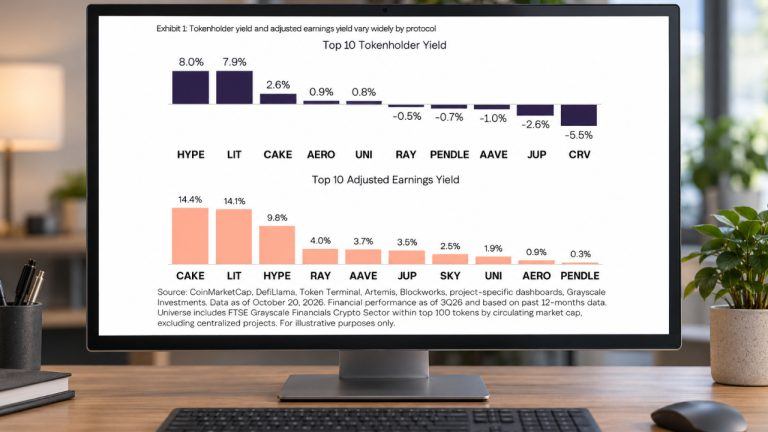
Grayscale Warns Crypto Token Inflation Can Wipe Out Holder Rewards
Crypto applications can generate earnings, yet growing token supplies can reduce the benefits reaching holders. Grayscale’s new an...

Circle Shareholder Sues Trump, Alleging Unconstitutional Profits From $2B UAE Crypto Deals
Bitcoin Magazine Circle Shareholder Sues Trump, Alleging Unconstitutional Profits From $2B UAE Crypto Deals A shareholder from one...

Circle shareholder sues Trump over UAE crypto deals, citing up to $82 million in potential annual revenue
A Circle shareholder sued President Donald Trump, alleging UAE-linked cryptocurrency payments enriched his family and diverted bus...

Ethereum (ETH) Price Prediction: Whale Rotates $155M Into ETH as Longs Surge Near $2,500
Ethereum is trying to stabilize after another volatile stretch, with price returning toward the mid-$2,400 region while several po...