How Will Bitcoin Navigate Government Attempts To Control It?
Policy is beginning to creep against bitcoin and it may affect the bitcoin price in the future so there are specific issues Bitcoiners should focus on.This is a transcribed excerpt of the “Bitcoin Magazine Podcast,” host...
Archive context
Older archive item. Useful for background and entity history, but not a fresh market-moving signal.
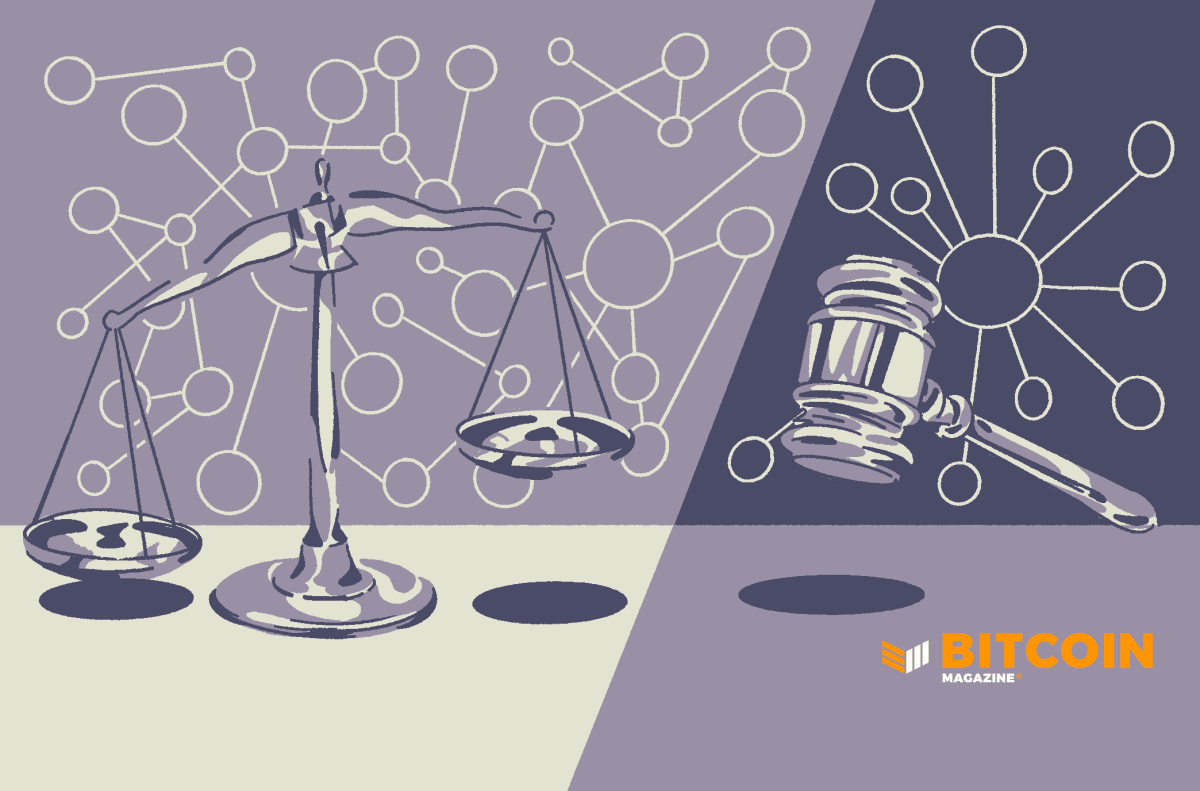
Policy is beginning to creep against bitcoin and it may affect the bitcoin price in the future so there are specific issues Bitcoiners should focus on.
This is a transcribed excerpt of the “Bitcoin Magazine Podcast,” hosted by P and Q. In this episode, they are joined by Matthew Pins to talk about the regulatory landscape and how the government might try to legislate Bitcoin.
Watch This Episode On YouTube Or Rumble
Listen To The Episode Here:
Matthew Pines: You can assume any scenario you want. I can imagine a scenario where solar flare wipes out the grid and it's not good for Bitcoin, but is that relevant for anyone's decision making? I don’t think there's a plausible scenario where Elizabeth Warren herself, takes executive power and bans Bitcoin.
I can construct an infinite number of these sorts of negative scenarios. The question is how much credence do you put in them? I think it's like symmetry. For every negative downside scenario, is there an equally likely, upside scenario? What would be the political conditions? We’re really making a political assessment here. We're not making an economic assessment. We're not making an assessment about when the next block's gonna hit, it's like entirely a political judgment.
I don't put much stock in anyone's ability to forecast any kind of political evolution. So then it's a matter of what's the reasonable, bad case scenario, what's the reasonable best case scenario and where we're gonna more likely end up somewhere in the middle.
I think you're likely gonna see, especially in the Biden administration, an increasing willingness to push the limits of the national security justification against Bitcoin, and the climate kind of argument against Bitcoin. There's not a unified front. There's people in lots of parts of the government that are neutral, negative, positive, and it's a complicated, messy kind of bureaucratic machine.
Any particular instrument of power is very much disconnected from every other instrument. So you can get somewhat disconnected, if not downright kind of incoherent policy-making on different things. I think what we should more likely expect is a downside scenario, like Tornado Cash-style sorts of OFAC things that just become much more aggressive on Bitcoin.
This is to try to incrementally boil the frog on Bitcoin miners. They’ll try to get them to come into more of a wall garden, so to speak. It's not necessarily hitting the application layer, they’re trying to hit the corporate layer.
There's layers to Bitcoin beyond just the social consensus layer, Bitcoin layer. There's the political, economic, social layer of corporations, like state and local regulatory regimes and national enforcement. I think it's an interesting test case to see how far they think they can push things like the OFAC power, which is a really unique power, right? The Tornado Cash justification came from the National Emergencies Act and through a separate international economic act, International Emergency Economic Powers Act, that basically allows them to sanction foreign property and entities associated with foreign property.
I think there's gonna be some litigation about exactly, to what extent, smart contracts can be considered a person or a property or an entity. That would be where I'd be looking would be the technocratic “wield the sanctions power,” and then really scare compliance into companies — not necessarily require it, but basically, leave the ambiguity open. Then, as we saw with the Ethereum stuff, self censorship takes place, right? So it's not compelled. It is scaring a bunch of people that are VCs or executives that don't wanna get in trouble and will just act on a precautionary principle and will just take action themselves, even if they may not be required to. That to me is the more downside scenario.
They do this and then a bunch of executive Bitcoin miners and other folks at the corporate layer, like they flinch. I think that is more the kind of game you're probably gonna see play out as opposed to the big hammer of the state's gonna come down and a bunch of jack-booted thugs are gonna come steal your hardware wallet. It's not gonna happen.
Eventually, those sorts of things end up in courts. It's very boring, right? It's like these sorts of things end up in lawsuits and two years later, after lots of court cases, you find out that like maybe there's new case law, maybe there isn't. I think people are overestimating how much of there's gonna be some major crackdown or even like major legalization, as opposed to just this random semi-drunken walk through a novel regulatory landscape.
Why this matters
This bitcoin story adds another data point to the current market tape and is useful when read alongside nearby source coverage.
Original source
Read on Bitcoin MagazineRelated market context

Ethereum (ETH) Price Prediction: Whale Rotates $155M Into ETH as Longs Surge Near $2,500
Ethereum is trying to stabilize after another volatile stretch, with price returning toward the mid-$2,400 region while several po...

Lido Puts Liquidity Buffers At The Center Of Ethereum ETP Yield Debate
An Ethereum investment product can advertise staking exposure without putting every unit of its ETH to work. Lido’s October 23 com...
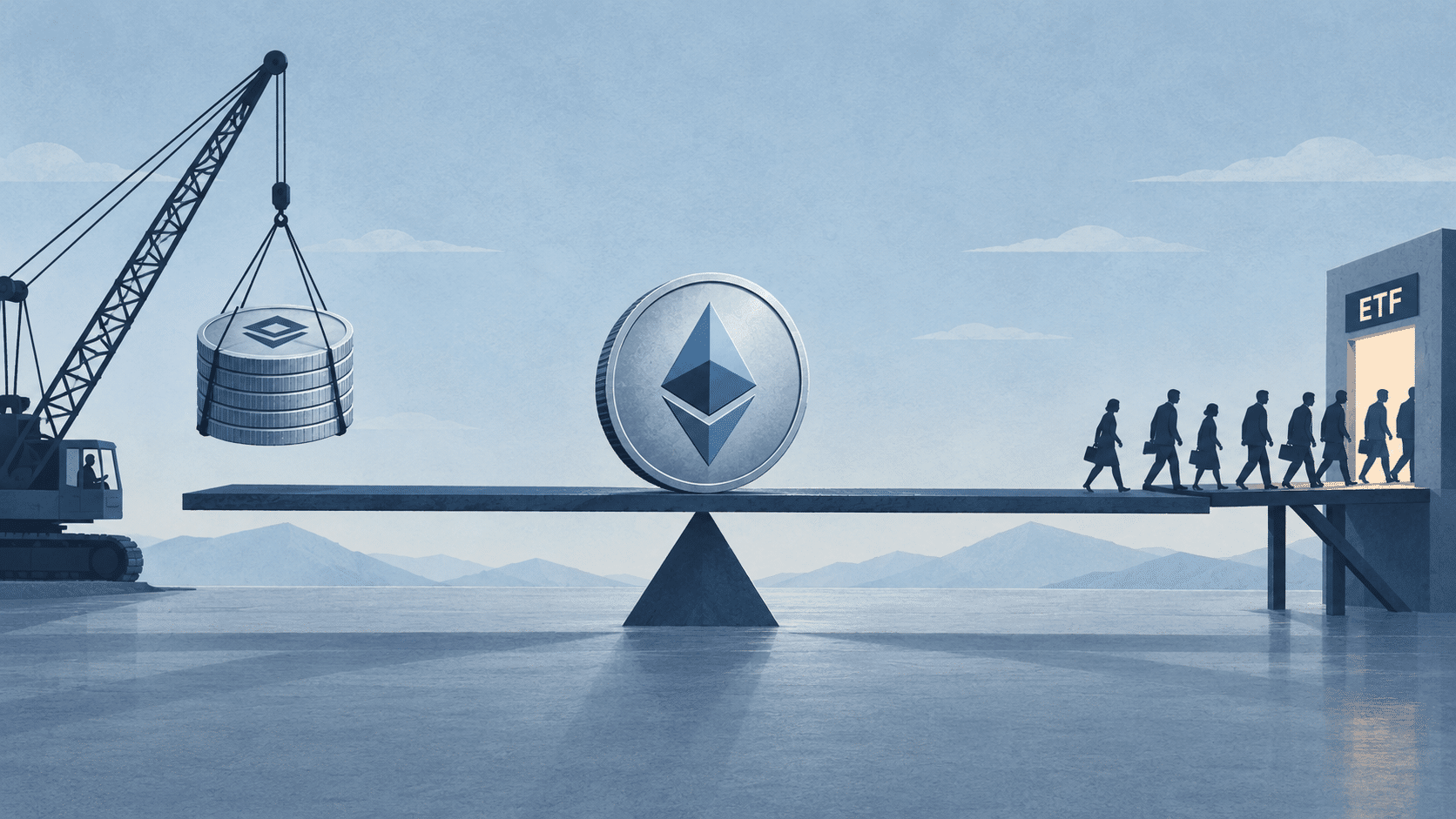
Ether ETFs Are Having Their Worst Month of 2026. Who Buys Once Bitmine Stops?
Ether’s (ETH) demand this year has largely come from two places: spot exchange-traded funds (ETFs) and Bitmine Immersion Technolog...

Austin Griffith Demonstrates How Fast Bots Can Drain Weak Ethereum Keys
Austin Griffith of the Ethereum Foundation put about $1 in an Ethereum wallet whose private key was the number 6969, and bots went...
Solayer Pay Adds Five Blockchain Networks For Direct Stablecoin Card Deposits
TL;DR: Solayer Pay says its card app now accepts supported stablecoin deposits from Solana, Ethereum, Arbitrum, BNB Chain and Base...

Lido Opens Higher-Balance Ethereum Validators With A Deliberately Small Start
Lido has opened a permissionless route to Ethereum validators that can hold much larger effective balances, but the first allocati...