Jameson Lopp sounds alarm on Bitcoin address poisoning attacks
Jameson Lopp, the chief security officer at Bitcoin (BTC) custody company Casa, sounded the alarm on Bitcoin address poisoning attacks, a social engineering scam that uses similar addresses from a victim's transaction hi...
Archive context
Older archive item. Useful for background and entity history, but not a fresh market-moving signal.

Jameson Lopp, the chief security officer at Bitcoin (BTC) custody company Casa, sounded the alarm on Bitcoin address poisoning attacks, a social engineering scam that uses similar addresses from a victim's transaction history to fool them into sending funds to the malicious address.
According to Lopp's Feb 6 article, the threat actors generate BTC addresses that match the first and last digits of addresses from the victim's transaction history. Lopp analyzed the Bitcoin blockchain history for this type of attack and found:
"The first such transactions did not appear until block 797570, July 7, 2023, which had 36 such transactions. Then, all was quiet until block 819455, December 12, 2023, after which we can find regular bursts of these transactions up until block 881172, January 28, 2025, then there was a 2-month break before they started up again.""Over these 18 months, just shy of 48,000 transactions were sent that match this profile of potential address poisoning," Lopp added.
Example of a poisoned address attack. Source: Jameson Lopp
The executive urged Bitcoin holders to thoroughly check addresses before sending funds and called for better wallet interfaces that fully display addresses. Lopp's warning highlights the emerging cybersecurity exploits and fraudulent schemes plaguing the industry.
Related: Crypto exploit, scam losses drop to $28.8M in March after February spike
Address poisoning scams and exploits claim billions in stolen user fundsAccording to cybersecurity firm Cyvers, over $1.2 million was stolen through address poisoning attacks in March 2025. Cyvers CEO Deddy Lavid said these types of attacks cost users $1.8 million in February.
Blockchain security firm PeckShield estimates the total amount lost to crypto hacks in Q1 2025 to be over $1.6 billion, with the Bybit hack accounting for the vast majority of the stolen funds.
The Bybit hack in February was responsible for $1.4 billion in losses and represents the biggest crypto hack in history.
Cybersecurity experts have tied the attacks to North Korean state-affiliated hackers that use complex and evolving social engineering schemes to steal cryptocurrencies and sensitive data from targets.
Common Lazarus Group social engineering scams include fraudulent job offers, zoom meetings with fake venture capitalists, and phishing scams on social media.
Magazine: 2 auditors miss $27M Penpie flaw, Pythia’s ‘claim rewards’ bug: Crypto-Sec
Why this matters
This bitcoin story adds another data point to the current market tape and is useful when read alongside nearby source coverage.
Original source
Read on CointelegraphRelated market context

Crypto Hacks: Three Projects Hacked in One Day as Losses Hit Over $11M
Three crypto projects were attacked on September 24, suffering combined losses of more than $11M. Attackers drained around $1.8M f...

SEC crypto FAQ addresses token buybacks, network upgrades and promises of profit
Promoting a network’s current uses generally would not create an expectation of profit, SEC staff said.

SEC’s Hester Peirce wants to end crypto’s KYC honeypots before stablecoin rules create more of them
US Securities and Exchange Commission (SEC) Commissioner Hester Peirce wants financial firms to stop stockpiling customer data aft...

Bitget Halts Withdrawals After $351.6M Hot Wallet Incident Hits Crypto Exchange
Key Takeaways: Bitget reported unauthorized transactions of about $351.6 million that occurred in a portion of its hot & warm wall...

DeFi hack attack: Three exploits snatch $11M in a single day
Crypto and DeFi projects continue to be hacked at a dizzying pace, and few days in recent weeks have been incident-free. That said...
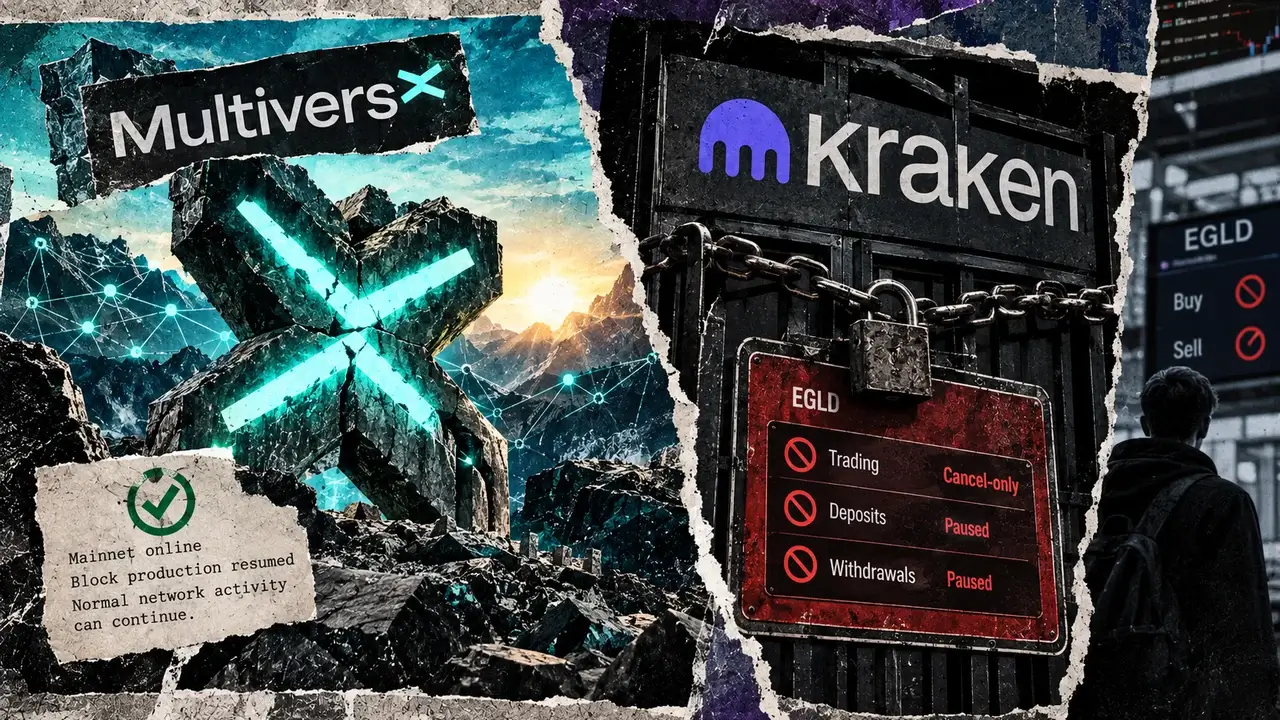
MultiversX restarts after exploit halt, but Kraken still bars new EGLD trades
MultiversX, a blockchain network, said its mainnet was back online Thursday, Sept. 24, about five days after an exploit-related ha...