Know-Your-Customer: The Quiet Kill Switch
Bitcoin Magazine Know-Your-Customer: The Quiet Kill Switch The know-your-customer (KYC) threat isn’t coming. It’s already here, and it didn’t arrive through a nationwide ban or an emergency executive order. It quietly sh...
Archive context
Older archive item. Useful for background and entity history, but not a fresh market-moving signal.

Bitcoin Magazine
Know-Your-Customer: The Quiet Kill Switch
The know-your-customer (KYC) threat isn’t coming. It’s already here, and it didn’t arrive through a nationwide ban or an emergency executive order. It quietly showed up with a checkbox and a Terms of Service agreement.
While the influencers make noise about CBDCs and paper bitcoin, the real control system has already been deployed: Know Your Customer.
Not dramatic. Not dystopian. Just regulated, normalized and accepted.
But compliance isn’t neutral. It’s the infrastructure of financial control, and if you’re still handing over your ID to stack sats, you’re not buying freedom. You’re financing your own cage.
The Real Attack Vector from KYCKYC regulations are marketed as a hedge against money laundering and fraud. The framing is safety. The reality is traceability.
The moment you attach your identity to Bitcoin through an exchange signup — a utility bill attached, a passport uploaded — you forfeit the very autonomy that Bitcoin was designed to preserve. It’s not about what you’re doing. It’s about who you are.
Once that link is made, every transaction becomes searchable, timestamped and admissible. This isn’t a theory. It’s how the system is already working.
Canada froze bank accounts based on political donations. The U.K. arrests protestors using facial recognition. The U.S. executes geofence warrants without individual suspicion.
Add KYC to that apparatus, and you’ve built a turnkey surveillance machine. No subpoenas. No charges. Just silent blacklists and frozen withdrawals.
Didn’t you find it odd that they arrested the developers of mixers like Whirlpool and Tornado Cash, instead of the criminals that used them?
KYC is Centralization by DesignGovernments didn’t need to outlaw Bitcoin; they just needed to know who’s using it.
The combination of centralized exchanges, KYC records and behavioral analytics turns every bitcoin purchase into a breadcrumb trail. Every withdrawal from Coinbase or Kraken becomes part of a profile logged, indexed, stored.
When regulators talk about “compliance,” this is what they mean: usable data pipelines. Sanitized, labeled UTXOs. A fully mapped ecosystem of wallets tied to real names and IP addresses.
What they’re building isn’t about stopping crime. It’s about preemptively labeling dissent.
You Are the HoneypotThe most dangerous part of KYC is that it doesn’t look dangerous. There’s no siren, no red alert. Just a few forms, a phone verification — maybe a bonus if you sign up today.
But each form you complete feeds the machine. Not just for you, but for everyone you interact with.
KYC isn’t just surveillance. It’s contagious.
A single identity-linked wallet poisons the privacy of every address it touches. Chain analysis firms don’t need to know everyone, they just need to know someone. Once that anchor point is set, mapping becomes mathematics.
You’re not stacking sats. You’re stacking evidence.
Exit Is a DeadlineThis is the accumulation phase. The calm before the enforcement.
We’re in the same pre-crackdown posture we saw before the war on cash. The pattern is familiar:
- Normalize surveillance
- Demonize privacy
- Criminalize autonomy
The result? Most users walked themselves into a trap. Not under threat, but under convenience.
The “just in case” crowd, the ones who signed up, KYC’d and hoped it wouldn’t matter, are already compromised. Not because they did something wrong, but because they let someone else decide what’s wrong.
And once that line moves? They’re already inside it.
“But they can’t stop me from moving my bitcoin and transacting P2P.” No one wants blacklisted coins: They’ll be radioactive and useless.
What Real Privacy RequiresThere’s no affiliate link for real privacy. No app store solution. No 10% discount for using your ID.
It looks like discipline. Friction. Small decisions that don’t scale.
- Buying peer-to-peer instead of custodial
- Mining to clean wallets
- Using tools that don’t log your metadata
- Walking away from platforms that promise speed in exchange for obedience.
It’s not glamorous. But it’s the difference between ownership and permission.
Final ThoughtBitcoin was never supposed to be polite. It was a way out. But as we normalize compliance in exchange for access, we risk turning that exit ramp into a regulated channel.
KYC is not a bureaucratic detail. It’s the quiet kill switch for sovereignty.
It doesn’t matter how many sats you stack if every one of them is logged, tagged and ready for blacklist.
So ask yourself:
What does it mean to own something?
If the answer starts with a government ID, you’re already losing.
No name. No compromise. No delay.
Build the exit while you still can.
This post Know-Your-Customer: The Quiet Kill Switch first appeared on Bitcoin Magazine and is written by Ghost Ghost.
Why this matters
This bitcoin story adds another data point to the current market tape and is useful when read alongside nearby source coverage.
Original source
Read on Bitcoin MagazineRelated market context
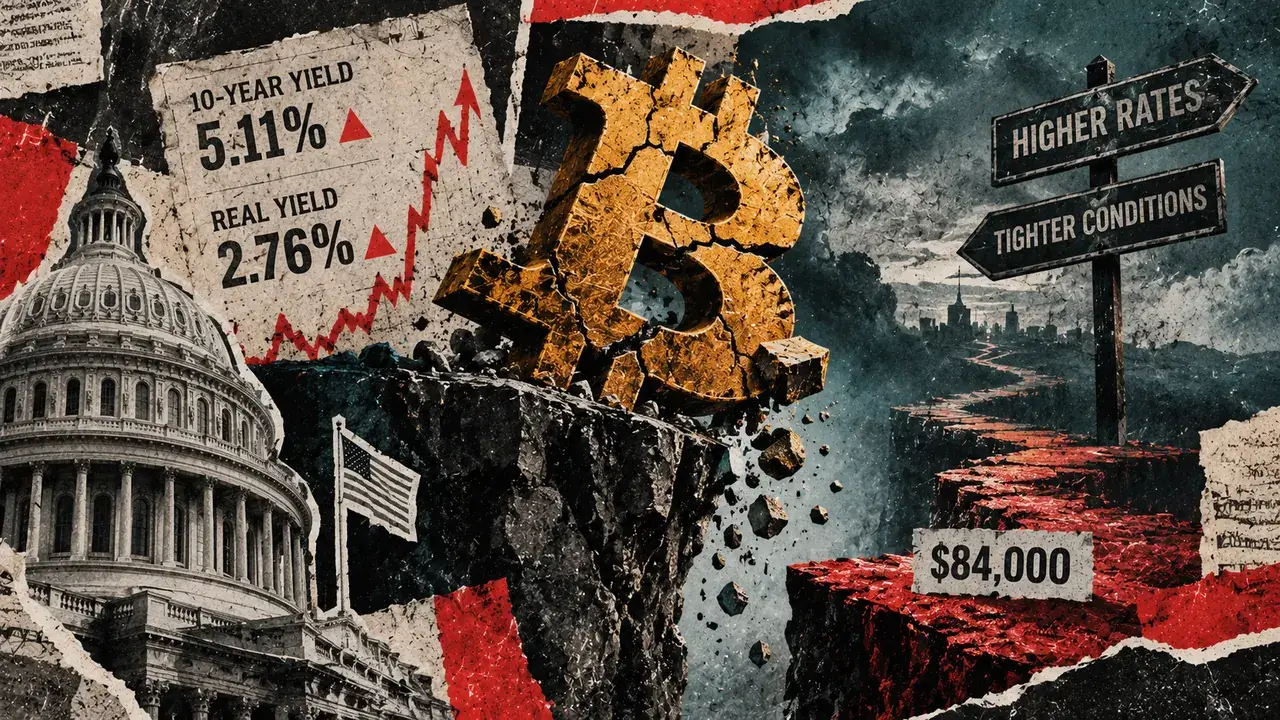
Why surging US real yields are quietly forcing Bitcoin under $84,000
Bitcoin registered an intraday low at $83,500 on Sept. 23, the same day the US 10-year Treasury yield closed at 5.11%, up 15 basis...
![[[alloc] init] Releases Shielded Bitcoin Proposal For Private Bitcoin Transactions](https://bitcoinmagazine.com/wp-content/uploads/2026/09/shielded2-scaled.jpeg)
[[alloc] init] Releases Shielded Bitcoin Proposal For Private Bitcoin Transactions
Bitcoin Magazine [[alloc] init] Releases Shielded Bitcoin Proposal For Private Bitcoin Transactions Shielded Bitcoin is a proposal...

Spend more than your cash balance: introducing Kraken Borrow for US customers
TL;DR Kraken Borrow US is now available in 48 states, giving eligible US customers the ability to buy more crypto than their avail...

Microsoft Copilot AI Predicts Bitcoin Will Do Something Incredible in Q4 2026
Microsoft Copilot AI predicts a wild move for BTC in Q4 2026, calling it one of the strongest asymmetric risk-reward positions ava...
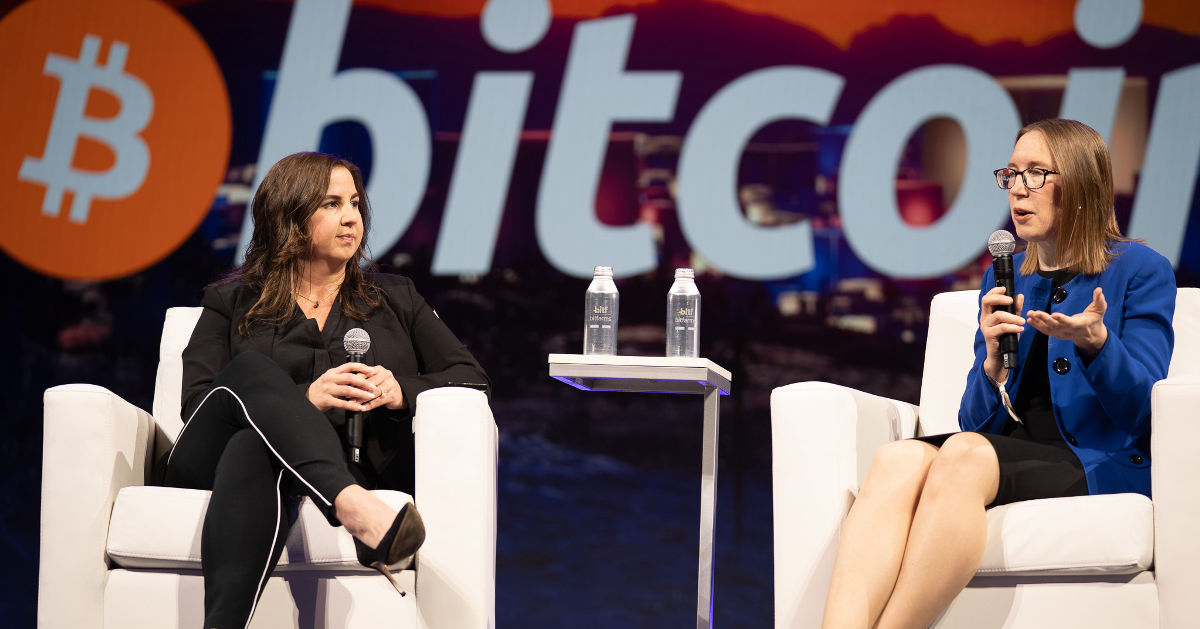
SEC Commissioner Hester ‘Crypto Mom’ Peirce Advocates Privacy-Preserving Tech
Bitcoin Magazine SEC Commissioner Hester ‘Crypto Mom’ Peirce Advocates Privacy-Preserving Tech Outgoing Securities and Exchange Co...

SEC’s Peirce Urges Zero-Knowledge Proofs to Reduce KYC Data Collection
SEC Commissioner Hester Peirce urged federal regulators to move away from data-heavy know-your-customer and anti-money-laundering...