Let’s Not Create $200 Trillion in Credit on Top of Bitcoin
Bitcoin Magazine Let’s Not Create $200 Trillion in Credit on Top of Bitcoin The purpose of Bitcoin is to definancialize the world, not refinancialize it. And so when I heard Strategy Executive Chairman Michael Saylor say...
Archive context
Older archive item. Useful for background and entity history, but not a fresh market-moving signal.

Bitcoin Magazine
Let’s Not Create $200 Trillion in Credit on Top of Bitcoin
The purpose of Bitcoin is to definancialize the world, not refinancialize it.
And so when I heard Strategy Executive Chairman Michael Saylor say at the Bitcoin Treasuries Unconference yesterday that he wants to see $200 trillion in credit built on top of bitcoin once it hits a $100 trillion market cap, I felt uneasy.
JUST IN: Michael Saylor says if Bitcoin hits $100 trillion, there could be $200 trillion in credit built on top of it.
Bitcoin is just getting started pic.twitter.com/SbgH9gW7fb
Then, when I heard Coinbase CEO Brian Armstrong send a similar message this morning, I started to feel like we’re very much losing the plot.
COINBASE CEO JUST SAID LIVE ON CNBC THAT $100 TRILLION OF CAPITAL AND CREDIT MARKET CAN BE REBUILT ON #BITCOIN AND CRYPTO
WE’RE “UPDATING FINANCIAL SYSTEM” pic.twitter.com/AmUGAEkeo7
For those who aren’t well-versed on Bitcoin’s origins, it was born from the great financial crisis of 2007-09, which was the result of a highly leveraged, overfinancialized system.
When I think about Satoshi Nakamoto coding Bitcoin, I don’t think of someone (or a group of people) thinking to him or herself, “How can I create a new asset that we can financialize so that we can create the same problems again?”
What Satoshi seemed to have in mind instead was: “Here’s a new form of money that preserves value over time so that people don’t have to rely on financial products as much.”
I don’t know whether or not we’ll ever live in a fully hyperbitcoinized future where no other forms of money exist. But I do imagine that the $100 to $200 trillion in debt that both Saylor and Armstrong are envisioning is constituted of other currencies, and, in such a scenario, bitcoin has likely been relegated to “digital capital” instead of money — and that’s not my vision for it. (To be fair, it could be used as digital capital and money simultaneously.)
My vision is closer to what we see in bitcoin circular economies, communities around the world that use bitcoin as money. I’ve visited a number of these communities and witnessed the tremendous impact they’ve had on the lives of their members.
Many members of these communities have never had a bank account or been a part of the broader digital financial system, which means they likely aren’t even eligible to apply for credit. However, with bitcoin, they’re able to save and build small businesses with those savings.
This is part of the magic of Bitcoin: It empowers those who’ve been neglected by the traditional financial system, while saving those of us who have access to it from becoming debt slaves.
We may never live in a completely definancialized future, and that’s fine. It’s one thing to acknowledge that, but it’s another to envision a future of finance built on bitcoin before we’ve even succeeded in having it widely adopted as money, which is what Satoshi intended for it to be.
It would be fantastic if some of the most prominent names in the industry supported bringing the original vision for bitcoin to life before proposing that we incorporate it into the antiquated, corrupt system as little more than a new form of collateral.
This article is a Take. Opinions expressed are entirely the author’s and do not necessarily reflect those of BTC Inc or Bitcoin Magazine.
This post Let’s Not Create $200 Trillion in Credit on Top of Bitcoin first appeared on Bitcoin Magazine and is written by Frank Corva.
Why this matters
This bitcoin story adds another data point to the current market tape and is useful when read alongside nearby source coverage.
Original source
Read on Bitcoin MagazineRelated market context

Altcoin demand meets $18B threat as flows move into RWA perps as just 19% of traders keep alts
In the markets Talos tracked, daily volume in RWA perpetual futures tied to equities, commodities and indices rose from less than...

Who Is Sebastián Marset? Uruguay’s Alleged Cocaine-Mafia Crypto Kingpin
Sebastián Enrique Marset Cabrera, a 35-year-old Uruguayan national, is jailed in Alexandria, Virginia, fighting federal charges of...
XRP News: SEC Opens AMM Door for Tokenized Stocks as XRPL Already Has the Tech
The latest XRP news is putting the XRP Ledger back in the spotlight after the SEC opened a new path for tokenized stocks to trade...
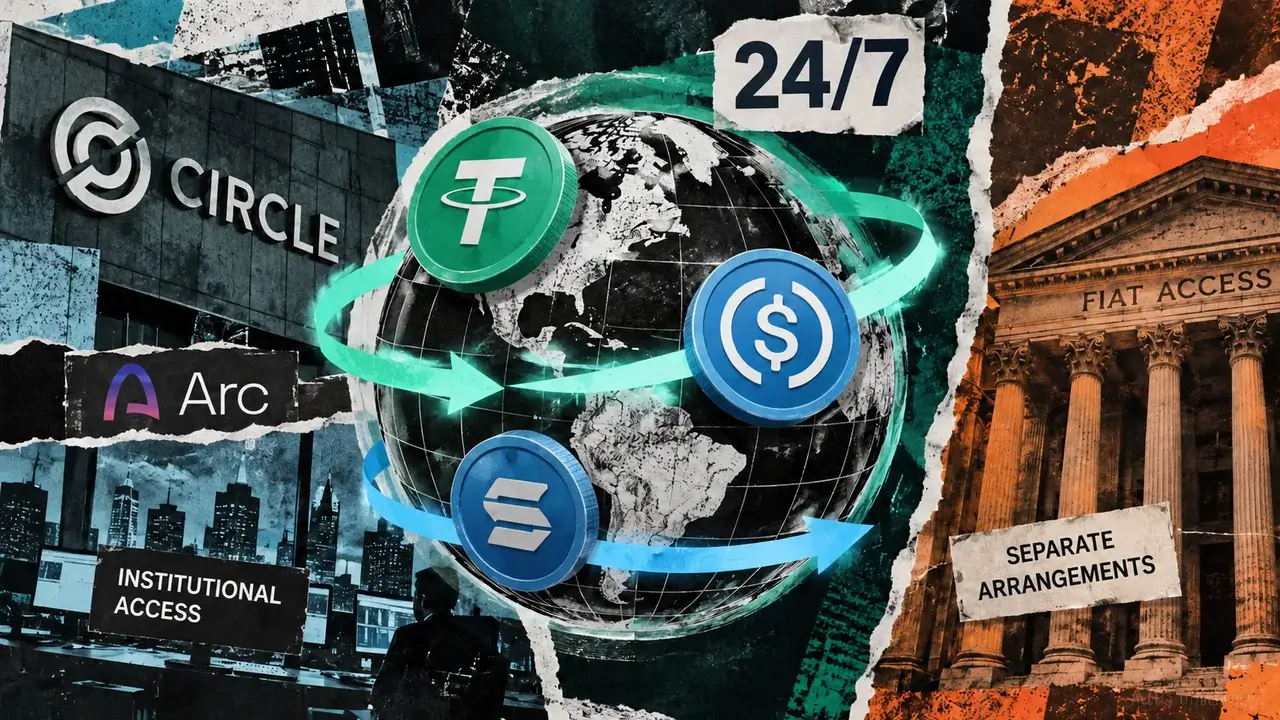
Circle launches 24/7 stablecoin FX engine as it chases a slice of the $10 trillion currency market
Circle has switched on 24-hour stablecoin foreign-exchange settlement on Arc, targeting a global FX market that moves nearly $10 t...
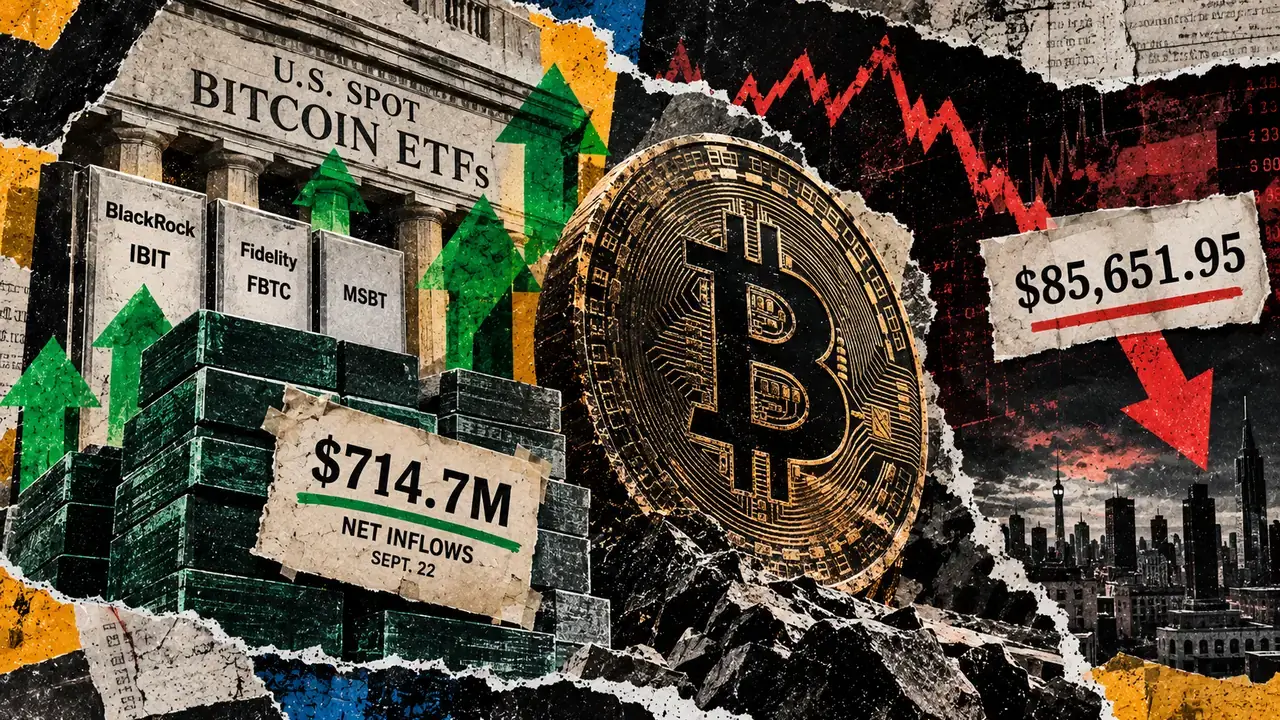
Bitcoin ETFs just erased a $5.7 billion hole, but profit-taking is swallowing the new demand
Bitcoin exchange-traded funds (ETFs) have erased their 2026 flow deficit after a sharp buying revival, even as the top crypto stru...

Stablecoin adoption intent surges when consumers get bank-level protections, research shows
Regulatory clarity and bank-level protections could drive stablecoin mainstream adoption, reshaping financial services and payment...