Lightning apps using unpatched LDK risk Bitcoin theft from a reconnect lie
Lightning Development Kit (LDK), a library for building Bitcoin Lightning wallets and payment applications, has patched a flaw that could let a malicious channel peer steal the value of a forwarded payment by lying after...
Archive context
Fresh in the current trading session. A tracked entity is involved.
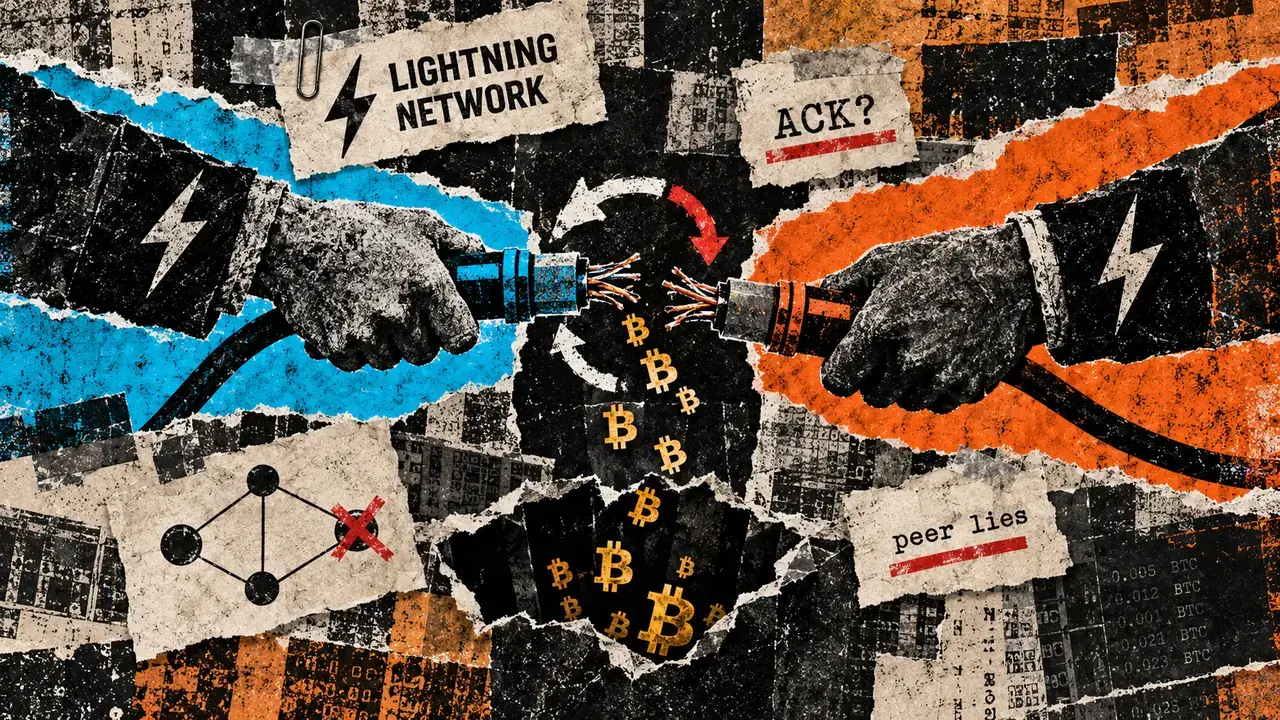
Lightning Development Kit (LDK), a library for building Bitcoin Lightning wallets and payment applications, has patched a flaw that could let a malicious channel peer steal the value of a forwarded payment by lying after reconnecting. Affected application developers need to incorporate the fix into the software they deploy.
The October 1-dated v0.2.7 and v0.1.13 security releases address the LDK reconnect vulnerability on the 0.2 and 0.1 branches, respectively. Bitcoin Optech described the fixes in its Oct. 9 newsletter.
How the LDK reconnect flaw could cost BitcoinThe attack starts with a channel peer acknowledging an update, then reconnecting and pretending it never received it. Before the fix, that false claim could cause LDK to sign a conflicting commitment transaction.
A commitment transaction represents a channel's agreed state and can be used to settle it on Bitcoin's blockchain. In the scenario described in PR 5057, the newly signed transaction was not recorded by LDK's channel monitor, the component tracking the channel's on-chain claims.
That gap could turn a forwarded payment into a loss. The malicious sender could confirm the transaction on-chain and let the payment settle with the next recipient. It could then reclaim the incoming payment contract when it expired, even though the forwarding node knew the secret normally used to claim payment.
The forwarding application would have paid downstream without recovering the corresponding incoming funds. The fix permits retransmission only while the peer's acknowledgment remains outstanding and force-closes the channel when the peer claims an already-acknowledged update was missed.
Related Reading Core Lightning patches flaw that could let revoked channel state escape penalty
Alongside the LDK reconnect fix, version 0.2.7 addresses a different theft path involving LSPS2 just-in-time payments, where a liquidity service opens a channel as part of handling a payment.
An intercepted payment could misrepresent its amount, causing the service to open a channel and forward more Bitcoin than the incoming payment supplied. The service would cover the difference from its own funds. PR 5042 addresses that amount check.
That exposure concerns the LSPS2 service flow. The v0.1.13 notes list the shared reconnect fix without listing the LSPS2 fix.
These defects differ from the splice-fee diversion and saved-state loading bugs covered in CryptoSlate's Sept. 13 LDK v0.2.6 report. Core Lightning is a separate implementation, as described in the update below.
Related Reading Core Lightning patches critical security flaws and a Bitcoin payment bugLDK’s architecture documentation explains that the SDK is compiled and executed inside applications. Developers must incorporate the relevant patched library code into deployed software. For LSPS2 integrations, the PR 5042 commit explanation flags that payment contracts queued by a prior version retain unvalidated amounts; teams need to account for those pending contracts as well as updating the library.
The post Lightning apps using unpatched LDK risk Bitcoin theft from a reconnect lie appeared first on CryptoSlate.
Why this matters
Bitcoin is a tracked market entity in the DigitalMoneyBox archive, making this useful context for readers monitoring repeated mentions and follow-up coverage.
Original source
Read on CryptoSlateRelated market context

Stealing $1.5B in crypto is easy, cashing out is the trap
North Korean hackers stole around $1.5 billion from Bybit in February 2025. While the hack itself has been widely covered and anal...

HSBC and Ant Digital test AI-agent payments with tokenized deposits
AI-agent payments with tokenized deposits could revolutionize financial transactions, enhancing efficiency and security in digital...

What happens when crypto trades stocks while Wall Street sleeps?
Wall Street closes at 4 p.m., but apparently that's becoming more of a suggestion than a rule. You can now spend the evening watch...

Ledger investigates wallet tampering tied to tens of millions in crypto thefts
The investigation highlights the critical need for enhanced security measures and trust in crypto hardware supply chains to preven...

Ledger theft-linked funds shift from USDT to USDD to dodge Tether freezes
The shift from USDT to USDD underscores vulnerabilities in stablecoin freeze mechanisms, prompting scrutiny on regulatory and secu...
Ledger Theft Funds Shift Into USDD, Beyond Tether’s Freeze Controls
Tron records show a 2 million USDT conversion through USDD’s stability module; Bitquery estimates Tether froze $10 million across...