Massive ETF capital exits threaten Bitcoin’s fragile $86,000 price surge
Bitcoin’s 11.65% weekly rebound now carries evidence of genuine spot and on-chain participation, widening a move that began with heavy short-covering. During EU trading hours on Sept. 22, CryptoSlate market data placed B...
Archive context
Older archive item. Useful for background and entity history, but not a fresh market-moving signal.

Bitcoin’s 11.65% weekly rebound now carries evidence of genuine spot and on-chain participation, widening a move that began with heavy short-covering.
During EU trading hours on Sept. 22, CryptoSlate market data placed Bitcoin at $85,877. In its latest market snapshot, Glassnode identified that the asset had risen more than 10% from the previous Sunday’s close and moved above $80,000 for the first time in nearly two weeks.
Glassnode said exchange spot taker flow flipped from net selling to net buying as volume increased, while the monthly change in realized capitalization moved above its high band. That combination shows the rebound had gained buyers beyond those forced to close bearish positions.
Demand quality improved, yet the market also accumulated a new vulnerability. Futures open interest, funding and realized profit-taking all sat above Glassnode’s bands. Bitcoin’s next phase therefore depends on whether spot participation can absorb leveraged positioning and sales from holders already sitting on gains.
Spot and on-chain participation improvedBitcoin’s initial break above $85,000 had a large mechanical component. CryptoSlate reported on Sept. 21 that CoinGlass data showed more than $648 million of crypto short positions were liquidated as the price rose. Traders betting against Bitcoin had to buy back positions, adding momentum to the advance.
Forced buying eventually runs out as vulnerable positions are cleared. The earlier rally therefore left a specific durability question: would willing spot buyers remain after the squeeze faded?
Related Reading Why Bitcoin's rally above $80,000 isn't backed by institutional convictionGlassnode’s Sept. 21 reading provided the first affirmative evidence. Spot taker flow captures the balance of aggressive market orders on exchanges. Its move from net selling to net buying, accompanied by higher volume, showed buyers increasingly executing at available prices.
Perpetual taker flow also swung from heavy net selling to net buying, but that metric belongs to the derivatives market. Perpetual positions can employ leverage and face liquidation, while executed spot purchases represent a separate demand channel. The simultaneous shift broadened participation without establishing how persistent either group would be.
The on-chain reading reinforced the constructive side of the picture. Realized capitalization values each Bitcoin at the price when it last moved on-chain, providing an estimate of the network’s aggregate cost basis. Its monthly change standing above Glassnode’s high band showed coins were being repriced at higher levels.
The metric should be read as on-chain valuation rather than literal cash flow. It does not identify buyers or count dollars entering Bitcoin.
That definition sharpens the contrast with the prior week. CryptoSlate reported that realized cap contracted on Sept. 15 after 27 consecutive growth days. By Glassnode’s Sept. 21 report, the monthly change was back above its high band.
The two observations show that the earlier contraction had given way to a stronger monthly reading by the time Bitcoin tested $86,000. They do not establish every daily move between those dates, but they mark a clear improvement in the on-chain cost-basis signal.
Related Reading Bitcoin sell pressure reaches one-month low as long-term holders slow down profit taking Leverage tests the reboundGlassnode’s derivatives readings put a limit on the bullish interpretation.
Futures open interest sat above its high band, and funding was also above its band as longs paid to maintain exposure. Higher open interest expands the pool of positions that can be forced out during a sharp move, while elevated funding raises the carrying cost for leveraged buyers.
Options positioning pointed to another imbalance. Open interest was above its high band near $41 billion, while Glassnode’s spread between implied and realized volatility had moved farther below its low band. Options were pricing less movement than Bitcoin had recently delivered. Skew edged toward puts but remained inside its range.
None of those readings predicts a reversal. Together, they show a market with more exposure to unwind if price moves abruptly.
Profitable supply creates a separate absorption challenge. Glassnode estimated that about two thirds of Bitcoin’s supply was in profit. Unrealized gains and realized profit-taking were both above their bands, indicating that holders had both the capacity and demonstrated willingness to realize gains.
Continued spot buying would give those sales a deeper pool of demand. A fading spot bid alongside rising open interest would leave price more dependent on leveraged traders, increasing the potential for liquidation-driven volatility.
ETF activity offered a reminder that the demand recovery was uneven. Glassnode’s Sept. 21 report put weekly ETF net flow at roughly negative $300 million. That dated measure covers institutionally mediated fund creations and redemptions over a weekly window, separate from exchange spot taker flow and the monthly change in realized cap. The three indicators describe different routes through which demand and valuation can change.
Related Reading Bitcoin ETF exits erase Monday’s rebound as spot selling deepens before the FedDeribit’s Bitcoin options expiry falls on Sept. 25 at 08:00 UTC under its published contract schedule. The date creates a potential hedging and volatility window, without supplying a directional signal on its own.
The more durable test will extend beyond that expiry. If exchange spot taker flow remains positive while realized-cap growth holds and futures funding cools, Bitcoin would have a stronger base for the next leg. If leverage continues to build as spot participation weakens, the rebound would become increasingly exposed to the same forced-position dynamics that accelerated its opening phase.
The post Massive ETF capital exits threaten Bitcoin’s fragile $86,000 price surge appeared first on CryptoSlate.
Why this matters
Bitcoin is showing up inside the Market Structure theme, so this story is worth tracking for follow-through rather than treating it as a one-off headline.
Original source
Read on CryptoSlateRelated market context

XRP rebounded as Binance spot turnover fell nearly 80%
XRP futures exposure began rebuilding by October 11 after market-data provider XRPL.to recorded $40.70 million in long liquidation...
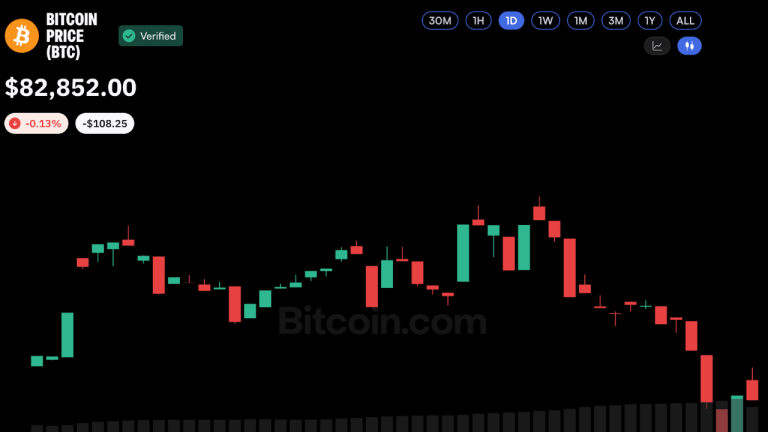
Bitcoin Price Defies $681M ETF Outflow as Oil Trades Above $100
Bitcoin is holding above $80,000 even as Brent crude trades above $100 amid renewed Middle East tensions. The resilience is notabl...

Bitcoin’s rebound approaches the $85,000 zone where past buyers may sell
Bitcoin and Ethereum extended their weekend recovery, although on-chain indicators and derivatives positioning suggest the rebound...
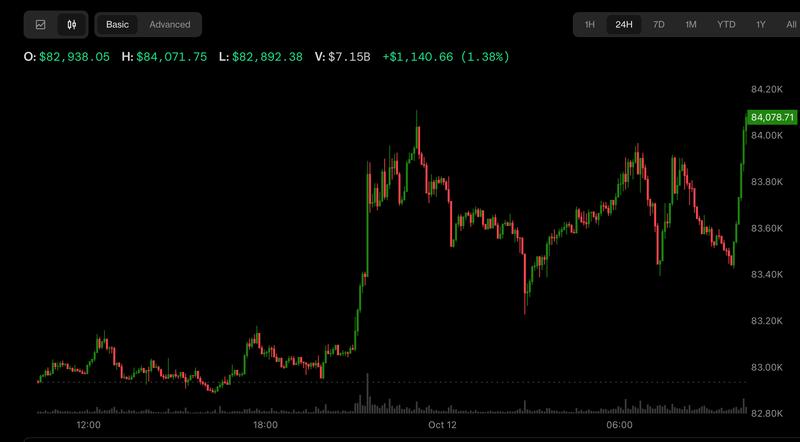
Bitcoin shrugs off ETF outflows to trade above $84,000 as oil falls
Bitcoin is holding on to its weekend gains as oil trades lower. ETFs lost over $600 million in outflows last week.

XRP Price Slid as Bitwise Drives $11 Million ETF Inflows
U.S. spot XRP ETFs drew $11.31 million in net inflows between October 5 and October 9, even as XRP fell from about $1.52 to $1.40...

Meta AI Predicts This Huge Catalyst Could Lead to $40 XRP
Mark Zuckerberg’s Meta AI predicts an insanely wild bullish price target for XRP by January 1, 2027. The AI bot believes $25–$40 i...