New Bitcoin upgrade catches hidden key leaks hiding the exact fix
Bitcoin improvement proposal BIP461 could make a hidden route for leaking wallet secrets easier to detect. The draft defines a common signing procedure for ECDSA, an existing Bitcoin signature scheme. Independent complia...
Archive context
Older archive item. Useful for background and entity history, but not a fresh market-moving signal.
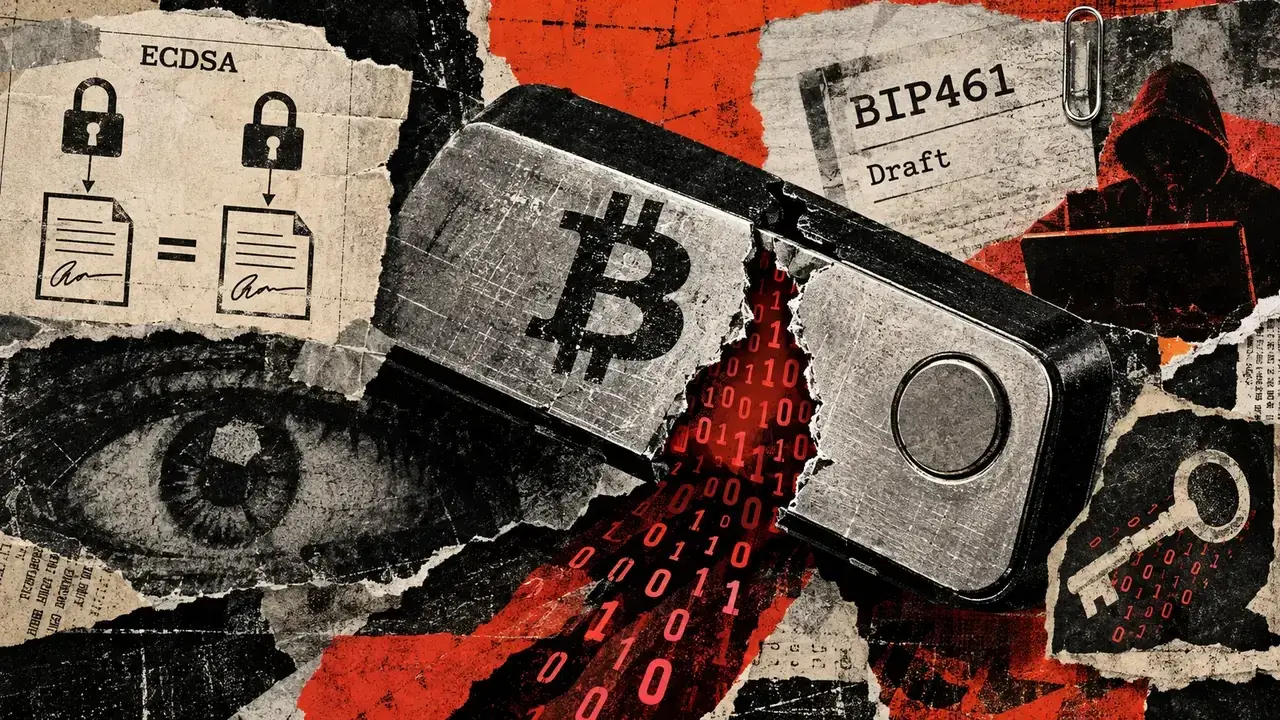
Bitcoin improvement proposal BIP461 could make a hidden route for leaking wallet secrets easier to detect. The draft defines a common signing procedure for ECDSA, an existing Bitcoin signature scheme.
Independent compliant signers should produce identical signatures for the same secret key and message hash, creating a benchmark for detecting departures that could conceal key leakage.
Authored by Liam Gilligan, the proposal was merged into the BIPs repository on Sept. 16 and remains marked Draft. Its signatures work under existing Bitcoin consensus rules, so implementing this signing procedure requires no consensus change.
Comparing signatures for deviationsECDSA allows a signer choices while creating a valid signature, including the nonce, a temporary value used in signing. Malicious firmware can exploit that freedom to hide key material in signatures that still pass verification, and BIP461 fixes those choices through a specified deterministic procedure.
Bitcoin’s acceptance of a signature cannot establish that its creation kept the key safe. A common specification supplies an expected output against which the signer’s behavior can be checked.
The comparison requires identical inputs and the exact same standard, including access to the secret key on another independent signer. That extra exposure is a practical cost of reproducing the signature. Different results for the same key and message hash show that at least one signer is not following BIP461.
An honest implementation using another valid ECDSA procedure can also disagree. A mismatch warrants investigation into compliance, but its cause remains unresolved. The comparison alone cannot identify a malicious device or demonstrate theft.
Related Reading No dice? Your Bitcoin hardware wallet is probably not as secure as you thought it wasThe prescribed algorithm also keeps signatures to at most 70 bytes in the standard DER encoding, excluding Bitcoin’s one-byte sighash flag.
The Dark Skippy disclosure pointed out that corrupted firmware can embed seed material in transaction signatures. In their original disclosure, the researchers said they had not seen the technique in the wild.
Dark Skippy’s original demonstration uses Schnorr signing, while BIP461 specifies ECDSA. Taproot uses the separate BIP340 Schnorr scheme, so this draft does not directly standardize a remedy for that demonstration.
The researchers’ mitigation discussion warned that a malicious signer could leak only on a selected transaction, so a device could produce compliant signatures in a test and leak on another transaction.
BIP461 compares two ECDSA signers; a mismatch flags deviation, while a match confirms only that single sample.At the September merge, a reviewer said test vectors and a reference implementation were needed for BIP461 to advance to Complete.
For wallet users, its potential value is a shared benchmark that could make deviations visible. Delivering that value still depends on compliant implementations and comparisons that account for both detection limits and the risks of handling secrets.
The post New Bitcoin upgrade catches hidden key leaks hiding the exact fix appeared first on CryptoSlate.
Why this matters
Bitcoin is a tracked market entity in the DigitalMoneyBox archive, making this useful context for readers monitoring repeated mentions and follow-up coverage.
Original source
Read on CryptoSlateRelated market context

Bitcoin hardware wallet hacks force a rethink of self-custody
The hacks highlight vulnerabilities in hardware wallets, prompting a shift towards multisignature setups and regulated custody ser...

Fhenix Goes Live on Ethereum and Arbitrum, Letting Contracts Compute on Hidden Balances
On Ethereum, a wallet’s holdings are public by default: anyone with the address can see what it owns, what it trades and when. Fhe...
Starknet Foundation Launches Bramble Wallet With STRK20 Shielding
The Chrome-only wallet combines private balances, Ledger signing and multisig accounts, with a recovery phrase for backup.... Read...
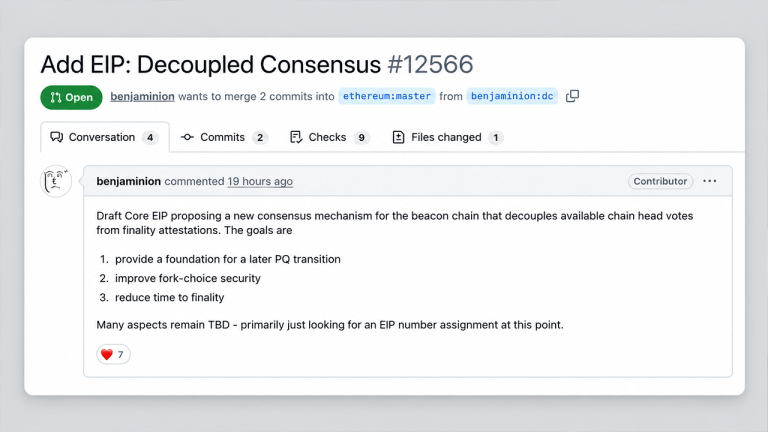
Ethereum Draft Targets Faster Finality and Future Quantum Defense
Ethereum researchers want to slash transaction finality from roughly 16 minutes to 4 minutes, potentially cutting the capital tied...

Arkham CEO on $1 Billion of U.S. Government Bitcoin Moved to “Unknown” Wallet
📺 Watch VideoBitcoin Magazine Arkham CEO on $1 Billion of U.S. Government Bitcoin Moved to “Unknown” Wallet A US government-linke...
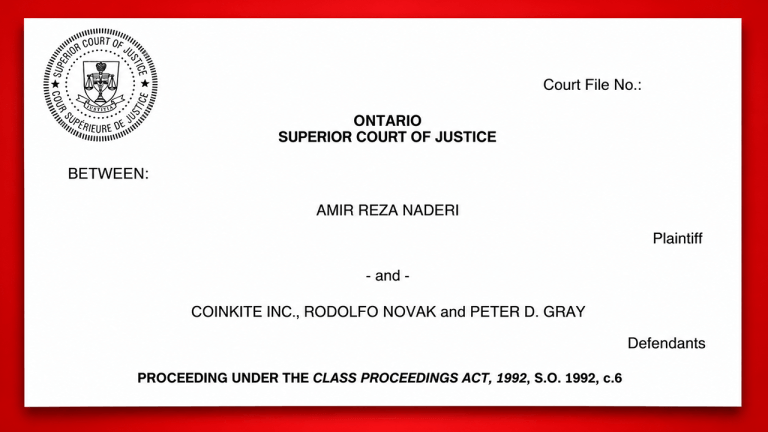
Coinkite Sued After Coldcard Wallet Flaw Exposes $140M in Bitcoin
A five-year-old security flaw in Coldcard hardware wallets has landed manufacturer Coinkite a lawsuit after attackers allegedly dr...