New Hampshire Becomes First U.S. State to Approve Strategic Bitcoin Reserve Law
Key Takeaways: New Hampshire passes a historic bill allowing up to 5% of state funds to be invested in crypto. Bitcoin is currently the only digital asset that meets the law’s $500B market cap requirement. The move posit...
Archive context
Older archive item. Useful for background and entity history, but not a fresh market-moving signal.
Key Takeaways:
- New Hampshire passes a historic bill allowing up to 5% of state funds to be invested in crypto.
- Bitcoin is currently the only digital asset that meets the law’s $500B market cap requirement.
- The move positions New Hampshire ahead of states like Arizona and Florida in crypto adoption.
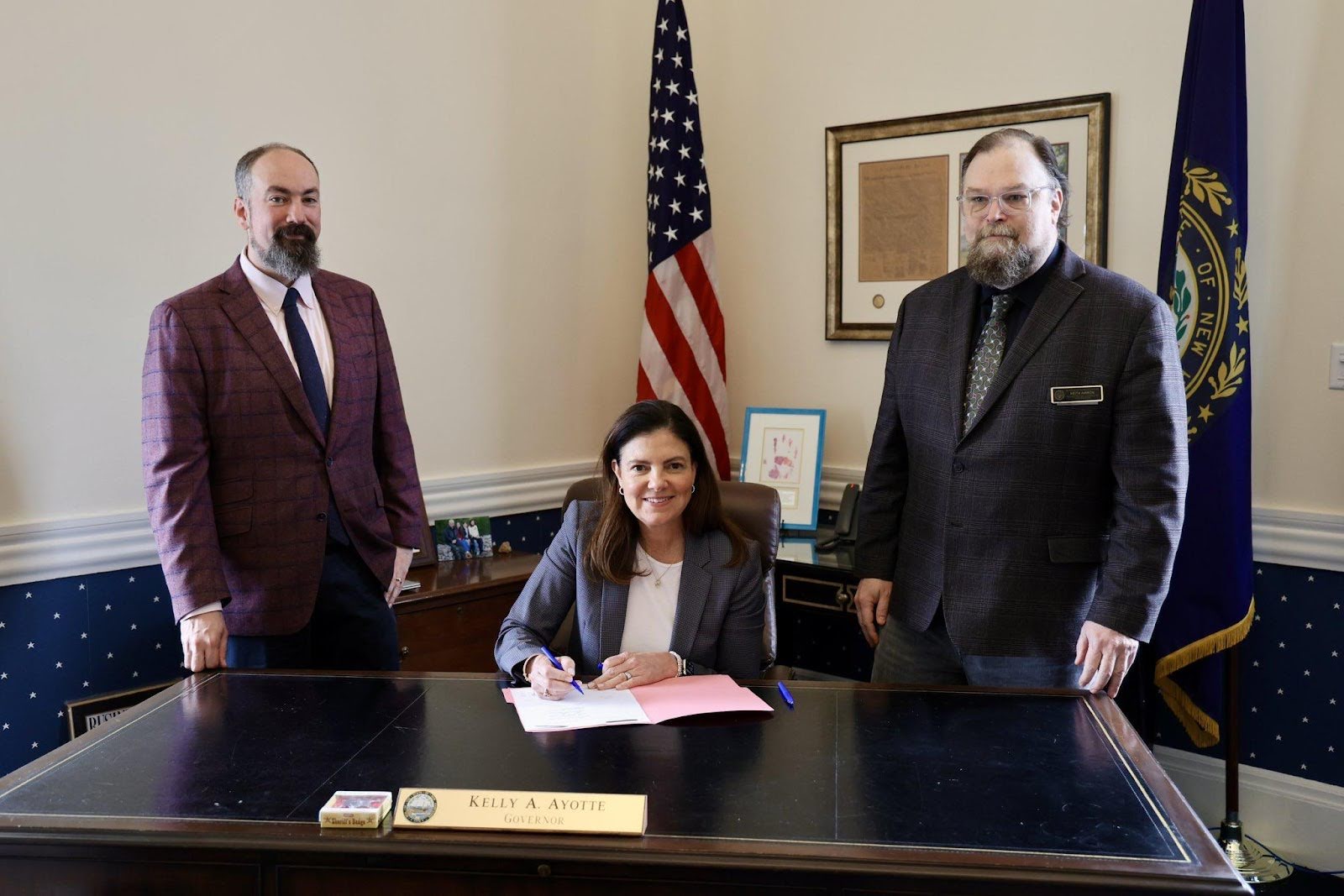
New Hampshire has taken the national lead by becoming the first state to authorize cryptocurrency investments for its public funds. Signed into law by Governor Kelly Ayotte, the new policy marks a critical step toward mainstreaming Bitcoin in public finance and diversifying state reserves.
Read More: Arizona Moves Closer to Crypto Milestone with Bitcoin Reserve Bills Approved by House
A Landmark Move in State-Level Crypto LegislationNew Hampshire’s newly signed bill allows the state to invest up to 5% of available public funds in cryptocurrency and precious metals. For crypto specifically, only assets with a market capitalization of at least $500 billion are eligible—currently, this includes only Bitcoin.
This makes New Hampshire the first U.S. state to legally approve a strategic crypto reserve. While other states have explored similar legislation, most failed to pass key hurdles. Arizona, for example, advanced a comparable bill earlier this year but saw it vetoed. Florida and others have withdrawn their proposals, unable to gather sufficient momentum.
By contrast, New Hampshire’s swift action positions the state as a policy leader in digital assets. According to Governor Ayotte, “New Hampshire is once again first in the Nation.” The governor shared the news on X (formerly Twitter), celebrating the state’s pioneering move.
Why Bitcoin? Eligibility Criteria and Reserve Goals Strict Criteria Limit Options to Bitcoin—For NowUnder the new law, any digital asset eligible for state investment must have a minimum market cap of $500 billion. This requirement sharply narrows the field and currently limits the state’s options to Bitcoin alone.
This policy aims to reduce risk and prevent exposure to low-liquidity or volatile tokens. Given its liquidity, legal clarity, and institutional acceptance, Bitcoin is a reasonable choice for such a conservative investing approach.
The law simply limits the allocation to 5% of state-held public funds; it does not specify the precise amount to be invested. This gives the state treasurer discretion over the timing and scale of purchases while maintaining a strict risk ceiling.
Read More: Florida Takes Bold Step to Add Bitcoin to State Treasury Reserve
Political and Industry Support for the Crypto ReserveIndustry players have also backed the initiative. Founder of the Satoshi Action Fund, Dennis Porter, was instrumental in pushing the measure and commended New Hampshire for being a “trailblazer” in public-sector cryptocurrency adoption. He thinks that other states will now be more likely to follow New Hampshire’s example.
“The first one’s the hardest, by far,” said Porter. “Having a state that’s already gotten it done, it’ll really increase the political momentum.”
Momentum Grows as Federal Action LagsWhile states like North Carolina are still considering similar measures, New Hampshire’s success could help accelerate legislation elsewhere. The strategic reserve idea is gaining national attention, even as federal progress remains limited.
Former President Donald Trump previously called for the U.S. to establish its own bitcoin reserve. However, the Treasury Department has yet to take concrete action on this front. Meanwhile, states are stepping into the gap, taking control of digital asset policy independently.
New Hampshire’s law sends a clear message: states don’t need to wait for federal approval to explore crypto-based diversification. With U.S. inflation remaining a concern and Bitcoin’s long-term value proposition gaining credibility, such strategies could gain popularity in other statehouses.
Looking Ahead: Will Other States Follow?While New Hampshire leads the way, it’s not alone in considering crypto reserves. North Carolina, bolstered by legislative champions, remains a serious contender. Lawmakers across several states are watching closely to see how New Hampshire implements its new authority.
If successful, New Hampshire’s experiment could set the tone for broader state-level adoption of crypto reserve strategies. For now, it holds the title of “first in the nation”—and the rest may not be far behind.
The post New Hampshire Becomes First U.S. State to Approve Strategic Bitcoin Reserve Law appeared first on CryptoNinjas.
Why this matters
This bitcoin story adds another data point to the current market tape and is useful when read alongside nearby source coverage.
Original source
Read on CryptoNinjasRelated market context

Grayscale Opens 3 Crypto Funds on Republic With $2,500 Minimum for Eligible Investors
Key Takeaways: Grayscale has introduced three crypto-investment products to Republic. A minimum investment of $2,500 is required f...

Circle Says 59 Cents of Each Revenue Dollar Went to USDC Partners and Transaction Costs
Circle said it paid about $819 million of its roughly $1.4 billion in first-half 2026 revenue to USDC distribution partners and tr...

US Hoovers up Bitcoin While the World Runs on Its Digital Dollars: Report
Bitcoin Magazine US Hoovers up Bitcoin While the World Runs on Its Digital Dollars: Report America is accumulating bitcoin while e...

MEXC Releases October 2026 Proof of Reserves, Reinforcing User Trust Through Verifiable Transparency
Mutsamudu, Comoros, October 16, 2026 – MEXC, a pioneer in 0-fee digital asset trading, has released its October 2026 Proof of Rese...

MEXC AI Trading Report Reveals 85% of Crypto Traders Use AI, But Most Limit Its Control Over Funds
Mutsamudu, Comoros, October 16, 2026 — MEXC, a global cryptocurrency exchange, released its AI Trading Report, based on a survey o...

Strive to sell another $130M of SATS stock to buy more bitcoin
Bitcoin treasury firm Strive wants another $130 million on top of a previously announced $500 million IPO to buy more BTC and grow...