No Fed Rate Cuts? No Worries For Bitcoin, Says Research Firm
As the US economy grapples with rising inflation expectations and scaled-back forecasts for Federal Reserve rate cuts, the Bitcoin market remains buoyant, according to a detailed analysis by Reflexivity Research. With th...
Archive context
Older archive item. Useful for background and entity history, but not a fresh market-moving signal.
As the US economy grapples with rising inflation expectations and scaled-back forecasts for Federal Reserve rate cuts, the Bitcoin market remains buoyant, according to a detailed analysis by Reflexivity Research. With the US CPI headline inflation projected to accelerate to 4.8% by the November 2024 elections, according to Bank of America, conditions are seemingly unfavorable for a loosening of monetary policy. Despite this, the cryptocurrency sector, particularly Bitcoin, appears insulated and optimistic.
Bitcoin Unfazed By Delayed Rate Cuts?The bond market now anticipates only three Federal Reserve rate cuts this year, a significant reduction from the earlier forecast of six. The CME FedWatch tool indicates that the majority of market participants do not expect a rate cut to occur before the mid-September FOMC meeting. This adjustment reflects a recalibration of expectations regarding the Fed’s capacity to manage persistent inflation pressures.
Amidst these macroeconomic shifts, Ritik Goyal, in a guest post for Reflexivity Research, presents a compelling analysis in his report titled “The Fed is Unable to Cause a Recession. Risk Assets are Yet to Realize This.”
The report argues that, contrary to conventional wisdom, the Federal Reserve’s rate hikes have had unintended stimulative effects on the economy. Goyal elucidates three specific mechanisms through which this phenomenon operates:
1. Increased Government Interest Payments: “Rate hikes raised interest payments by the government to the private sector,” Goyal notes. As the Fed raises rates, it increases the interest burden on the government, which has borrowed extensively during the post-COVID period. With the federal debt-to-GDP ratio exceeding 120%, the doubled interest payments now effectively act as a stimulus, channeling approximately $1 trillion annually to the private sector
2. Direct Subsidy to Banking System: The Fed’s policy adjustments have also led to a redistribution of wealth within the financial system. “Rate hikes raised the Fed’s direct subsidy to the banking system,” states Goyal. This has occurred as the yield curve inversion resulted in the Fed incurring losses on its balance sheet, losses that directly benefit the banking sector, translating to an estimated $150 billion annual subsidy.
3. Induced Housing Construction Boom: The rate hikes have paradoxically stimulated the housing market. “Rate hikes induced a housing construction boom,” according to Goyal. As higher rates discourage existing homeowners from selling, the only viable option to meet housing demand is new construction, a sector with one of the highest GDP multipliers.
Goyal’s insights underline a critical misalignment in the Fed’s current approach against the backdrop of substantial fiscal interventions since the pandemic. “The traditional monetary policy framework is breaking down under the weight of fiscal dominance,” Goyal concludes, suggesting an environment that could favor non-traditional assets like Bitcoin.
Echoing Goyal’s findings, crypto expert Will Clemente highlighted the broader implications for cryptocurrencies on X (formerly Twitter), stating, “With debt/GDP as high as it is, we’re in a backwards world where high rates mean interest payments on debt are stimmy checks for people that buy assets—~$1T will be paid out in 2024. Big picture is very constructive for the internet coins.”
At press time, BTC traded at $61,173.
Why this matters
This bitcoin story adds another data point to the current market tape and is useful when read alongside nearby source coverage.
Original source
Read on NewsBTCRelated market context

KB Kookmin Card and SBI Holdings separately explore AI identity checks and crypto payments
AI-driven identity checks and crypto payments could revolutionize cross-border transactions, reducing costs and enhancing financia...

Strategy Smash Buys $21.5M in Bitcoin as It Continues BTC Accumulation
Bitcoin Magazine Strategy Smash Buys $21.5M in Bitcoin as It Continues BTC Accumulation Bitcoin juggernaut Strategy has bought mor...

Aave’s USDG rollover plan has a yield below most quoted borrowing rates
Aave’s proposed USDG rollover would let borrowers carry their stablecoin debt into a new fixed-yield USDG position, but the replac...

Strategy Spends $192 Million Buying Back Its Preferred Stock, Nearly Nine Times Its Bitcoin Buy
Strategy directed most of its spending last week toward its own preferred stock rather than bitcoin. The company announced on Mond...

Bitcoin Extends Slide — Can ‘Uptober’ 2026 Beat Last Year’s?
Bitcoin Magazine Bitcoin Extends Slide — Can ‘Uptober’ 2026 Beat Last Year’s? Bitcoin’s price dipped further on Monday, sliding 2%...
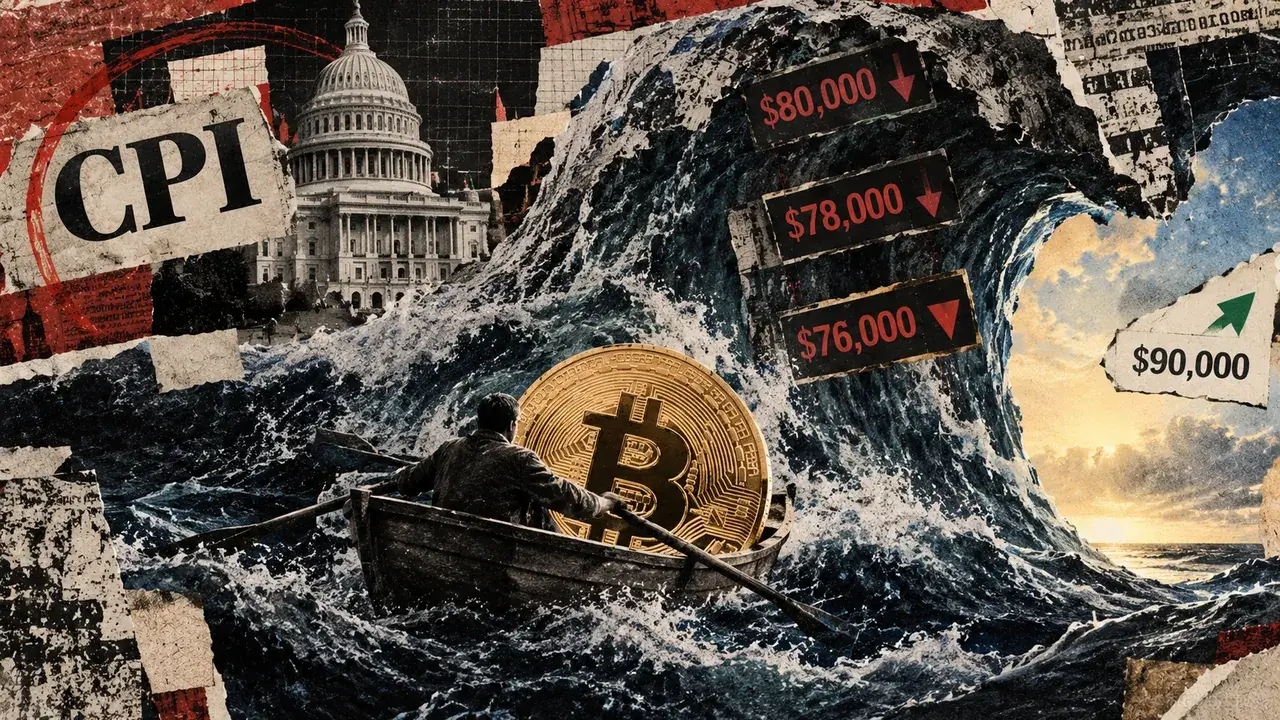
Bitcoin options price a quiet CPI week while shorts cluster at $76,000–$80,000
Bitcoin options expiring Friday carry substantial put exposure below the market price, while short-term volatility pricing has fal...