Panelists at Senate Banking Hearing on Crypto Market Structure Call for Regulation ASAP
Bitcoin Magazine Panelists at Senate Banking Hearing on Crypto Market Structure Call for Regulation ASAP Today, the U.S. Senate Banking’s Subcommittee on Digital Assets hosted a hearing entitled “Exploring Bipartisan Leg...
Archive context
Older archive item. Useful for background and entity history, but not a fresh market-moving signal.
Bitcoin Magazine
Panelists at Senate Banking Hearing on Crypto Market Structure Call for Regulation ASAP
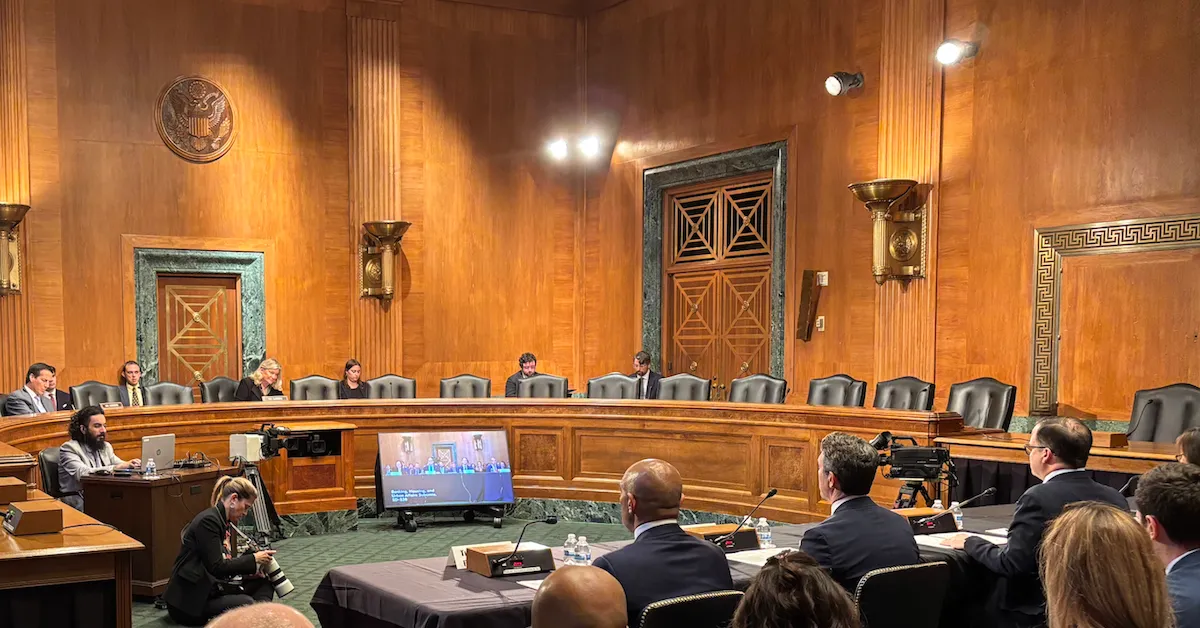
Today, the U.S. Senate Banking’s Subcommittee on Digital Assets hosted a hearing entitled “Exploring Bipartisan Legislative Framework for Digital Assets Market Structure” in which the panelists implored Congress to pass digital asset legislation soon.
(Spoiler alert: The word “Bitcoin” didn’t come up once in the hearing. With that said, Bitcoin would be subject to some of the crypto regulation discussed in the hearing. Hence, it’s important as a Bitcoin enthusiast to understand what was said.)
The hearing took place in the wake of Senators Cynthia Lummis (R-WY), Thom Tillis (R-NC), Bill Hagerty (R-TN) and Senate Banking Chairman Tim Scott (R-SC) issuing principles for digital asset market structure this morning. (See the full list of principles here.)
Senator Lummis presided over the event and initiated it by touching on some of the aforementioned principles, while also facetiously adding that now that the Senate has voted on the GENIUS Act, the U.S. is in the process of joining the 21st century financially.
The senator was joined by Senators Bill Hagerty (R-TN), Bernie Moreno (R-OH), Angela Alsobrooks (D-MD), Dave McCormack (R-PA), and the panel of witnesses including:
- Sarah Hammer, Executive Director at the University of Pennsylvania Wharton School
- Greg Xethalis, General Counsel at Multicoin Capital and Board Member of the Blockchain Association and the DeFi Education Fund
- Ryan VanGrack, Vice President of Legal at Coinbase
- The Honorable Rostin Behnam, Distinguished Fellow at the Psaros Center for Financial Markets & Policy, Georgetown University, and Former Chairman of the U.S. Commodity Futures Trading Commission (CFTC).
In the first round of questions from Senator Lummis, both Behnam and Hammer stressed the importance of combatting illicit activity involving digital assets via clear anti-money laundering and anti-terrorist financing rules, though neither went into detail on what this might look like.
When Senator Lummis asked Hammer what country the U.S. should take note of when it comes to its anti-terrorist financing regulation for crypto, Hammer cited Singapore.
Before getting off of the topic of combatting illicit crypto activity, Behnam claimed that the longer Congress waits to pass comprehensive market structure legislation, the more space it gives to unsavory actors to operate.
“Bad actors will gravitate toward areas that are unregulated,” said Behnam.
Consumer Protection for Crypto InvestorsSenator Hagerty, the primary sponsor of the GENIUS Act, which recently passed in the Senate, praised the bipartisan efforts in the legislative process around digital assets, alluding to the notion that he’d like to see his colleagues keep up the momentum.
And on the topic of bipartisanship, the one Democratic senator present at the hearing, Senator Alsobrooks, seemed optimistic about the potential of crypto but also concerned about setting up the proper guardrails for investors.
She asked Behnam which of consumer protection elements were essential for crypto investors.
Behnam cited “bankruptcy protection” as the most important element of consumer protection.
“Customer assets must be fully segregated so that there’s no question in the event of a bankruptcy that assets will be returned to customers,” said Behnam.
The Price of Failing to Legislate on Crypto in the U.S.Toward the latter part of the hearing, Senator Moreno asked the panelists how much time the U.S. has to pass crypto regulation as well as what the price of failing to do so might be.
Xethalis responded by saying “we have to act now,” before sharing what he felt were the two biggest potential costs of the U.S. not acting soon are.
He claimed that the first cost is that other jurisdictions may enact more onerous rules for crypto, which could cause friction if adopted globally. He cited Europe’s enacting strict rules for internet commerce decades back as precedent for this.
Xethalis then argued that the second cost is economic. He said that the United States is behind in both 5G development and silicon chip manufacturing and stressed that he doesn’t want to see the same happen with crypto.
A Call for BipartisanshipSenator Lummis closed the hearing by imploring her fellow senators as well as the panelists to engage in bipartisan discussions and to work across the aisle, as she has done with Senator Gillibrand.
She noted that it seems that some Democrats have been reluctant to engage in the legislative process around crypto because President Trump’s family is involved in the industry, adding that crypto is bigger than the president’s family’s involvement and that Democrats should acknowledge this.
This post Panelists at Senate Banking Hearing on Crypto Market Structure Call for Regulation ASAP first appeared on Bitcoin Magazine and is written by Frank Corva.
Why this matters
This bitcoin story adds another data point to the current market tape and is useful when read alongside nearby source coverage.
Original source
Read on Bitcoin MagazineRelated market context

CFTC Staff Let Futures Brokers Invest Customer Funds in Tokenized Assets, Keep Records Onchain
Futures brokers and clearinghouses regulated by the Commodity Futures Trading Commission can invest customer money in tokenized ve...

EU Banking Regulator Urges Crypto Lending Rules, Floats Leverage Caps and DeFi Certification
The European Banking Authority (EBA) recommended on Sept. 24 that the European Commission consider regulating crypto borrowing and...
Over a third of top 20 global banks now using Coinbase infrastructure
The integration of major banks with Coinbase could accelerate the mainstream adoption of digital assets, reshaping global financia...
Privy Expands TRON Support As Stablecoin Payment Infrastructure Grows
TL;DR Privy has expanded its TRON integration with new transaction, policy, transfer and monitoring tools for developers. The Stri...

Microsoft Copilot AI Predicts Bitcoin Will Do Something Incredible in Q4 2026
Microsoft Copilot AI predicts a wild move for BTC in Q4 2026, calling it one of the strongest asymmetric risk-reward positions ava...

TALIS launches onchain structured markets protocol for tokenized stocks on Robinhood Chain
TALIS's protocol on Robinhood Chain could democratize access to complex financial instruments, enhancing global participation in t...