Philippine Bank to Offer Bitcoin Trading: Report
The Union Bank of the Philippines reportedly plans to offer trading and custody of bitcoin and cryptocurrency.The Union Bank of the Philippines is planning to offer bitcoin and cryptocurrency trading and custody services...
Archive context
Older archive item. Useful for background and entity history, but not a fresh market-moving signal.

The Union Bank of the Philippines reportedly plans to offer trading and custody of bitcoin and cryptocurrency.
The Union Bank of the Philippines is planning to offer bitcoin and cryptocurrency trading and custody services to its customers, according to a Bloomberg report.
The move seeks to capitalize on the rampant adoption of such assets in the Asian nation, the report said, as the average investor in the country is expected to hold between 3% and 5% of their personal assets in cryptocurrency in five years. Currently, these figures are approximately 1% to 2%, Cathay Casas, head of the bank’s blockchain and application programming interface group, told Bloomberg.
Casas said the new offerings represent “a way to future-proof our banking business,” per the report. “We are making efforts to educate our clients also via social media, making sure that they are safe,” she added.
The Union Bank of the Philippines offers a wide range of financial services to corporate and consumer clients, including investment management, trust banking, insurance brokerage, currency brokerage, and private banking services. It was incorporated in 1968 and has over 3,000 employees.
The Union Bank of the Philippines’ custodial services for bitcoin and cryptocurrencies will also be capable of encompassing tokenized bonds, Casas told Bloomberg.
According to the report, the bank became the first Philippine bank to launch its own stablecoin in 2019 to provide “rural banks in its network easier access to remittances and payments.”
Despite the bank’s positive stance towards Bitcoin, the country’s central bank Governor Benjamin Diokno has, according to the report, cautioned that cryptocurrencies could “pose a danger to the financial system” as they are “very vulnerable” to illicit activities.
Any medium of exchange can be leveraged by criminals, and blaming the tool rather than the person using it is a fallacious argument. For instance, one of the largest cases of money laundering schemes uncovered to date involved U.S. dollars and the international bank HSBC. In contrast, bitcoin’s usage for illicit activities has been in decline.
Why this matters
This bitcoin story adds another data point to the current market tape and is useful when read alongside nearby source coverage.
Original source
Read on Bitcoin MagazineRelated market context
Czechia’s Partners Banka Adds Direct Bitcoin Trading
Czech Republic bank Banka has partnered with licensed cryptocurrency exchange Anycoin to offer direct bitcoin trading inside its m...

Kaiko report finds EUR fiat pairs dominate euro crypto trading volumes
The dominance of EUR fiat pairs in euro crypto trading highlights a preference for direct transactions, impacting stablecoin adopt...
Circle and Tether find common ground against MiCA’s bank reserve rules
Circle is urging the European Union to open its Markets in Crypto-Assets Regulation (MiCA) to foreign-regulated stablecoins and lo...
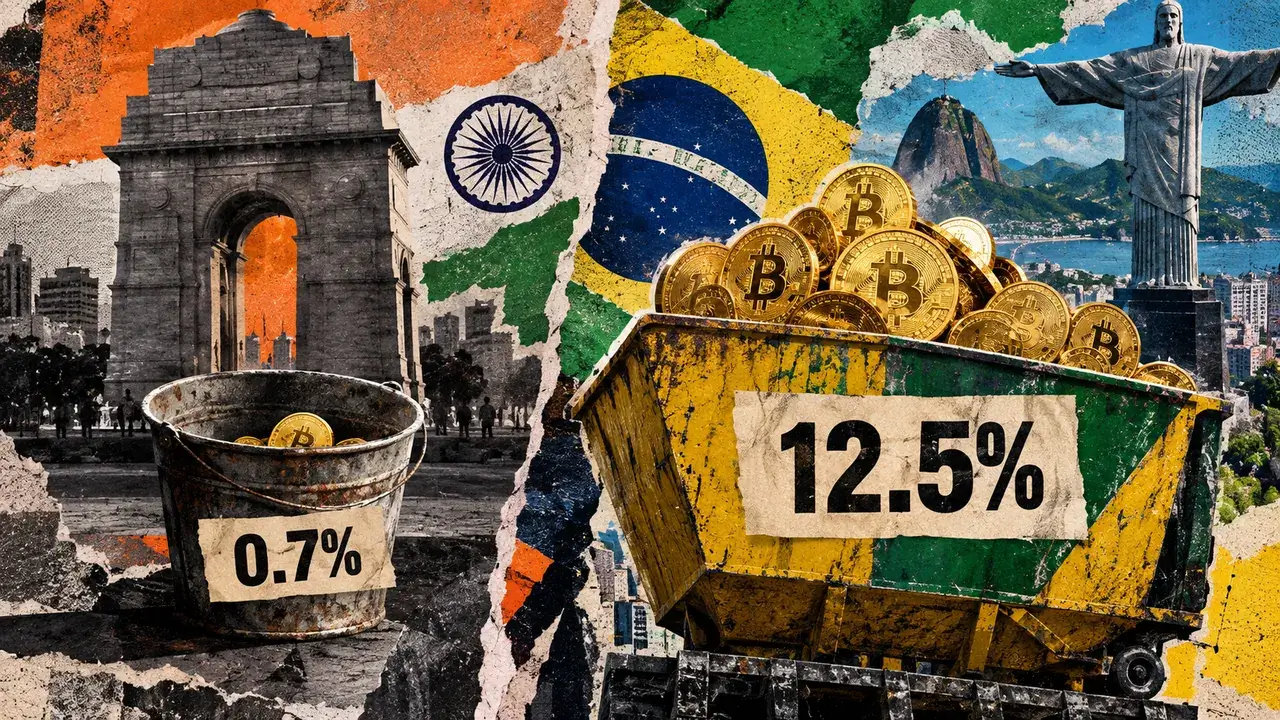
India’s local crypto exchanges get just 0.7% of inflows, Chainalysis reports
India’s crypto users send substantial value to centralized exchanges, but domestic platforms receive just 0.7% of exchange value i...
Strategy Reports Quarterly Profit on Bitcoin Rally
Bitcoin Magazine Strategy Reports Quarterly Profit on Bitcoin Rally Bitcoin treasury Strategy is back in the black after the risin...

FinCEN Withdraws Proposed Crypto Mixer and Unhosted Wallet Reporting Rules
The Financial Crimes Enforcement Network (FinCEN) is withdrawing two proposed crypto rules that would have required banks and othe...