Philippines Proposes Bold 10,000 Bitcoin National Reserve Strategy
A new bill filed in August 2025 could position the Southeast Asian nation alongside global leaders in sovereign digital asset holdings. Representative Miguel Luis Villafuerte from Camarines Sur introduced House Bill 421...
Archive context
Older archive item. Useful for background and entity history, but not a fresh market-moving signal.

A new bill filed in August 2025 could position the Southeast Asian nation alongside global leaders in sovereign digital asset holdings.
Representative Miguel Luis Villafuerte from Camarines Sur introduced House Bill 421 in the Philippine Congress in June 2025, though it gained major attention in late August. This “Strategic Bitcoin Reserve Act” directs the country’s central bank to buy 2,000 Bitcoin every year for five years, creating a massive 10,000 Bitcoin stockpile worth over $1.1 billion.
The Plan Behind the ReserveThe proposed reserve follows a careful, long-term approach. The Bangko Sentral ng Pilipinas (BSP), the Philippines’ central bank, would lock away these digital assets for at least 20 years. During this period, the government cannot sell, trade, or use the Bitcoin except in one specific case: paying down national debt.
The bill includes strict rules about selling. Even after the 20-year holding period ends, the government can only sell 10% of the reserve within any two-year span. This approach treats Bitcoin like gold reserves – as a long-term store of value rather than a trading asset.
Villafuerte called Bitcoin “digital gold” in his proposal, pointing to its 40% annual growth rate over the past five years. He argues that other countries are already moving into Bitcoin, and the Philippines cannot afford to fall behind.
How the System Would WorkThe proposed system includes multiple safety measures and oversight requirements. The BSP governor would work with the Department of Finance, Department of Defense, and Securities and Exchange Commission to manage the reserve.
The bill requires the central bank to publish quarterly reports showing exactly how much Bitcoin it holds. Independent auditors would verify these “proof-of-reserve” reports and make them public online. This transparency aims to build trust and prevent any misuse of the funds.
Source: congress
Storage would happen through secure “cold storage” facilities spread across different locations in the Philippines. This distributed approach reduces the risk of losing all the Bitcoin in a single security breach or natural disaster.
The legislation also protects ordinary citizens. It clearly states that the government will not interfere with private Bitcoin ownership or trading. Individuals and businesses can continue buying and selling cryptocurrency without government restrictions.
Global Context and CompetitionIf passed, this move would put the Philippines in elite company. Currently, 11 countries hold about 480,196 Bitcoin combined – roughly 2.29% of all Bitcoin in existence.
The United States leads with 198,022 Bitcoin (worth $22.9 billion), followed by China with 190,000 Bitcoin ($22 billion). The Philippines’ proposed 10,000 Bitcoin reserve would surpass El Salvador’s current holdings of 6,276 Bitcoin and nearly match Bhutan’s 10,565 Bitcoin.
El Salvador made headlines in 2021 by becoming the first country to make Bitcoin legal money. Despite mixed results with everyday Bitcoin use, the government continues buying more. Bhutan quietly built its Bitcoin stash through cryptocurrency mining powered by hydroelectric dams.
The timing aligns with global trends. President Trump has proposed a strategic Bitcoin reserve for the United States. Several American states, including Texas and Pennsylvania, are considering similar measures.
Economic MotivationsThe Philippines faces real economic challenges that drive this Bitcoin strategy. The country owes ₱16.09 trillion ($285 billion) in debt as of November 2024. About 68% of this debt is domestic, meaning it’s owed to Filipino citizens and institutions.
Traditional reserves like US dollars and gold may not provide enough protection against inflation and currency problems. Bitcoin’s fixed supply of 21 million coins makes it attractive as a hedge against currency devaluation.
The Philippines also processes huge amounts of international money transfers. Filipino workers abroad send home billions of dollars each year. Bitcoin could potentially make these transfers cheaper and faster, though the bill doesn’t specifically address this use case.
Challenges and Next StepsThe bill faces several hurdles before becoming law. It must pass through committee reviews and floor votes in both houses of Congress. Political opposition could emerge from lawmakers concerned about Bitcoin’s volatility or the risks of managing such a large digital asset reserve.
Critics worry about Bitcoin’s price swings. The cryptocurrency has experienced dramatic ups and downs throughout its history. A major price crash could leave the Philippines holding assets worth far less than the purchase price.
Cybersecurity presents another challenge. Government-held Bitcoin reserves become attractive targets for hackers. The proposed distributed storage system aims to reduce this risk, but no system is completely secure.
The bill also requires significant technical expertise from government officials who may lack experience with cryptocurrency custody and security. Training and hiring qualified personnel could prove costly and time-consuming.
Looking ForwardFor the global Bitcoin market, sovereign adoption by a major economy like the Philippines could drive increased institutional demand. This growing legitimacy might encourage more traditional investors to consider Bitcoin holdings.
The Philippines’ Strategic Bitcoin Reserve Act signals a shift in how governments view digital assets – not as speculative investments but as strategic tools for financial stability and economic sovereignty. Success could inspire other Southeast Asian countries to follow suit. Thailand, Malaysia, and Indonesia are already exploring various cryptocurrency initiatives.
Why this matters
This bitcoin story adds another data point to the current market tape and is useful when read alongside nearby source coverage.
Original source
Read on Brave New CoinRelated market context

Ondo, Securitize and BlackRock pitch OUSG for Sky’s $1 billion tokenization initiative
The collaboration could significantly enhance liquidity and diversification in tokenized assets, potentially reshaping financial e...

IBM Digital Asset Haven connects to Swift’s blockchain ledger for tokenized deposit transactions
The integration enhances blockchain interoperability, potentially accelerating the adoption of tokenized deposits in global bankin...
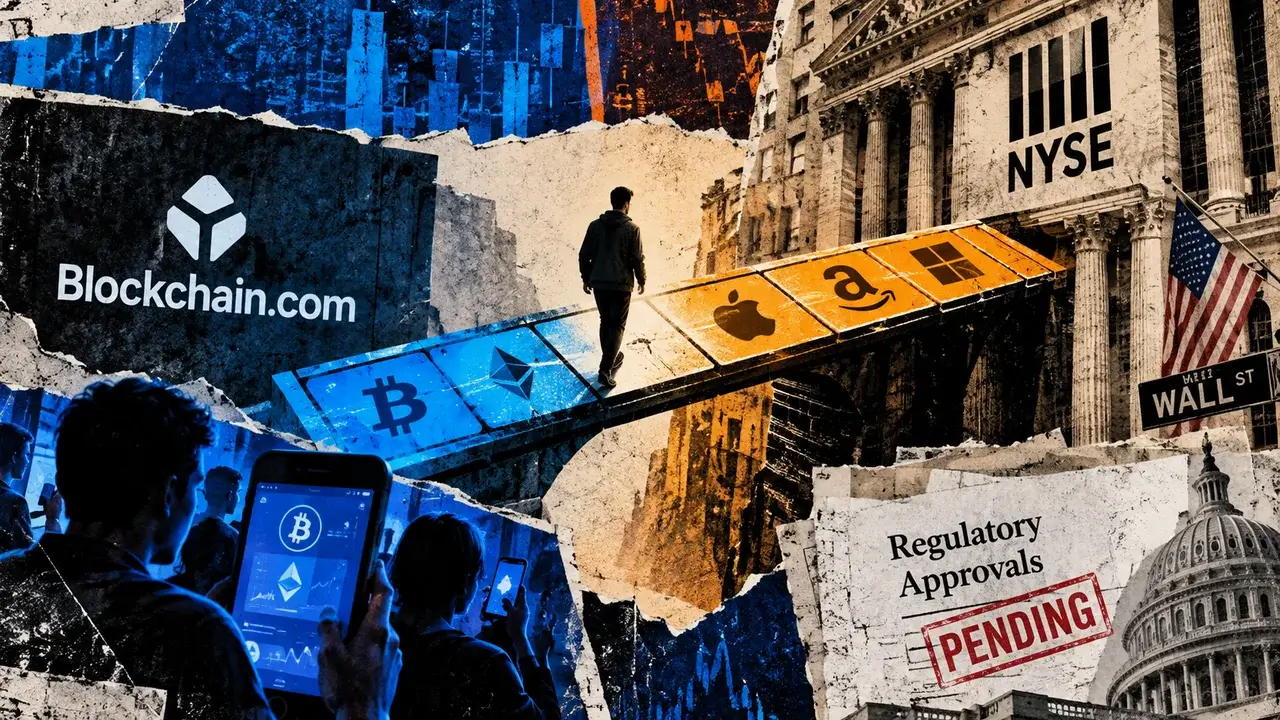
NYSE is assembling the pipes for a $5.5 trillion tokenized asset market
NYSE is adding Blockchain.com as a prospective gateway to its planned round-the-clock market for tokenized US stocks. Blockchain.c...
Bitcoin ETFs Erase 2026 Outflows With $4.6 Billion Rebound
U.S. spot bitcoin ETFs have erased their 2026 outflows after attracting roughly $4.6 billion since Aug. 19, helping push bitcoin a...
IBM connects Digital Asset Haven to Swift blockchain ledger for tokenized deposit transactions
IBM Digital Asset Haven clients can now connect to Swift's shared ledger and instruct tokenized deposit transactions.
Fed proposes reserve limits, capital standards for stablecoin issuers under GENIUS Act
The Federal Reserve proposed new measures for stablecoin issuers, including reserve-asset limits and standardized capital requirem...