President Trump’s Crypto Czar Hosts U.S.’s First Press Conference On Bitcoin And Digital Assets
In the first ever official press conference for digital assets hosted by the U.S. government, Crypto Czar David Sacks and pro-crypto U.S. politicians committed to prioritizing bitcoin and digital assets during the Trump...
Archive context
Older archive item. Useful for background and entity history, but not a fresh market-moving signal.
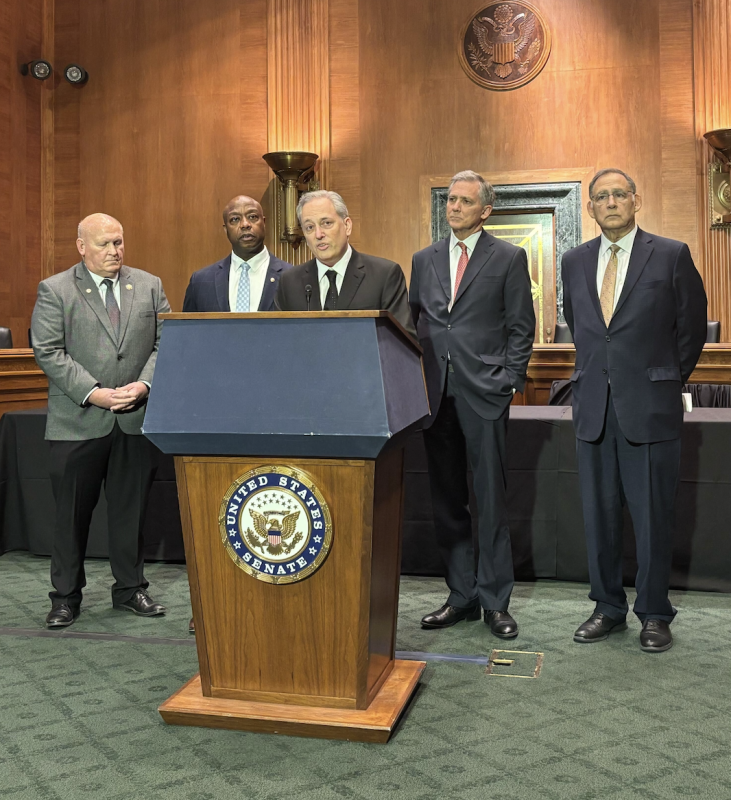
In the first ever official press conference for digital assets hosted by the U.S. government, Crypto Czar David Sacks and pro-crypto U.S. politicians committed to prioritizing bitcoin and digital assets during the Trump administration.
In his opening remarks, Sacks shared that “the President said in his executive order in the first week that it’s the policy of his administration to support the responsible growth and use of digital assets, blockchain technology and related technologies across all sectors of the economy.”
He also reminded the audience that in that executive order, the President established both a working group for digital assets as well as a mandate for the group.
“Our objective is to accomplish the task the President assigned for us in his EO, which is to propose a Federal regulatory framework governing the issuance and operation of digital assets, including stablecoins, in the United States,” said Sacks.
The "Golden Age" For The Bitcoin And Crypto Industry BeginsSacks also contextualized the significance of this new administration’s not being antagonistic to the Bitcoin and crypto industry, especially in light of what transpired under the Biden administration.
“I’ve talked to many founders over the last few years and they’ve told me repeatedly that the number one thing they need from Washington is regulatory clarity,” he said.
“They just want to know what the rules of the road are so they can abide by them. We’re coming off frankly four years of arbitrary prosecution and persecution of crypto companies where the SEC wouldn’t tell founders what the rules were and then they would prosecute them. Many founders even told me stories of being debanked personally just because they had founded a crypto company,” he added.
Before concluding his opening remarks, Sacks noted that he looks forward to working with the politicians hosting the conference alongside him — Senator Tim Scott (R-SC), Chairman of the Senate Banking Committee; Congressman French Hill (R-AR), Chairman of the House Financial Services Committee; Senator John Boozman (R-AR), Chairman of the Senate Agriculture Committee; and Congressman G.T. Thompson (R-PA), Chairman of the House Committee on Agriculture — in “creating a golden age for digital assets.”
Senator Scott began by stating that this “golden age has begun” and that “the good news is that it’s going to get better.”
He also noted that he plans to “work synergistically with the House and the Senate, with the White House leading the way” when it comes to passing bills on digital assets.
The U.S. At The Forefront Of Bitcoin And Crypto InnovationRep. Hill stressed that the United States should be leading the way, not falling behind when it comes to the digital asset industry.
“We don’t want to be behind in financial technology and digital assets in the United States, [and] our innovators need clarity,” said Rep. Hill. “They need to know what the rules of the road are.”
He also stated that he’s forming a working group between the House Financial Services Committee, the Senate Banking Committee, the House Agriculture Committee and the Senate Agriculture Committee to craft a clear regulatory framework.
Senator Boozman highlighted the fact that not all crypto assets are the same (without necessarily singling bitcoin out).
“Some assets are commodities, some are securities,” said Senator Boozman, who noted that different regulatory agencies should oversee different crypto assets accordingly.
Rep. Thompson walked the audience through the stages of the Internet, pointing out the fact that the internet today has become the “Internet of value.”
“America really was the leader when it came to Internet 1.0, and [with] Internet 2.0, again, it was America that led that for the world,” said Rep. Thompson. “Internet 3.0 is what we’re talking about today, and that’s the Internet of value — and we’re approaching it in a principled way.”
This “principled way” includes protecting consumers while still offering innovators in the Bitcoin and crypto industry space to foster innovation, according to Rep. Thompson.
“The opportunities [in crypto] are unimaginable,” said Rep. Thompson. “I know that [David Sacks] is laser focused on bringing certainty to digital asset markets.”
During a question and answer session, Senator Scott noted that bipartisan efforts are being made around crypto in the Senate.
“Cynthia Lummis (R-WY) and Kirsten Gillibrand are coming together for the market structure bill,” he said.
Comments On Anti-Money Laundering RegulationWhen asked about reconsidering Anti-Money Laundering (AML) laws as they pertain to crypto, Senator Scott said he’s open to it.
“I think that the broader conversation should not be about digital assets alone,” said Senator Scott. “It’s about bad actors doing bad things by any means necessary.”
Rep. Hill chimed in regarding AML regulations, stating that they should exist, much like they do in the analog financial space.
Educational EffortsRep. Thompson brought up the importance of educating those in the House and Senate about crypto assets, given that it’s still a relatively new subject.
“Member education is what our first goal is here,” he said.
Rep. Hill echoed his sentiment.
“A key element now is the education and technical assistance that can be provided to members both in the House and Senate,” he said.
Sacks also offered his thoughts on this topic.
“Part of what we’re here to do is provide resources on education,” he said, adding that some of the educators can be “luminaries in the industry.”
As Sacks spoke on this topic, he also differentiated between Bitcoin and all other crypto assets and networks.
“Crypto can be an esoteric subject, and it is good to explain it, to demystify it,” said Sacks. “You’ve got the cryptocurrency itself like bitcoin, [and then other assets that] run on blockchains, which are just distributed ledgers.”
The Strategic Bitcoin ReserveBefore the conference concluded, Sacks also addressed the prospect of the U.S. creating a Strategic Bitcoin Reserve.
“One of the things that the President instructed us to do was to evaluate the idea for a Bitcoin reserve,” said Sacks. “So, that is one of the first things we’re going to look at as part of the internal working group in the administration.”
Why this matters
This bitcoin story adds another data point to the current market tape and is useful when read alongside nearby source coverage.
Original source
Read on Bitcoin MagazineRelated market context
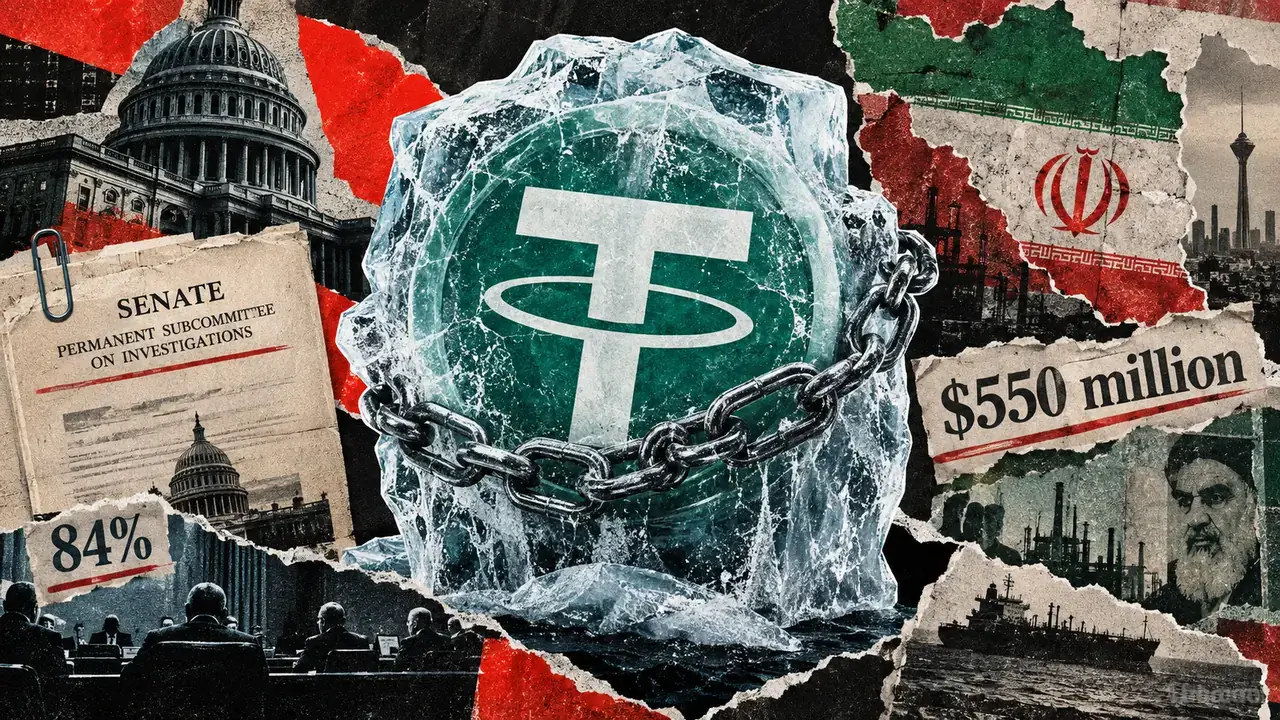
Tether claims $550 million in Iran freezes, but $35 million slipped past Senate
Tether says it helped freeze nearly $550 million in Iran-linked USDT during 2026, while Democratic investigators on a Senate subco...
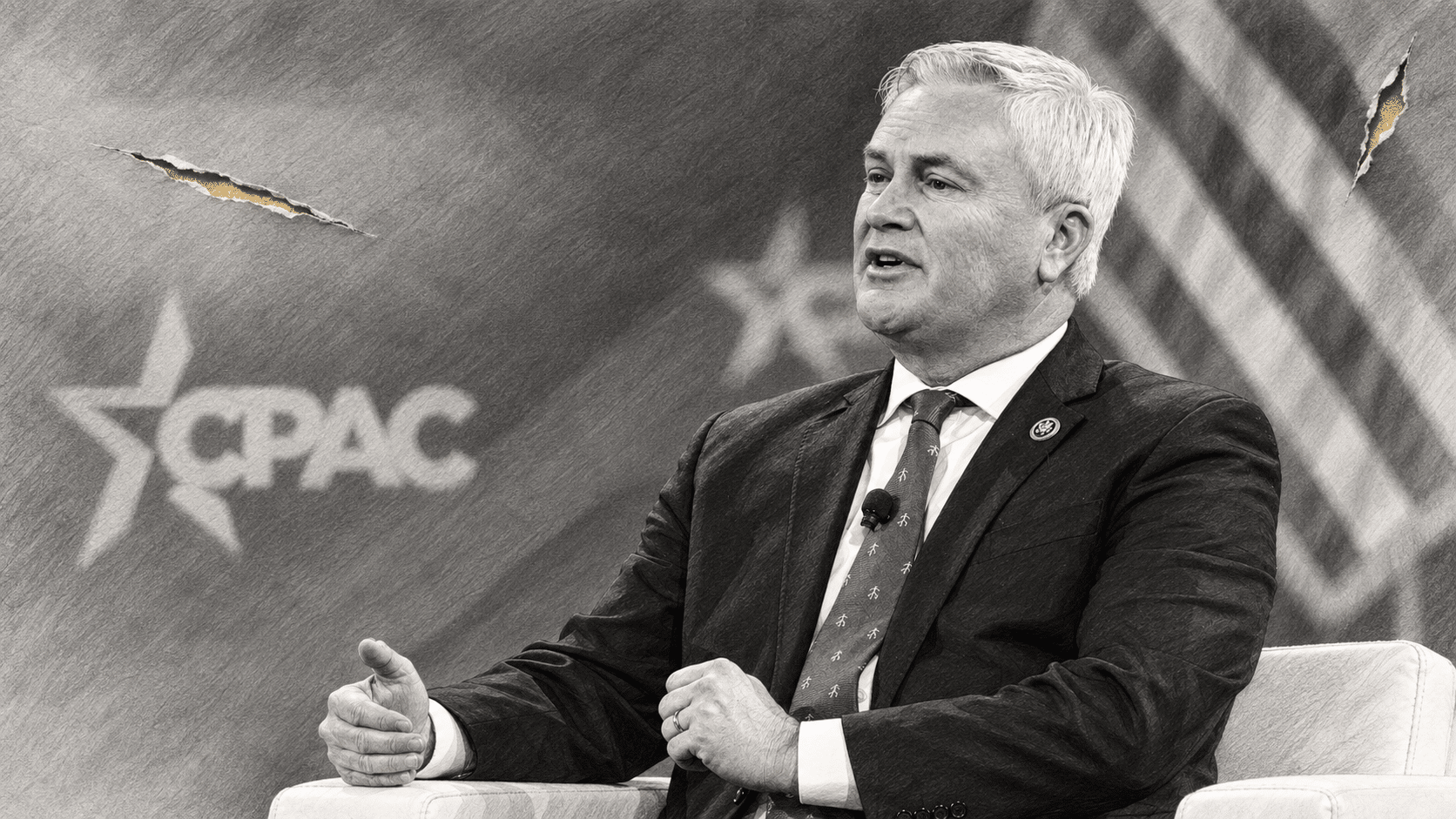
House Oversight Targets Hyperliquid, Crypto.com and PredictIt in Insider Trading Probe
House Oversight Committee Chairman James Comer (R-Ky.) widened his investigation into insider trading on prediction markets on Tue...

House Oversight Committee expands probe to Hyperliquid, Crypto.com
The expanded probe signals increased regulatory scrutiny, potentially reshaping compliance standards and market dynamics in the cr...

Coinbase Brings Derivatives Clearing In-House After CFTC Registration
The Commodity Futures Trading Commission, or CFTC, registered Coinbase Clearing LLC as a derivatives clearing organization last ni...

White House blames Democrats for Crypto Clarity Act’s Senate failure
The failure highlights deepening partisan divides, complicating future efforts for cohesive U.S. crypto regulation and market stab...
Morgan Stanley Has ‘Digital Asset Lab’ To Test Crypto Products: Report
Bitcoin Magazine Morgan Stanley Has ‘Digital Asset Lab’ To Test Crypto Products: Report Wall Street giant Morgan Stanley has launc...