Revolut Crypto Data Leak Exposes Bitcoin Records, Attackers Demand Payment to Stop More
Key Takeaways: Hackers have reportedly begun to share personal data on the affected customers and ask for money to prevent more leaks from Revolut. Information exposed can range from identity documents to verification se...
Watchlist
Archive context. The story has cross-source confirmation.

Key Takeaways:
- Hackers have reportedly begun to share personal data on the affected customers and ask for money to prevent more leaks from Revolut.
- Information exposed can range from identity documents to verification selfies, statements and Bitcoin transaction records.
- No individual accounts were impacted, said Revolut, and the systems and customer funds continue to be unaffected.
User Score
8.7
Follow us on Google NewsThreat actors are now threatening to release customer data shared on a fraudulent government information request, adding a fresh challenge to the calibration of Revolut. Crypto users may be interested in this incident as it could expose their detailed Bitcoin transaction records as well as personal and financial data.
Read More: Revolut Exposes Bitcoin Records, Passports After Fraudulent Government Email Attack
Attackers Begin Publishing Revolut Customer DataThe attackers have reportedly moved from demanding information to publishing data linked to Revolut customers online. International Cyber Digest said the group is threatening to release additional messages, customer files and internal information unless Revolut pays.
‼️ BREAKING: The threat actors who targeted Revolut with information-demand emails are now posting sensitive customer data, including that of high-profile clients such as tennis player Shevchenko and Römer, CEO of Gamdom/Skinscom.
They want Revolut to pay up. They say they’ll… pic.twitter.com/obuVOOABx7
— International Cyber Digest (@IntCyberDigest) September 13, 2026
Some of the reported material contains identity documents and verification selfies of high-profile customers. Rebecca has also been hit with accusations of a failure in the handling of private information by the attackers, and that they have moved sensitive data to a jurisdiction outside the scope of the UK and EU regulations.
The event doesn’t stem from any direct compromise of its main systems, according to Revolut. Rather, fraudulent requests for customer information have been reportedly made via a legitimate government agency email domain by an unauthorised party. The incident was labeled as a well-planned outside spoofing attack.
Read More: Revolut to Delist USDT by August amid Risk Concerns
Bitcoin Transaction Histories Among Exposed DataThe bit that is most important to the crypto users is the exposure of information of all what they are transacting.
The tampered files can contain Bitcoin transactions, account statements, IBANs, withdrawal dates and full payment history. Others that may be part of the compromised data are phone numbers and identification documents, addresses, and names, along with dates of birth.
This one combination makes it a different risk than a normal crypto exchange hack. No customer funds or private keys have ever been reported stolen, however, identification of a person with his/her Bitcoin transactions could reveal his or her financial information and may lead to targeted phishing or social engineering attacks.
Revolut Says Customer Funds Remain SafeRevolut said the number of those affected was small and it made individual contact with those affected. The company doesn’t say how many people were involved.
The fraudulent requests were caught by Revolut and their email address was blocked. The company also informed relevant government authority, law enforcement, data protection agency and financial regulators.
This is the latest in Revolut’s ongoing growth in the crypto industry and its digital-asset services. This further heightens the importance of protecting customer identity and details regarding a transaction.
Now they claim that there are preparations for further leaking of customer data in the future. So for Revolut users who have or are trading BTC, the most immediate concern is not the loss of their assets from the platform, but how precious personal data is being used which they are linked to in direct connection with their crypto operations.
The post Revolut Crypto Data Leak Exposes Bitcoin Records, Attackers Demand Payment to Stop More appeared first on CryptoNinjas.
Why this matters
Bitcoin is showing up inside the Security Incidents theme, so this story is worth tracking for follow-through rather than treating it as a one-off headline.
Original source
Read on CryptoNinjasRelated market context
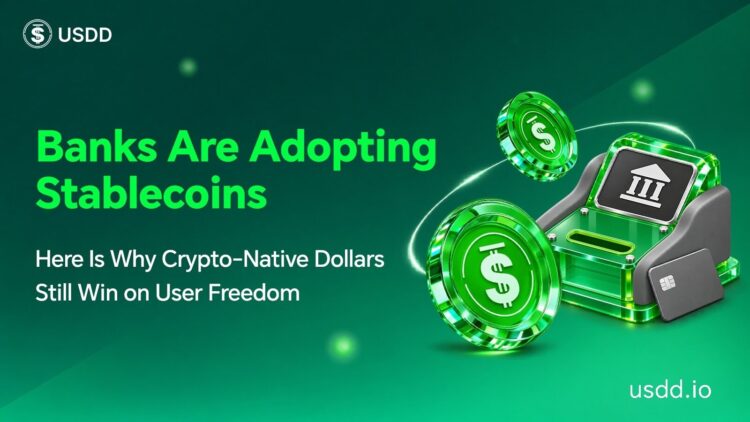
As traditional giants rush into digital dollars, USDD’s Yvonne Chia explains why 24/7 access, self-custody, and transparent yield give decentralized stablecoins an edge banks can’t replicate. 20 November – Road Town, Totorla, British Virgin Islands – Decentralized stablecoin protocol USDD is accelerating its multichain utility across TRON, Ethereum, and BNB Chain—combining automated sUSDD yield via its Smart Allocator with GasFree zero-TRX transfers—as traditional financial giants race to build competing stablecoin rails. In a recent industry interview with instant exchange partner ChangeNOW, USDD Head of Communications Yvonne Chia outlined why self-custody, 24/7 settlement, and transparent onchain reserves give decentralized digital dollars a structural advantage over bank-issued alternatives. 1. Permissionless Access vs. Gatekept Accounts For billions of people globally, opening and maintaining a traditional bank account still involves paperwork, minimum balance requirements, geographic restrictions, and approval delays. Even when banks integrate stablecoin rails behind the scenes, those services remain gated behind legacy compliance walls and intermediary control. Crypto-native stablecoins flip that model on its head. As Yvonne Chia highlighted during the interview: “Compare this to a stablecoin like USDD, where all you need is a phone, a working internet connection, you can immediately start a wallet and you have access to your funds right away.” With USDD, users can access and manage their digital dollars directly through their own wallets, without depending on traditional financial intermediaries. This represents a fundamental shift in financial access: users are no longer limited to the services, operating hours, or account structures of a single institution. Instead, they have the freedom to hold, manage, and transfer their assets on their own terms. Self-custody also gives users greater autonomy over their financial decisions. They can choose which wallets to use, where to transfer their assets, and which supported decentralized applications to interact with, without needing to route every transaction through a centralized financial institution. With USDD, users’ digital dollars can move with them across an open blockchain ecosystem, rather than remaining tied to a particular bank or service provider. 2. 24/7 Global Settlement vs. “Banking Hours” Legacy payment networks still operate on decades-old schedules: weekend cutoffs, bank holidays, and multi-day cross-border settlement delays accompanied by hefty wire fees. Blockchain networks never close. Whether it is a Sunday night or a public holiday, USDD moves globally without depending on traditional banking operating hours or settlement windows. “We are able to have transfers 24/7 and we’re not limited to any traditional banking hours. So I think that in some ways, stablecoins are not just becoming banks, but exceeding what traditional banks can offer to users.” To make everyday transfers even smoother than fintech apps, USDD introduced GasFree integration on TRON, allowing users on supported wallets to pay network fees directly in USDD without needing to hold TRX. This removes another practical barrier to stablecoin adoption: having to acquire and maintain a separate gas token just to transfer digital dollars. With GasFree, eligible users can pay approximately 0.5 USDD per transaction, compared with around 1.5 USDT for a standard USDT transfer under the referenced fee conditions. These improvements matter because the usefulness of a stablecoin is not determined by its peg alone. Low-cost transfers, straightforward wallet experiences, and around-the-clock availability are what make digital dollars practical for everyday payments and global value transfers. 3. Passing Yield Back to Users vs. Bank Spreads Perhaps the sharpest contrast between banks and decentralized stablecoins lies in how yield is distributed. In traditional banking, institutions take customer deposits, deploy them into yield-generating markets, and retain a significant portion of the returns. Everyday depositors may receive relatively low interest rates, while higher-yielding products often come with eligibility requirements, minimum deposits, or fixed maturity periods. Stablecoins introduce another way to participate in digital-dollar opportunities. Rather than keeping capital entirely within a traditional deposit account, users can access onchain yield opportunities through decentralized protocols and transparent investment mechanisms. USDD was built to return that value directly to holders. Through USDD Earn, users can deposit USDD to receive sUSDD, earning automated, competitive yield powered by our Smart Allocator system, with no fixed lock-up periods restricting access to their capital. For users, the distinction is important: USDD Earn provides access to a productive stablecoin while maintaining flexibility, rather than requiring users to commit their capital to a conventional fixed-term product. 4. Onchain Verification vs. Institutional Trust Traditional banks ask customers to trust closed-door balance sheets and periodic regulatory filings—until a crisis proves otherwise. USDD takes a different approach through its “Don’t trust, verify” ethos, emphasizing publicly accessible onchain information and independent verification. Onchain Transparency: Smart contract addresses, collateral reserves, and Smart Allocator deployments are publicly viewable, allowing users to examine relevant information directly on the blockchain. Structured Disclosures: Quarterly Treasury Reports provide additional information about reserve positions, financial performance, and operational developments. Independent Security Reviews: USDD undergoes third-party security audits to assess its smart contracts and identify potential vulnerabilities. Transparency does not eliminate financial or technical risks, but it changes how users can evaluate them. Instead of relying exclusively on an institution’s assurances, users have access to information that can be independently examined and verified. 5. Beyond a Single Network: An Open, Multichain Financial Ecosystem Financial freedom is not just about holding digital dollars. It is also about being able to use them wherever opportunities and applications exist. A stablecoin confined to a single network or limited use case cannot fully realize the potential of open blockchain finance. Following its January 2025 protocol upgrade, USDD expanded natively from TRON onto Ethereum and BNB Chain, extending its reach across multiple blockchain ecosystems. This multichain presence allows USDD to connect with different communities, liquidity environments, and decentralized applications. Its sUSDD product has also expanded into DeFi integrations, including Pendle and Morpho, giving users additional ways to access yield strategies across supported ecosystems. The bigger picture is an interconnected financial ecosystem in which users can move between holding, transferring, exchanging, and deploying their stablecoins according to their own needs. These are not isolated functions. Together, they make stablecoins more useful as everyday financial infrastructure. The Future: Interconnected, Open, and Multichain Banks will undoubtedly continue using stablecoin rails to modernize their back-end settlement. However, true financial freedom comes from open networks where assets flow freely across protocols without intermediaries. For USDD, the opportunity goes beyond offering a dollar-pegged asset. It is about making digital dollars accessible, transferable, and productive across an interconnected financial ecosystem. From self-custody and 24/7 transfers to flexible yield opportunities and multichain DeFi access, these capabilities give users more ways to put their money to work. Banks may be bringing stablecoins into traditional finance. Crypto-native protocols are showing what stablecoins can make possible beyond it.
As traditional giants rush into digital dollars, USDD’s Yvonne Chia explains why 24/7 access, self-custody, and transparent yield...
Tether Fires Back After S&P Keeps USDT at Weakest Stability Score Over Reserve Risks
Key Takeaways: USDT retains the lowest rating, 5, on S&P Global Ratings’ “Weak” side of the stability scale for stablecoins. S&P r...

Ledger CTO Charles Guillemet Exits After Nine Years, Warns AI Is Changing Crypto Security
Key Takeaways: Charles Guillemet, CTO will be exiting the company at the end of 2026. He contributed to the development of Ledger...

Tether Burns 4 Billion USDT From Ethereum Treasury
The tokens came from Tether’s own inventory. The burn alone does not establish a fresh $4 billion drop in circulating USDT across...

S&P Global Maintains Lowest Stability Score for Tether’s USDT
S&P Global Ratings has maintained its lowest stability score of 5 for Tether’s USDT, warning that growing exposure to volatile ass...

Researchers Publish Security Analysis of Bitcoin’s Post-Quantum SHRINCS Proposal
Bitcoin Magazine Researchers Publish Security Analysis of Bitcoin’s Post-Quantum SHRINCS Proposal Several researchers have publish...