Russia Paid Teenage Spies in Bitcoin, Blockchain Forensics Reveal
Russian intelligence agencies are increasingly relying on Bitcoin to fund covert operations across Europe, including the recruitment of teenagers as spies. Key Takeaways: Russian intelligence is using Bitcoin to fund cov...
Archive context
Older archive item. Useful for background and entity history, but not a fresh market-moving signal.

Russian intelligence agencies are increasingly relying on Bitcoin to fund covert operations across Europe, including the recruitment of teenagers as spies.
Key Takeaways:
- Russian intelligence is using Bitcoin to fund covert operations, including the recruitment of teenage spies.
- Blockchain forensics traced espionage payments to wallets linked to the FSB, showing structured laundering patterns.
- This case is part of a broader trend, with crypto also used to finance propaganda and sabotage across Europe.
A Reuters investigation, conducted with blockchain forensics firms Global Ledger and Recoveris, has revealed how the Russian Federal Security Service (FSB) used crypto to finance espionage.
One case involved Canadian national Laken Pavan, who was just 17 when he was recruited by the FSB after traveling to Donetsk to join pro-Russian forces.
Teen Spy Case Reveals Russia’s Use of Coercion and Crypto PaymentsAfter several days in detention, Pavan was coerced into spying for Russia and assigned a handler known as Slon, Russian for “elephant.”
His instructions included traveling across Europe to collect intelligence, with payments sent in Bitcoin.
After receiving just over $500 in BTC while in Copenhagen, Pavan fled to Poland, where he turned himself in on May 22, 2024. He was later sentenced to 20 months in prison by Polish authorities.
The payment Pavan received was traced to two intermediary wallets by blockchain analysts, which had received significant funds from a larger wallet created in June 2022.
That wallet has since processed more than $600 million in Bitcoin, including transactions routed through Garantex, a sanctioned Russian crypto exchange.
JUST IN: Russia's central bank showcases #Bitcoin as the most profitable investment over the past year pic.twitter.com/y9MB4vyGAD
— Bitcoin Magazine (@BitcoinMagazine) May 15, 2025Global Ledger’s analysis found that the wallets linked to Pavan’s payments operated exclusively during Moscow business hours, pointing to a highly structured laundering network.
“Transactions from wallets linked to the FSB followed a structured laundering pattern, involving fund splitting, mixing with larger sums, and routing through unconnected deposit wallets,” Global Ledger said in its report.
The case is not isolated. According to Marcin Zarakowski, CEO of Recoveris, Russian intelligence has used Bitcoin to fund multiple covert operations.
“This method has been uncovered on multiple occasions,” he said, citing a 2023 case involving young Belarusians and Ukrainians who were paid in crypto by the GRU to install surveillance devices and spread propaganda in Poland. Some were even paid in BTC to commit acts of arson.
161 Bitcoin Wallets Tied to Russia’s FSB Show Patterned ActivityRecoveris has also identified a network of 161 Bitcoin addresses linked to the FSB, with hundreds of transactions occurring within 6 a.m. to 6 p.m. Moscow time.
Russia’s reliance on crypto extends to mercenary funding in Donbas and payments to European politicians for disseminating pro-Kremlin narratives.
As reported, Russia is exploring ways to use cryptocurrencies to settle grain export payments, as the country looks to bypass Western sanctions and modernize its trade infrastructure.
More recently, Russia’s central bank announced that it is allowing qualified investors limited access to crypto-linked financial products.
Under the new guidance, banks and financial firms can offer derivatives and securities tied to cryptocurrency prices, though these products must be non-deliverable and settled in fiat.
The post Russia Paid Teenage Spies in Bitcoin, Blockchain Forensics Reveal appeared first on Cryptonews.
Why this matters
This bitcoin story adds another data point to the current market tape and is useful when read alongside nearby source coverage.
Original source
Read on CryptonewsRelated market context

North Korean Hackers Linked to $388M Bitget Crypto Exchange Theft: CEO
Bitcoin Magazine North Korean Hackers Linked to $388M Bitget Crypto Exchange Theft: CEO Hackers from North Korea targeted crypto e...

Strategy’s daily dividend proposal puts Bitcoin funding back in investors’ hands
The @saylor account said Friday that Strategy wants to pay dividends daily on four of the preferred shares it uses in its Bitcoin...

Nearly $352M Moved From Crypto Exchange Bitget Wallets in Suspected Hack
Bitcoin Magazine Nearly $352M Moved From Crypto Exchange Bitget Wallets in Suspected Hack An estimated $351.6 million in crypto ha...

Bitget’s Hot and Cold Wallets Hit in Suspected Hack Worth More Than $180 Million
Crypto exchange Bitget appears to have suffered a major, still ongoing, wallet breach on Thursday afternoon. A newly created addre...

Crypto Investors Can Now Buy Into Cathie Wood’s Fund Holding SpaceX, OpenAI and Kalshi
Cathie Wood’s ARK Invest and tokenization firm Securitize announced on Sept. 24 that they have tokenized the ARK Venture Fund (ARK...
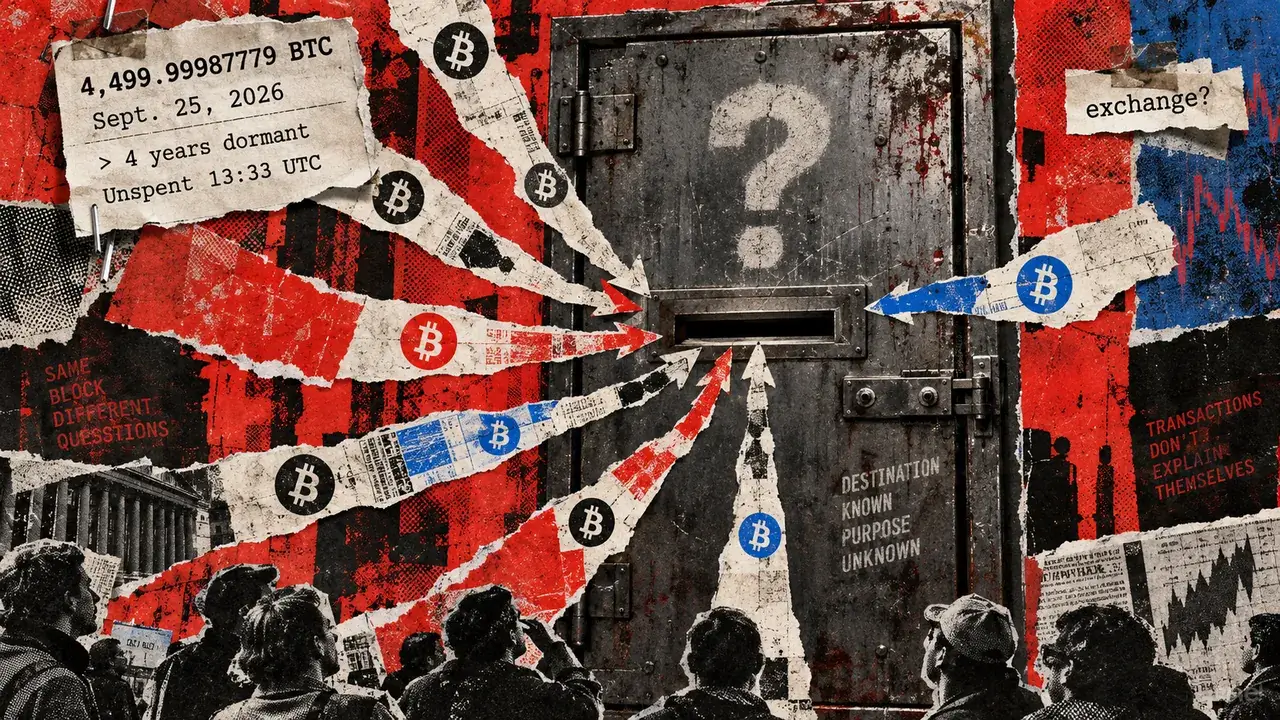
Dormant whale moves $380M Bitcoin, leaving the sale question unanswered
A Bitcoin address sent 4,499.99987779 BTC to a single destination in a transaction confirmed at 02:30:04 UTC on Sept. 25, 2026. Th...