So You Have KYC Bitcoin — Now What?
What is KYC bitcoin, and what steps can users concerned with privacy take to address the issues presented by KYC bitcoin?If you have spent time going down the rabbit hole of bitcoin or bought bitcoin from an exchange, th...
Archive context
Older archive item. Useful for background and entity history, but not a fresh market-moving signal.

What is KYC bitcoin, and what steps can users concerned with privacy take to address the issues presented by KYC bitcoin?
If you have spent time going down the rabbit hole of bitcoin or bought bitcoin from an exchange, then you have come across the term KYC (Know Your Customer). You’ve also most likely participated in the process by handing over a ton of personal information to said exchange in order to purchase bitcoin. After your purchase you are holding what others call
“KYC bitcoin.”
What does that even mean? It means that your identity is now tied to the purchase of that bitcoin and the associated wallet address of where that bitcon resides as a UTXO (unspent transaction output).
Is KYC Bitcoin Really Bad?If you place a high priority on privacy and freedom, then the short answer is yes. KYC bitcoin is a major piece of identifying data that can be used to track your transactions. Many believe that KYC goes against everything a Bitcoin maximalist believes in. The average user of bitcoin often knows no different. I will get into personal preferences and tools later on for those who wish to know more later on. This is not meant to be a guide for privacy, but to inform people of tools that I have used that can hopefully help them regain some privacy.
Performing a simple on-chain transaction of sending bitcoin from address to another is recorded on the Bitcoin public blockchain. If you have never done so or are curious, then I suggest looking at a Bitcoin block explorer, such as mempool.space, where you can input bitcoin wallet addresses and see their transaction history. In addition to this public information, having gone through KYC with an exchange allows transaction information to be recorded by the exchange. They can attach that transaction to your ID and location, and they will know how much bitcoin was bought and how much was sent to another wallet address. As stated earlier, many feel this is not an issue, but I feel it's important for both new and existing Bitcoin users to be aware of the information being shared with KYC exchanges.
So How Much Of Your Bitcoin Should Be No-KYC?There is no perfect formula, like 50/50 or 60/40. This goes back to your needs and everyday usage of bitcoin. If you already have KYC bitcoin, it's up to you to determine if you want to keep it or sell it and try to acquire non-KYC bitcoin. It is unwise to try and make already KYC’d bitcoin hidden or otherwise private. If you’re looking to acquire non-KYC bitcoin, then the best idea would be to sell any KYC bitcoin and then use tools like the ones listed below to try and maintain privacy best practices.
As a personal preference, I lean more on the non-KYC bitcoin privacy side — I don't believe any entity or governing body should know how or what I spend my bitcoin on. That isn't to say I don't have any KYC bitcoin — but I understand the risk I’m taking. It's easy enough for me to buy bitcoin from an exchange rather than going through some additional hoops for privacy, such as those required to buy from Bisq, a peer-to-peer exchange. — but when I am interested in privacy I consider such services.
Another tool that I use to take back my privacy is RaspiBlitz, a Bitcoin and Lightning node. You can build this device at home running off a Raspberry Pi. The service I use with it is JoinMarket which utilizes CoinJoin. I use Electrum (another service in the Raspiblitz suite) to be able to create a new wallet with loads of new addresses, so when coinjoined transactions are complete, I can send them to many addresses and not reuse addresses. This helps to reduce the deterministic hierarchy of my UTXO history, something that many chain-analysis companies use to track bitcoin transactions. This is not meant to be a technical guide, but by using the two tools mentioned, I can create new and destroy old wallets as needed while continuing to send bitcoin to my choosing. Now this isn't a foolproof method. If I go and deposit bitcoin back onto my exchange (or any place I KYC with) because I want fiat, then essentially all the work I did can be undone. Why? Because reusing a bitcoin address is the fastest way to reconnect all the points in between. So, if you do end up using JoinMarket and Electrum, your ultimate end goal is to keep post-coinjoined KYC bitcoin away from addresses and places where you have to KYC. Keep your stacks separate.
In the end, like everything else between privacy and freedom, Bitcoin falls into a conundrum as well. There is no perfect solution for each Bitcoin user, but one should familiarize themselves with how block explorers work, privacy tools, such as JoinMarket, and how much information you are required to give up with performing a KYC. There is space for both kyc and non-kyc bitcoin as well, just find your balance and know to keep each separate.
This is a guest post by Anthony Feliciano. Opinions expressed are entirely their own and do not necessarily reflect those of BTC Inc or Bitcoin Magazine.
Why this matters
This bitcoin story adds another data point to the current market tape and is useful when read alongside nearby source coverage.
Original source
Read on Bitcoin MagazineRelated market context
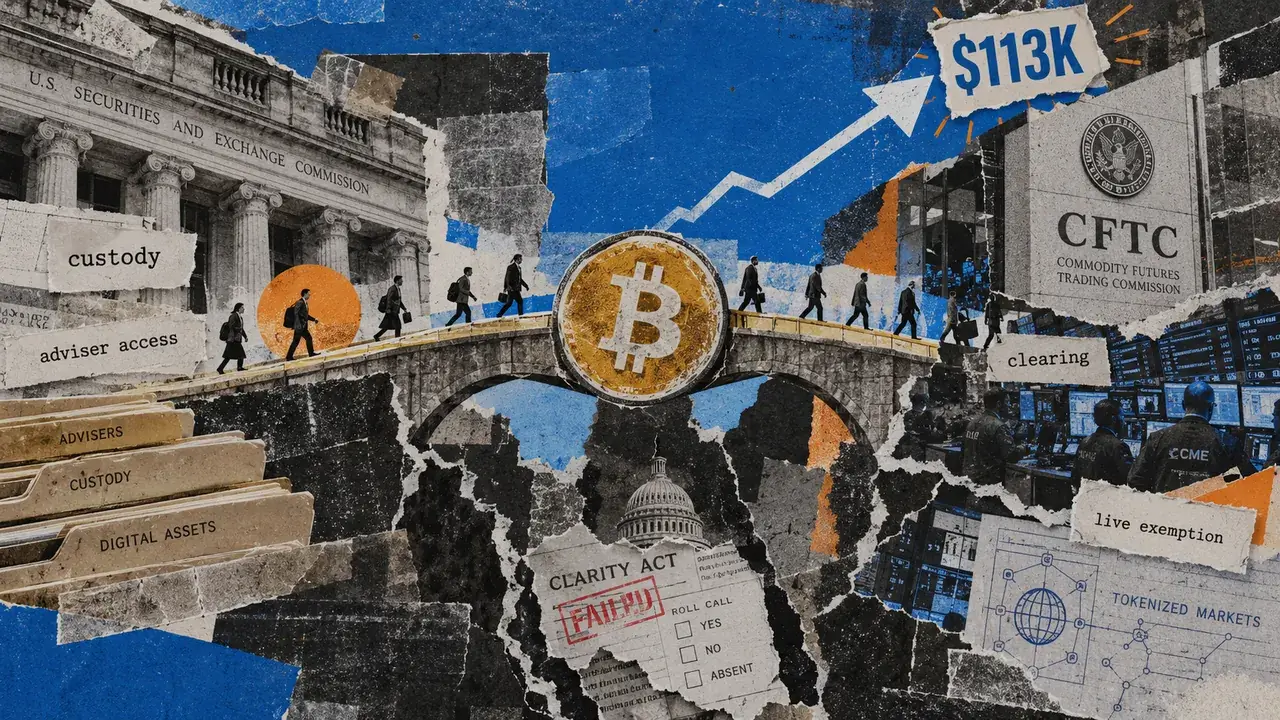
Bitcoin’s $113,000 case strengthens as US regulators push 9 crypto actions
The US Securities and Exchange Commission (SEC) proposed a custody framework on Oct. 1 that would let investment advisers and regu...

Ethereum Foundation Launches Privacy Tool That Cuts the Link Between AI Prompts and Payers
The Ethereum Foundation has launched zkAPI, a system for paying for AI models and other metered online services without that usage...

Following the Bitget Hack: BitOK Traces 87.8 BTC as Stolen Funds Reach Mixers
Research and reporting by Alexander Manev, BitOK. Reporting and adaptation by Brave New Coin. Investigators following the Bitget h...

Dormant Ethereum wallets stir on September 30 as exchange balances hold steady
Dormant Ethereum activity suggests potential market shifts, yet stable exchange balances indicate no immediate sell-off pressure o...

Solana Perps Exchange Drift Opens Recovery Token Claims for Users Who Lost Over $290 Million
The Drift Foundation opened claims and redemptions on Thursday for DFX, a Solana token issued to users of the perpetuals exchange...
Ethereum Layer 2 Blast Is Shutting Down, Saying Costs Now Exceed What the Chain Earns
Blast, the Ethereum layer 2 network created by Blur founder Tieshun “Pacman” Roquerre, is shutting down, its team announced on X o...