Study Finds Blackmail Leads in $20 Billion Bitcoin Scams
The cryptocurrency world is not without its pitfalls. While only a small fraction of crypto transactions are linked to illicit activities, the impact on individual investors can be devastating. A new study by Coin Kickof...
Archive context
Older archive item. Useful for background and entity history, but not a fresh market-moving signal.

The cryptocurrency world is not without its pitfalls. While only a small fraction of crypto transactions are linked to illicit activities, the impact on individual investors can be devastating. A new study by Coin Kickoff sheds light on the most common types of Bitcoin scams, showing that blackmail leads the pack. The average value of BTC received by scammers in the first half of 2023 reached a whopping average of $1.66 million.
Crypto Numbers Tell a Story
In 2022, a mere 0.24% of all cryptocurrency transactions were associated with illegal activities. Although this percentage decreased from 1.9% in 2019, it still represents a significant figure of $20.1 billion. The study also highlighted that the number of reported scammers has nearly halved from 23,799 in 2021 to 12,354 in 2022. During the last quarter, the hackers' activity also fell. However, the financial impact remains high, with Bitcoin scammers receiving an average of $1,664,899 in the first half of 2023 alone.
The most common scams that can empty your crypto wallet are blackmail, sextortion, and ransomware. Blackmail scams often involve threats to release personal data or embarrassing photos unless a crypto payment is made. Sextortion scams prey on younger victims, tricking them into sharing explicit content and then demanding payment. Ransomware attacks lock up the victim's data and demand cryptocurrency for its release.
You can find the rest of the article below the infographic:
"Do your homework," suggests Dr Marc Tomljanovich from Lombardo College of Business, quoted in the study. "I strongly suggest that investors step away from social media to get these information sources, and only come back once they feel well informed."
The types of scams evolve over time. While blackmail has been the most reported scam since 2018, ransomware scams are currently leading the pack in 2023. Investment scams have also seen a decline as people become more aware of the risks involved. However, giveaway scams have gained traction, often involving scammers posing as celebrities to lure in victims.
The Financial Impact of Crypto Scams
The total value received by Bitcoin scammers peaked at $55.04 billion in 2021. This peak may have been influenced by the boom in decentralized finance transactions and related crimes. However, there has been a decline in investment scams as law enforcement begins to catch up with advancements in crypto technology.
Another report published by Comparitech at the end of August showed that investors lost over $20 billion due to rug pulls, financial pyramids, and other cryptocurrency scams.
You can find the rest of the article below the infographic:
While the percentage of cryptocurrency transactions linked to scams may seem small, the financial and emotional toll on individual victims is significant. Awareness and caution are the first steps in protecting yourself from becoming another statistic in the growing list of crypto scam victims.
"Crypto scams are an expensive and sometimes life-ruining nuisance that largely depends on the foibles of human nature, be it the willingness to click an enticing link on social media or to trust an 'investor' who you never hear back from," the authors of the report concluded.
We don't have to look far for examples of such individuals. Finance Magnates recently reported on a crypto kingpin sentenced to over a decade in prison after running a $100 million Ponzi scheme for years. His activities had a detrimental impact on the savings of thousands of individual investors.
Coin Kickoff analyzed 251,806 abuse reports sourced from chainabuse.com. These reports were associated with 87,722 unique blockchain addresses. After eliminating redundant reports submitted by the same user about identical scams linked to the same blockchain address, the study focused on 232,455 unique abuse reports spanning from 2018 to June 2023.
This article was written by Damian Chmiel at www.financemagnates.com.Why this matters
This bitcoin story adds another data point to the current market tape and is useful when read alongside nearby source coverage.
Original source
Read on Finance MagnatesRelated market context
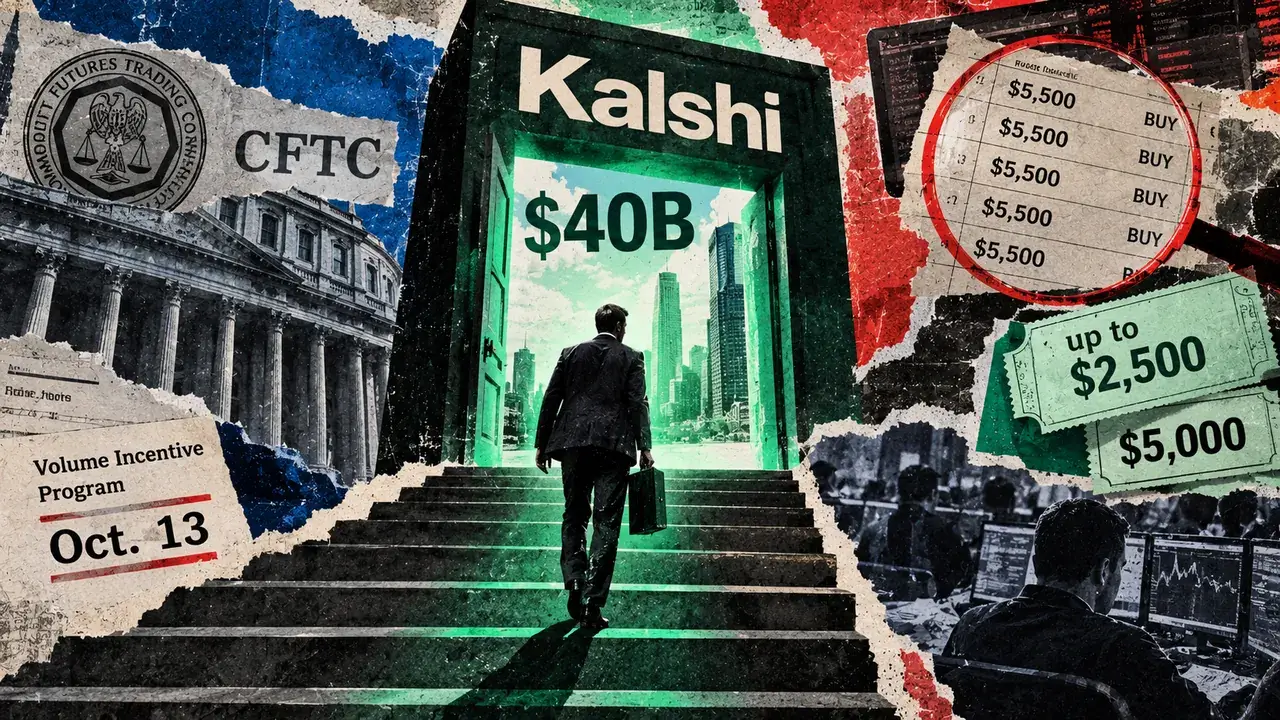
Kalshi’s $40 billion growth story hits tough questions about its trading volume
Kalshi is ending a trader-volume incentive program nearly a year early as scrutiny of activity in its crypto markets intensifies....

Stablecoin cards enter ‘hyper growth’ mode as monthly spending hits record $1.17 billion
Stablecoin card spending is accelerating to record levels, but the payment rail remains a fraction of the traditional card market....

ESMA and National Regulators Scrutinize Binance’s Reliance on ‘Reverse Solicitation’ Exemption in the EU, FT Reports
The European Securities and Markets Authority (ESMA) and national regulators in France, Germany and Greece are questioning Binance...

Uphold Adds XRP, Bitcoin Inheritance, Citing $331 Billion Stranded
Passing cryptocurrency to an heir requires both legal ownership and a way to authorize transactions. A new service addresses that...

Binance Research projects tokenized equities could hit $349 billion by 2030
The projected growth of tokenized equities could significantly transform financial markets, emphasizing the importance of asset ut...
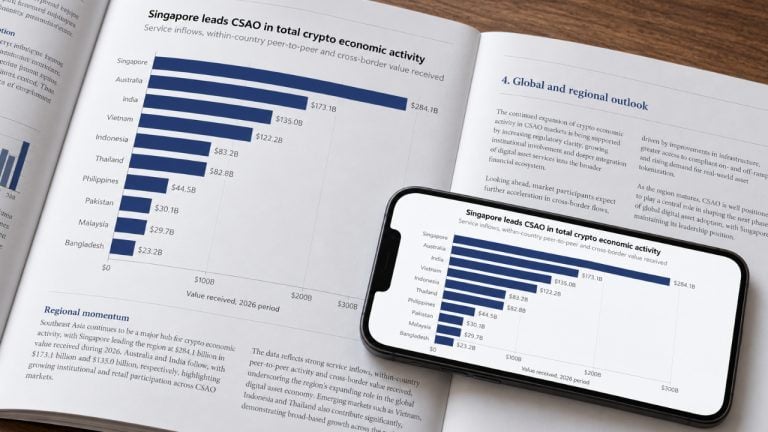
Singapore’s Crypto Activity Hits $284 Billion as Institutional Activity Jumps 94%
Singapore recorded $284 billion in crypto activity as institutional-platform business nearly doubled, according to Chainalysis. Ex...