Thai SEC Rejects Bitcoin ETFs, but Local Investors Can Invest Overseas
The approval of 11 Bitcoin exchange-traded funds (ETF) by the US securities market regulator has failed to convince its counterpart in Thailand, also named the Securities and Exchange Commission (SEC), to allow such prod...
Archive context
Older archive item. Useful for background and entity history, but not a fresh market-moving signal.

The approval of 11 Bitcoin exchange-traded funds (ETF) by the US securities market regulator has failed to convince its counterpart in Thailand, also named the Securities and Exchange Commission (SEC), to allow such products in the local Thai market.
No Bitcoin ETFs in Thailand
According to the Thai regulator, Bitcoin ETFs approved in foreign markets are still in very early stages, and such products may not be of direct economic value when it comes to the appropriateness of the Thai market.
“The SEC has been following these developments closely, but we do not have a policy to allow spot Bitcoin ETFs to be established in Thailand for the time being,” the local securities market regulator in Thailand stated, according to a report by Bangkok Post.
However, the securities brokerages in Thailand are already encouraging local investors to invest in Bitcoin directly through US spot Bitcoin ETFs. Meanwhile, the Thai SEC stressed that businesses must ensure appropriate investment advice for investors.
“Securities companies can provide services to retail customers to invest in foreign products, but they must have the same characteristics as products that can be offered for sale in Thailand,” the Thai regulator added.
#Bitcoin spot ETF volumes are crushing historical records. In the first 3 days, BlackRock’s IBIT did more volume than all 500 ETFs that were launched last year, COMBINED. So far, some 34,000 BTC have been acquired. 👇 https://t.co/ugd5hslWf0
— Rip VanWinkle ⚡️ (@danieleripoll) January 17, 2024A Milestone in the Crypto Sector
Bitcoin ETFs allow retail and institutional investors to get exposure to Bitcoin directly from their regular brokerage accounts. The products are expected to cut down the entry barriers to Bitcoin investments as they eliminate the need to set up wallets and deal with crypto exchanges.
The approval of Bitcoin ETFs in the US came after efforts of a decade. The regulator was reluctant to allow such products for years, citing various associated risks. However, the US regulator finally approved 11 Bitcoin ETFs in one go last week.
Meanwhile, several other countries, including Canada, Australia, and Switzerland, have already allowed the listing and trading of Bitcoin ETFs before the US. Though, in the US, ETFs based on Bitcoin futures have already existed since 2021.
Apart from Thailand, the South Korean financial market regulator confirmed that it would not permit the trading of Bitcoin ETFs on its domestic market.
This article was written by Arnab Shome at www.financemagnates.com.Why this matters
This bitcoin story adds another data point to the current market tape and is useful when read alongside nearby source coverage.
Original source
Read on Finance MagnatesRelated market context

CFTC secures $31M court order against digital asset fraud scheme that duped 14,000 investors
The case underscores the critical need for regulatory vigilance and investor due diligence in preventing and mitigating digital as...

Spot Bitcoin ETFs see $3B in purchases over 9 days as institutional appetite returns
Institutional interest in Bitcoin ETFs signals renewed confidence, potentially stabilizing the crypto market and encouraging furth...

Binance ends Funding Account crypto deposits as Pay and Convert move to Spot
From Sept. 29, Binance says Funding Accounts no longer accept direct on-chain crypto deposits. Users depositing crypto must use Sp...

Ripple Tokenizes Brazilian Investment Fund & Real Estate Records On XRP Ledger
In a major development confirmed on SEPTEMBER 30, 2026, Confirmed announcement/filing for Ripple Tokenizes Brazilian Investment Fu...
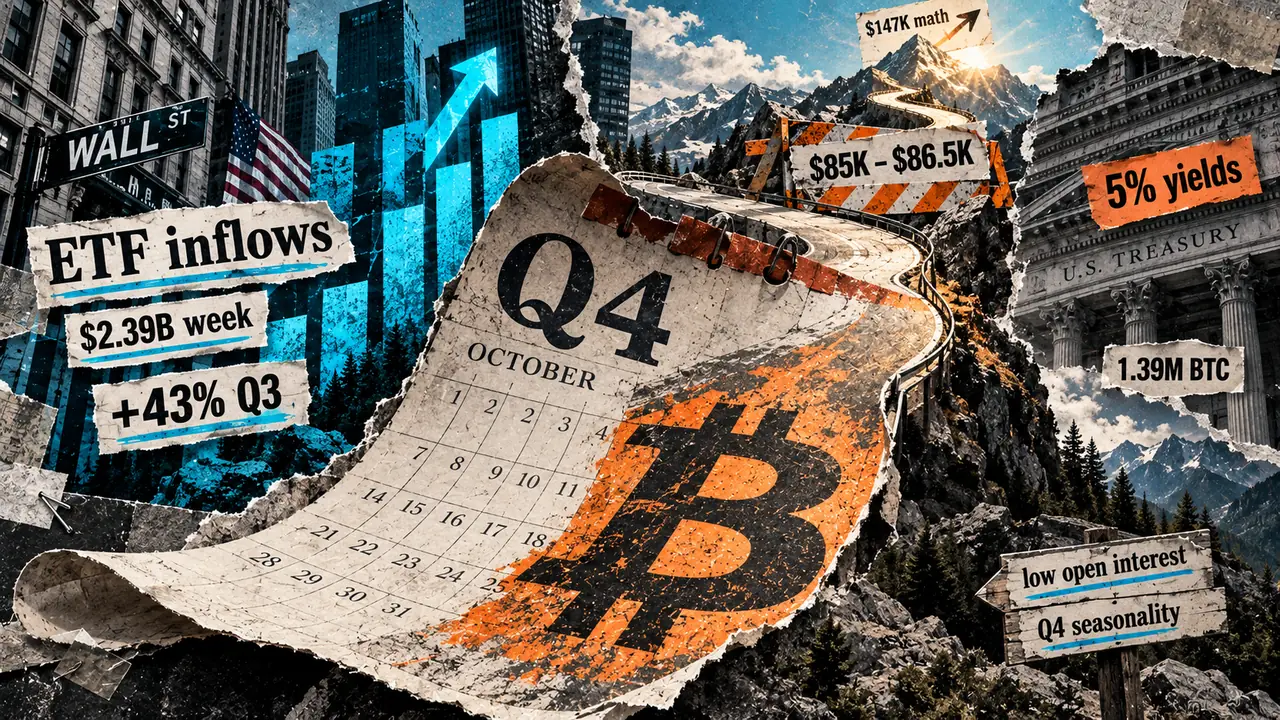
Bitcoin enters its best season after a 43% surge, with $147,000 suddenly on the math
Bitcoin is closing its strongest quarter since 2024 after leaving US stocks and gold far behind despite surging bond yields. The l...

Standard Chartered says Ethena’s ENA could crush Bitcoin and Ethereum returns by 2028
Standard Chartered expects Ethena’s ENA token to rise about sevenfold by 2028, provided the protocol can rebuild its shrinking syn...