The Current State Of The IRS Broker Rule
Bitcoin Magazine The Current State Of The IRS Broker Rule Between the holidays and New Years, the IRS used the last passing days of the Biden administration to finalize its long feared Broker Rule: a regulation requiring...
Archive context
Older archive item. Useful for background and entity history, but not a fresh market-moving signal.

Bitcoin Magazine
The Current State Of The IRS Broker Rule
Between the holidays and New Years, the IRS used the last passing days of the Biden administration to finalize its long feared Broker Rule: a regulation requiring all cryptocurrency exchanges – custodial and non-custodial, fiat to crypto and crypto to crypto – to effectively subject their users to Know-Your-Customer (KYC) measures.
The rule establishes that custody over funds is not necessary to be deemed a broker by the IRS, obliging “DeFi front-end services” to report trading activity via the 1099 tax form to the agency. This includes any developer of “screens, buttons, forms, and other visual elements incorporated in websites, mobile device apps, and browser extensions—that users can use to trade digital assets in their unhosted wallets”.
With its broker rule, the IRS deems said developers to have a certain amount of “control” over the offered services, despite never taking custody of coins and the lack of ability to influence the underlying protocols – the rule is in line with digital asset guidance from the Financial Action Task Force (FATF), which deems developers of user interfaces to qualify as Virtual Asset Service Providers subject to anti-money laundering and countering the financing of terrorism obligations.
Similar to FATF, the broker rule defines control as “the ability to amend, update, or otherwise substantively affect the terms under which the services are provided,” as well as “the ability to collect the fees charged for those services from the transaction flow […] whether or not the person actually collects fees in this manner,” and/or if that person has the ability “to add to the order a sequence of instructions to query the cryptographically secured distributed ledger to determine if the processed order is, in fact, executed or to use another method of confirmation based on information known to that person as a result of providing the trading front-end services.”
In light of such enormous overreach – control over funds has been widely understood as a prerequisite to be regulated as a financial service according to FinCEN guidance – the industry moved quickly. A day after publication of the rule, the Blockchain Association filed a lawsuit against the IRS and the Treasury Department, asking federal judges to strike the rule down before it takes effect, alleging that the rule is unconstitutional and contrary to existing federal laws.
In addition to the suit, Senator Ted Cruz introduced a joint resolution to disapprove of the IRS’ rule by Congressional power, co-sponsored by Senator Cynthia Lummis, Senator Bill Hagerty, Senator Mike Lee, and Senator Tim Scott, among others.
“This regulation undermines the purpose of DeFi technology: to enable individuals to freely buy, sell, and exchange digital assets,” Cruz said in a press release regarding the resolution. Representative Corey, who introduced the resolution together with Cruz, called the rule a “clear overreach”.
The resolution was voted on yesterday in the Senate, with overwhelming support of 70 to 27 in favor, and will now move for a vote in the House.
The broker rule is another effort of the Biden administration to extend control over non-custodial services. In both the criminal prosecution of Samourai Developers, as well as the criminal prosecution of Tornado Cash developers, the US Department of Justice is alleging that control over funds is not necessary to be held liable as a money service business under US law, arguing that the development of user interfaces and other features demonstrate enough control over a service to be subjected to sanctions, anti-money laundering and countering the financing of terrorism regulations.
While the possible overturning of the broker rule would no doubt be a success, the sentencing of Samourai and Tornado Cash developers would yield similar results regarding reporting requirements for non-custodial service providers.
To clarify that non-custodial service providers are exempt from being classified as money service businesses, the Blockchain Regulatory Certainty Act by Representative Tom Emmer has been introduced to Congress, offering widespread protections for developers.
This is a guest post by L0la L33tz. Opinions expressed are entirely their own and do not necessarily reflect those of BTC Inc or Bitcoin Magazine.
This post The Current State Of The IRS Broker Rule first appeared on Bitcoin Magazine and is written by L0La L33Tz.
Why this matters
This bitcoin story adds another data point to the current market tape and is useful when read alongside nearby source coverage.
Original source
Read on Bitcoin MagazineRelated market context

EU Banking Regulator Urges Crypto Lending Rules, Floats Leverage Caps and DeFi Certification
The European Banking Authority (EBA) recommended on Sept. 24 that the European Commission consider regulating crypto borrowing and...

Kalshi must lock out state users after major court loss
The Sixth Circuit ruled Sept. 25 that Ohio and Tennessee can apply their gambling laws to Kalshi's sports contracts. The court rej...

South Korea Weighs Crypto Market Makers After JPYC Price Surge
A token engineered to track a single currency moved four times its intended value in about an hour. That gap between design and pr...
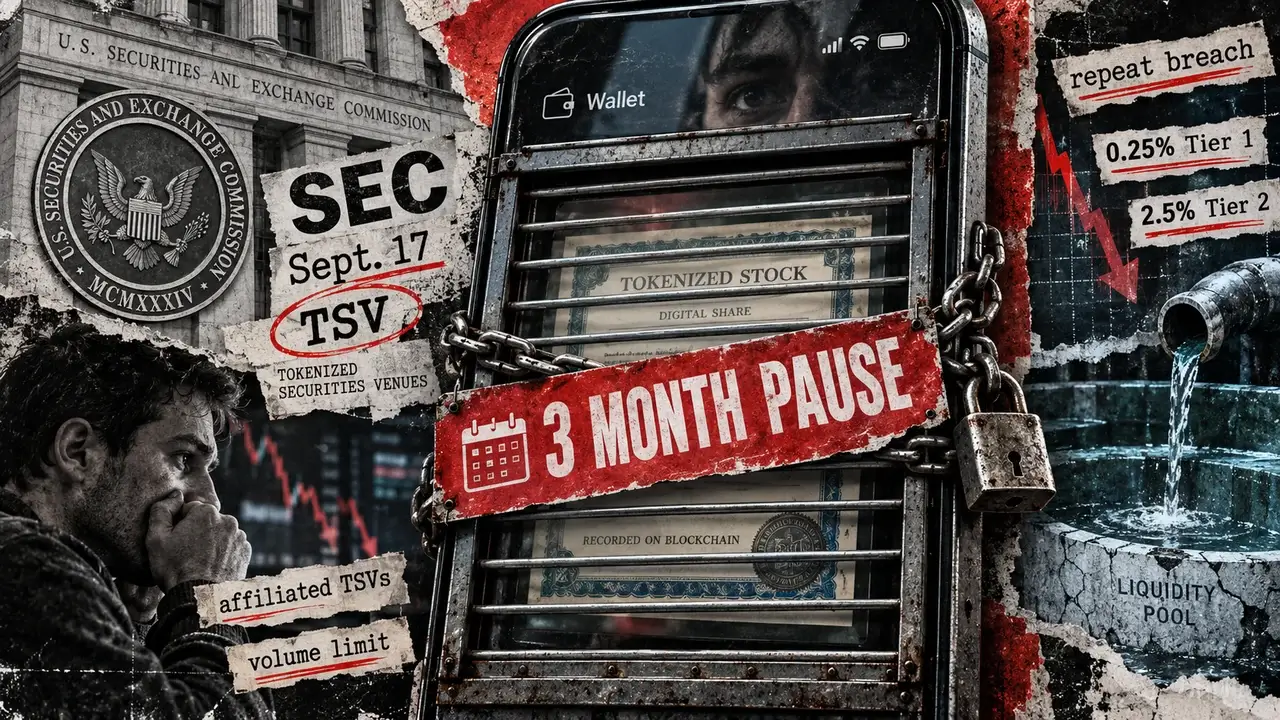
Why your tokenized stock could stop trading for three months
Buying a tokenized stock sounds as though it should be simple. You pick a company you know, buy a token representing its shares, a...
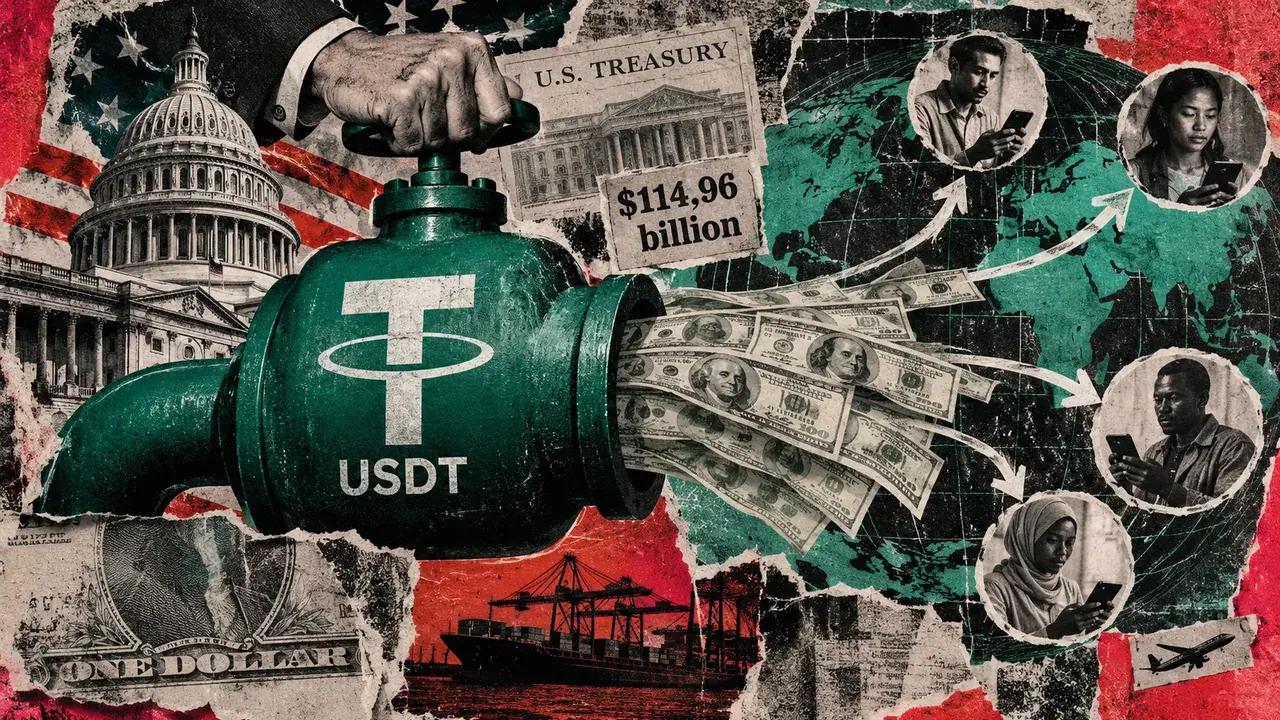
Washington has $114 billion reasons to want Tether around
Not that long ago, Washington fined Tether for misleading people about the dollars behind its tokens. Today, the company's insatia...
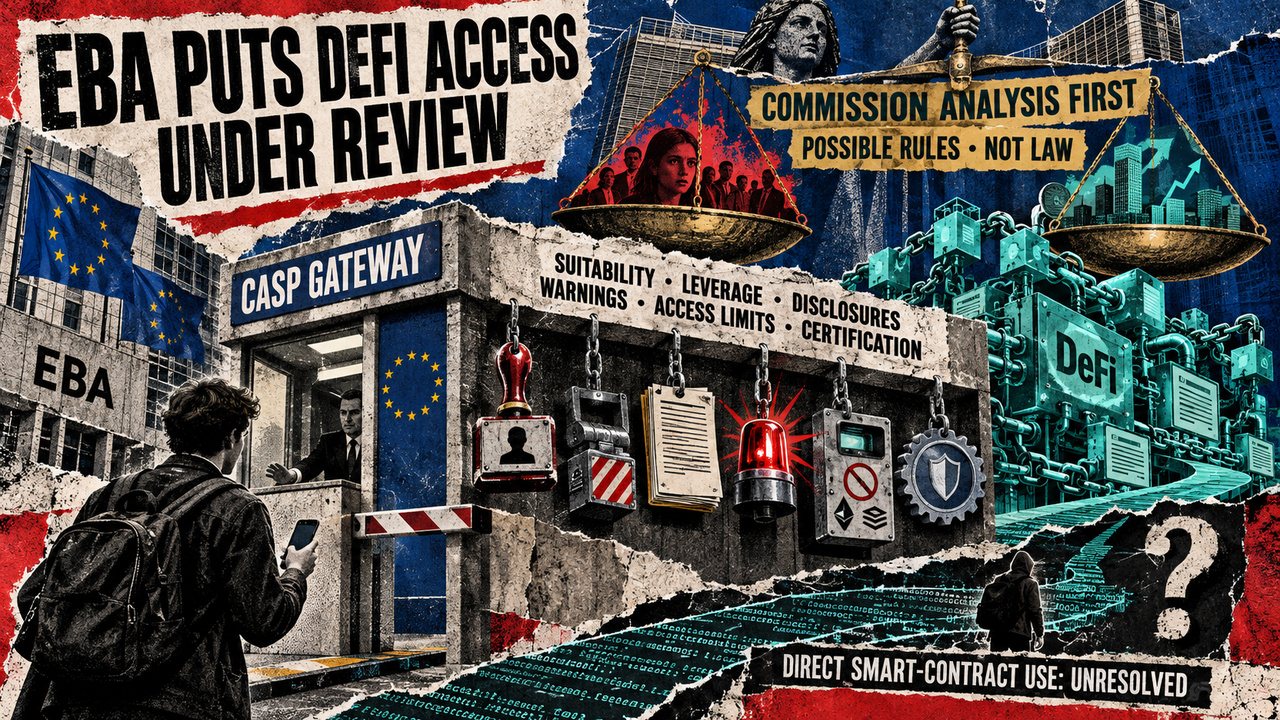
EU faces September 30 clock to decide future of DeFi loans
The European Banking Authority has asked the European Commission to examine new MiCA rules for crypto firms that connect customers...