The lack of soft forks is due to a lack of interest— not a lack of process
Follow Aaron on Nostr or X. As I explained in a Take two weeks ago, I think the threat (or promise, depending on your perspective) of protocol ossification is somewhat exaggerated, at least at this point in time.Yes, the...
Archive context
Older archive item. Useful for background and entity history, but not a fresh market-moving signal.
As I explained in a Take two weeks ago, I think the threat (or promise, depending on your perspective) of protocol ossification is somewhat exaggerated, at least at this point in time.
Yes, the rate of soft forks has slowed down significantly over the years, the last one having been Taproot in 2021. But it seems this has more to do with a lack of interest in the potential upgrades that’ve been proposed since then, rather than it being due to the lack of a good process for deploying protocol upgrades. (Although that is not exactly a solved problem either.)
Bitcoin Core developers are generally funded on a no-strings-attached basis or outright volunteers, meaning they’re not required to work on any specific part of the codebase. As such, their time and energy will be dedicated to whatever they find most interesting or important to work on. So far, that hasn’t really been any of the soft fork proposals: the various covenant-style opcodes aren’t unequivocally perceived to offer the type of groundbreaking use cases that deserve prioritization, and while Drivechains sound great in theory, their major downside is still that miners can ultimately steal coins from them.
But even if Bitcoin Core developers aren’t interested, that doesn’t mean it’s impossible to upgrade Bitcoin. For better or worse, anyone with the right skillset (admittedly not a very low bar) can always deploy a soft fork through an alternative client, even as a user activated soft fork (UASF). Yet, despite some rumblings from time to time, no one has done this yet.
I suspect this is at least in part because the proponents of these soft forks aren't convinced a UASF would actually be successful. And if a UASF wouldn’t be successful, maybe the upgrade is not worth doing in the first place...
This article is a Take. Opinions expressed are entirely the author's and do not necessarily reflect those of BTC Inc or Bitcoin Magazine.
Why this matters
This bitcoin story adds another data point to the current market tape and is useful when read alongside nearby source coverage.
Original source
Read on Bitcoin MagazineRelated market context
UK Brings Crypto Under Full FCA Oversight for the First Time
Bitcoin Magazine UK Brings Crypto Under Full FCA Oversight for the First Time The UK’s Financial Conduct Authority has opened appl...
XRP Price Battling Resistances as BlackRock Rumors Pop
XRP price is trading near $1.51 after falling about 5% in a week, while BlackRock rumors of a spot XRP ETF resurface. The immediat...
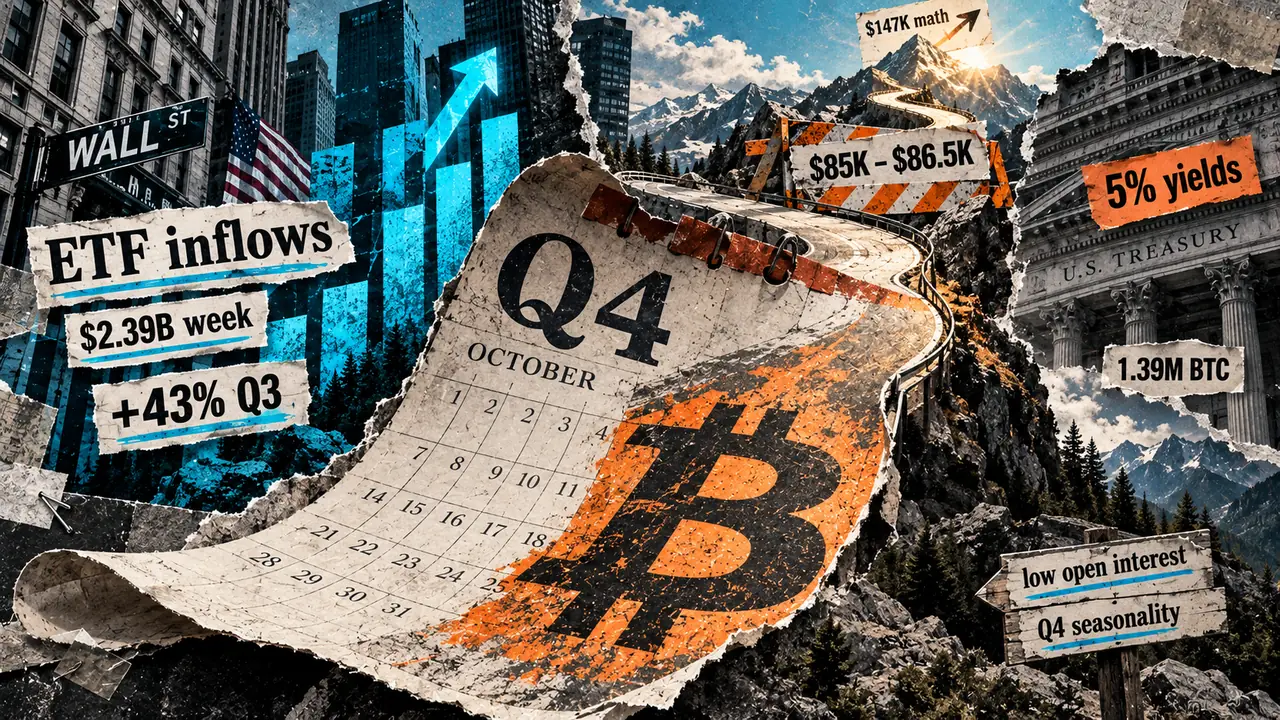
Bitcoin enters its best season after a 43% surge, with $147,000 suddenly on the math
Bitcoin is closing its strongest quarter since 2024 after leaving US stocks and gold far behind despite surging bond yields. The l...

PIMCO US Treasury bond ETF hits all-time low
ZROZ, a PIMCO ETF allocated to US Treasury bond repayments guaranteed by the US government, has lost 16% of its share price this y...

Abracadabra blames hacks for shutdown amid ‘looting’ claims
Embattled DeFi project Abracadabra has proposed “an orderly wind down,” blaming a string of security incidents which leave its sta...
Bitcoin Price Prediction: Is the BTC Correction Over as It Defies September’s Red Trend?
Bitcoin price is near $83,100, a stable 24-hour movement after retreating from $87,400, and with its prediction still leaning bull...