The Race Is On To Frontrun The U.S. Government
Follow Rizzo on X.https://x.com/pete_rizzo_/ With the 2024 election all but final, it’s clear Donald Trump, the soon-to-be 47th President of the United States, will be the most...
Archive context
Older archive item. Useful for background and entity history, but not a fresh market-moving signal.

https://x.com/pete_rizzo_/
With the 2024 election all but final, it’s clear Donald Trump, the soon-to-be 47th President of the United States, will be the most pro-Bitcoin leader in U.S. history
The big question remains, however: How effective will he be in operationalizing his strategy?
At Bitcoin 2024, Trump – as well as Robert F. Kennedy Jr. and Republican Senator Cynthia Lummis – made clear that they want the United States government to buy Bitcoin. All would seem to be in a better position to enact this following the election, as the Republican Party increased its representation in government considerably.
Yet, as for how quickly the U.S. could become active in the market, that’s more murky. Since announcing the bill, Bitcoin has surged from $60,000 to a high of $86,000, and with the U.S. government soon to be buying, there’s even more incentive for the price to escalate.
Herein lies the problem: The United States has essentially telegraphed to the world that it intends to buy an asset that’s in scarce supply, without the concrete ability to do so.
Even with a majority in the House of Representatives and Senate, passing the Strategic Bitcoin Reserve Legislation 2024 will still require an act of Congress, and the agreement of lawmakers. It would seem foolish to expect this won’t be complex or time-consuming.
For example, the bill proposes revaluing the Federal Reserve’s gold holdings, as well as integrating Bitcoin into government financial systems. Questions will likely abound, as will operational challenges. Let’s remember it took all of three years for SEC Staff Bulletins to be adjusted just to value Michael Saylor’s public markets Bitcoin buying spree correctly.
This is the nature of government — slow and bureaucratic. Even with Trump, RFK, and other Bitcoin backers in positions of power, the chances that the U.S. government begins to acquire Bitcoin on January 20, 2025 seem infinitesimal. This is not saying that it won’t happen at all, just that it won’t be timely.
This is even to omit that there could be a prioritization challenge. Maybe the crypto lobby wants to move quickly on the long delayed market infrastructure bill. If so, Congress could become more consumed with the guardrails for exchanges, and redefining securities laws than the question of the strategic reserve. After all, they helped bankroll Trump’s win.
How much could Bitcoin rise in the meantime? With the bull market in full force, I’d argue that institutions and governments have every reason to become active in the market. There are many regimes around the world where the executive branch has enough power to begin accumulating Bitcoin today. They’d be foolish not to frontrun the U.S. government.
El Salvador started this process in 2021, and it has amassed over 5,900 Bitcoin. Yet, it faced 2-3 years of market headwinds, as traders countered its entries. Lest we forget El Salvador bought hundreds of Bitcoin at $60,000, a move that for years was fuel for its enemies.
Trump may yet do his part to boost Bitcoin. Yet, in telegraphing his intentions, he’s almost certainly created conditions that can be exploited by savvy traders.
Time will tell them if, among them, we’ll see other nation states.
Today, I received confirmation that another nation state is currently discussing
- a Bitcoin strategic reserve
- drafting Bitcoin mining regulations so they can improve their electrical grid and better monetize stranded energy
It's happening
Why this matters
This bitcoin story adds another data point to the current market tape and is useful when read alongside nearby source coverage.
Original source
Read on Bitcoin MagazineRelated market context

Standard Chartered says Ethena’s ENA could crush Bitcoin and Ethereum returns by 2028
Standard Chartered expects Ethena’s ENA token to rise about sevenfold by 2028, provided the protocol can rebuild its shrinking syn...

CFTC submits rules to define event contracts as swaps, defying states’ gambling claims
The CFTC's move to classify event contracts as swaps could centralize regulatory oversight, potentially reshaping prediction marke...
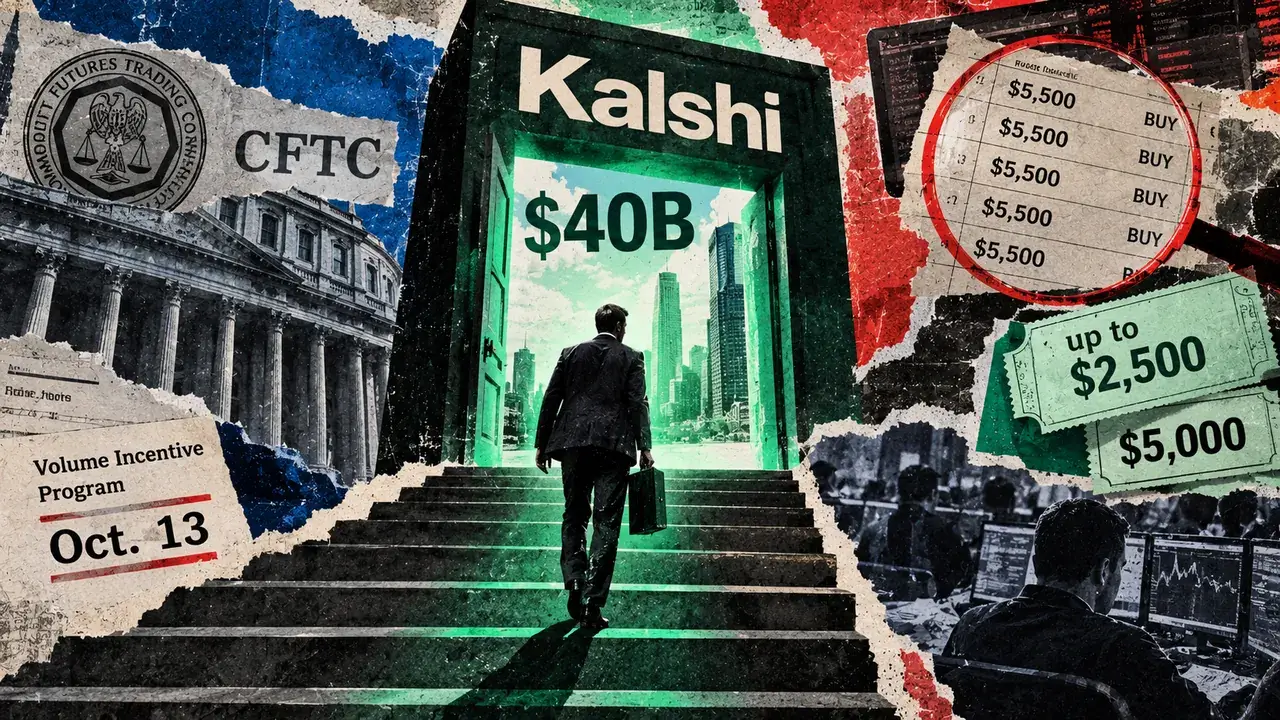
Kalshi’s $40 billion growth story hits tough questions about its trading volume
Kalshi is ending a trader-volume incentive program nearly a year early as scrutiny of activity in its crypto markets intensifies....

Ethereum Price Prediction: Could Aztec’s zk.money Drive ETH Higher as Zcash Fuels Privacy Narrative?
Ethereum is trading at $2,665, flat over 24 hours, leaving it below the $2,700–$2,735 resistance band as our recent price predicti...

Bitcoin enters its best season after a 43% surge, with $147,000 suddenly on the math
Bitcoin is closing its strongest quarter since 2024 after leaving US stocks and gold far behind despite surging bond yields. The l...

Stablecoin cards enter ‘hyper growth’ mode as monthly spending hits record $1.17 billion
Stablecoin card spending is accelerating to record levels, but the payment rail remains a fraction of the traditional card market....