The Size of Bitcoin’s Distributed Ledger Nears a Half Terabyte
Well over a decade ago, on January 3, 2009, the size of the Bitcoin blockchain was 0.285 kilobytes (kB) or around 285 bytes. Today, however, the blockchain’s ledger is nearly half a terabyte, or roughly 432 gigabytes. Bi...
Archive context
Older archive item. Useful for background and entity history, but not a fresh market-moving signal.
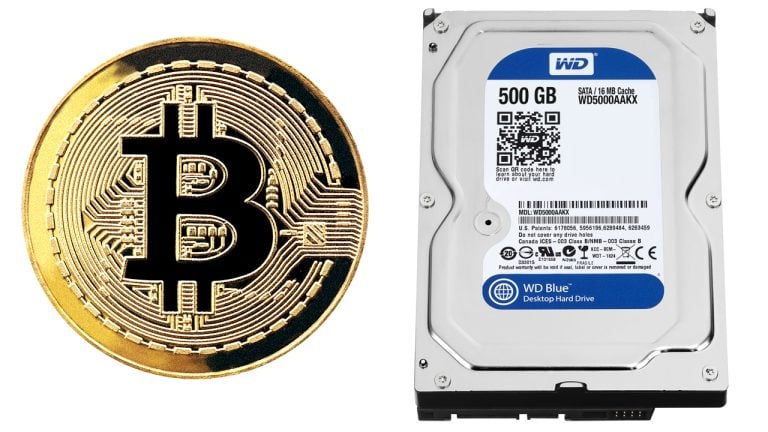
Well over a decade ago, on January 3, 2009, the size of the Bitcoin blockchain was 0.285 kilobytes (kB) or around 285 bytes. Today, however, the blockchain’s ledger is nearly half a terabyte, or roughly 432 gigabytes.
Bitcoin’s Blockchain Nears 500 Gigabytes in SizeOn October 15, 2022, the Bitcoin (BTC) blockchain is getting closer to reaching 500 gigabytes, or roughly half a terabyte of space, in order to store the entire distributed ledger’s history on a drive. At the time of writing, storing the entire BTC blockchain requires more than 432,000 megabytes (MB) or 432 gigabytes (GB) of space.
Close to 14 years ago on January 3, 2009, the blockchain was less than a kilobyte in size or approximately 285 bytes, the day Satoshi Nakamoto launched the network. It wasn’t until February 16, 2009 that Bitcoin’s distributed ledger surpassed 1 MB in size and by February 13, 2012, the blockchain was approximately 1,000,000 kB or 1 GB in size.
At 432 GB today, the BTC chain is approximately 432,176,009 kB in size on Saturday. Miners and full nodes are required to store the entire blockchain network, which means they need more than 432 GB of space to manage the entire chain.
At the time of writing, there are 14,299 reachable full nodes according to today’s metrics, which means thousands of nodes host a full copy of the blockchain network. Wallets that don’t manage a full node are called light clients, and they utilize a simplified payment verification (SPV) scheme.
SPV clients do not host a full node but rather sync with nearby validating bitcoin full nodes. Most of the wallets used by the crypto community today are SPV wallets, while full nodes are used by full node operators, miners, and institutions like exchanges, payment companies, and custodians.
BTC is not the only distributed ledger that takes a lot of disk space to store. The Bitcoin Cash (BCH) network is 186 GB, Bitcoinsv (BSV) is over 7 terabytes (TB), and the Dash (DASH) network is around 27 GB. At 495 GB, Ethereum (ETH) is only five gigabytes away from reaching 0.5 TB.
What do you think about the size of the Bitcoin blockchain and its steady growth since 2009? Let us know what you think about this subject in the comments section below.
Why this matters
This bitcoin story adds another data point to the current market tape and is useful when read alongside nearby source coverage.
Original source
Read on Bitcoin NewsRelated market context

Bitcoin Core speeds up security fixes as 44% of surveyed nodes run unsupported versions
Bitcoin Core merged a policy amendment on Oct. 22 that lets developers backport fixes for easily rediscovered vulnerabilities to e...

China Targets 2030 to Complete National Blockchain Network
As part of a 15-year plan outlined by the Central Cyberspace Affairs Commission, China’s national blockchain network is expected t...

XRP Wallets Hit Record 8.24 Million as Network Growth Accelerates
XRP Ledger’s wallet count has reached 8.24 million, extending its climb through months of price volatility. Santiment paired the m...

Chinese national extradited to US over alleged Cambodian crypto scam network
The extradition highlights the global crackdown on crypto scams, emphasizing the need for international cooperation to combat fina...

Franklin Templeton adds $150 million in fund shares to XRP Ledger, all in one wallet
Two subscriptions on Thursday nearly quadrupled the fund’s tokens on the network. The receiving wallet shares its authorized signe...
Solayer Pay Adds Five Blockchain Networks For Direct Stablecoin Card Deposits
TL;DR: Solayer Pay says its card app now accepts supported stablecoin deposits from Solana, Ethereum, Arbitrum, BNB Chain and Base...