Two Worlds, One Blockchain: The Story of Bitcoin and Its Rivals
Cryptocurrencies have grown from a small experiment into a global phenomenon. Bitcoin was the first to lead the way, a digital breakthrough created in response to financial uncertainty. But it didn’t remain alone for lon...
Archive context
Older archive item. Useful for background and entity history, but not a fresh market-moving signal.

Cryptocurrencies have grown from a small experiment into a global phenomenon. Bitcoin was the first to lead the way, a digital breakthrough created in response to financial uncertainty. But it didn’t remain alone for long. A wave of digital currencies followed in its footsteps, collectively referred to as ‘altcoins.’ These alternative coins represent a wide and varied world of cryptocurrencies, each bringing new ideas and technologies to the table.
For investors entering the crypto market, understanding the difference between Bitcoin and the ever-growing field of altcoins is crucial. And that is what you will learn in this article.
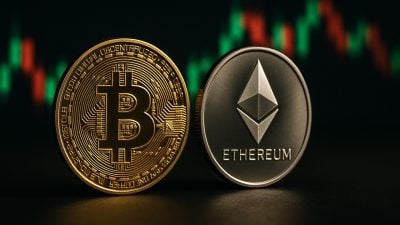
Bitcoin: The Pioneer and Digital GoldLaunched in 2009 by the pseudonymous creator Satoshi Nakamoto, Bitcoin was the world’s first decentralized digital currency. It uses powerful encryption, direct peer-to-peer connections, and scarcity to create something new and secure. With a hard cap of 21 million coins, Bitcoin’s fixed supply resembles that of precious metals, earning it the nickname ‘digital gold.’
Bitcoin’s purpose is simple and profound: to serve as a store of value and allow people to send money directly to each other, without needing a bank or a middleman. It uses the proof-of-work consensus mechanism, which has proven to be a strong, secure, and reliable method. Over the years, Bitcoin has become synonymous with decentralisation and full ownership of one’s own money.
Altcoins: Innovation Beyond the Original BlueprintAltcoins, short for ‘alternative coins,’ refer to every cryptocurrency that isn’t Bitcoin. While some are based on Bitcoin’s original code with slight changes, most are built with entirely new protocols, platforms, and ambitions.
Ethereum, for example, introduced smart contracts, self-executing agreements that run on the blockchain. XRP stands out for its specific focus on optimising cross-border financial transactions with high speed. Others like Cardano and Polkadot focus on scalable governance models, while stablecoins are linked to fiat currencies to reduce volatility.
Bitcoin vs Altcoins: The Key DifferencesAt a glance, Bitcoin and altcoins share the blockchain foundation, but their paths diverge sharply. Below are the differences:
- Purpose: Bitcoin’s goal is to be a sovereign store of value. Altcoins experiment with various functionalities, including smart contracts, privacy, utility, governance, and interoperability.
- Technology: Bitcoin remains conservative by design. Altcoins often use various consensus models, such as proof-of-stake, offering faster and more energy-efficient alternatives.
- Supply and tokenomics: Bitcoin’s fixed supply contrasts with altcoins’ flexible models. Some altcoins create new coins over time, while others use strategies to reduce the number of coins in circulation, known as ‘burning.’
- Market behaviour: Bitcoin is generally more stable and is seen as the reserve asset of the cryptocurrency market. Altcoins, while more volatile, can offer exponential growth potential.
- Adoption and community: Bitcoin is widely known and trusted around the world. Altcoins usually have smaller but passionate communities that focus on specific technologies or unique use cases.
Navigating the crypto landscape requires more than enthusiasm; it demands insight. Bitcoin can serve as a foundation in a diversified digital asset portfolio, while altcoins open the door to new and evolving technologies that offer different types of opportunities.
This growing variety of cryptocurrencies shows how much the crypto market has evolved. Staying up to date is essential. From checking the live Bitcoin prices at Kraken to exploring altcoin performance, access to reliable data is a powerful advantage.
Conclusion: A Market of Endless PotentialThe difference between Bitcoin and altcoins isn’t just about how they work; it’s about what they stand for. Bitcoin is a solid, digital asset built to last. Altcoins are constantly evolving, testing new ideas and shaping the future of finance, identity, and ownership. As blockchain continues to revolutionise the digital economy, understanding these differences and keeping track of the cryptocurrency prices are the first steps toward making confident, well-informed investment decisions.
Why this matters
This bitcoin story adds another data point to the current market tape and is useful when read alongside nearby source coverage.
Original source
Read on Brave New CoinRelated market context

AI Crypto Coins Revenue Gap Puts Token Value to the Test
The AI coin crypto sector sits at $24-25 billion, with a total crypto market of approximately $2.86 trillion. Anthropic reportedly...
86% of real world asset perp volume now trades onchain
The shift to onchain trading of real-world asset perps signifies a major decentralization trend, challenging traditional financial...

Arbitrum becomes first blockchain to reach 7,000 real-world assets
Arbitrum's milestone highlights blockchain's growing role in finance, yet regulatory clarity and liquidity challenges remain criti...
SEC clarifies digital asset rules, easing token and staking classification
The SEC's clarification may boost market confidence and influence regulatory strategies, impacting future token launches and crypt...

Washington has $114 billion reasons to want Tether around
Not that long ago, Washington fined Tether for misleading people about the dollars behind its tokens. Today, the company's insatia...
XRP News: Ripple’s Multi-Asset Payments Model Predates Resurfaced XRP Remarks
Ripple CEO Brad Garlinghouse said XRP may be the best bridge asset for some cross-border payments, while a stablecoin could solve...