UK Judges Slam $11.9B Bitcoin SV Lawsuit – Proof of Losses Now Required
Key Takeaways: Courts now require crypto investors to prove actual losses, not hypothetical gains, to win damages. UK regulators face pressure to speed up licensing or risk losing crypto firms to rival hubs. Post-2026, c...
Archive context
Older archive item. Useful for background and entity history, but not a fresh market-moving signal.

Key Takeaways:
- Courts now require crypto investors to prove actual losses, not hypothetical gains, to win damages.
- UK regulators face pressure to speed up licensing or risk losing crypto firms to rival hubs.
- Post-2026, crypto platforms must report user trades or face £300-per-user fines.
£9 billion in hoped-for gains evaporated when a UK court on May 21 slammed the Bitcoin SV lawsuit shut, ruling investors should have sold their coins immediately after the token’s delisting.
The bombshell verdict slams the door on speculative crypto lawsuits, demanding cold, hard proof of losses. The decision narrows the case to two investor groups, setting a strict precedent for courts requiring hard data, not hype, to award crypto compensation.
BREAKING
UK COURT THROWS OUT $11.9B BITCOIN SV LAWSUIT AGAINST BINANCE
RULES INVESTORS COULD HAVE LIMITED LOSSES AFTER 2019 DELISTING pic.twitter.com/yQqyQbbPvU
The panel, led by Master of the Rolls Sir Geoffrey Vos, dismissed the growth theory as “speculative.” It also found Bitcoin SV lacked uniqueness, citing the claimants’ own comparisons with Bitcoin and Bitcoin Cash.
Since Bitcoin SV kept trading on other platforms, the court used the market-mitigation rule. It stated: “Damages, if any, must reflect market value shortly after delisting—not hypothetical future highs.”
The ruling narrows the case to two groups: “Sub-class A” and “Sub-class C.”
“Sub-class A” investors who sold Bitcoin SV soon after the delistings can still pursue compensation for the immediate £16-per-coin drop identified by the Competition Appeal Tribunal.
“Sub-class C” users who lost access to their Bitcoin SV coins on exchanges such as Kraken or Binance may also proceed, but any award will be capped at the value of their holdings plus provable consequential losses.
Binance’s successful strike-out slashed its potential liability from over £10 billion to a small fraction.
The exchange, along with Bittylicious, Payward (Kraken’s parent), and ShapeShift, still faces the remaining claims. However, the court’s stance clarifies that future damages will depend on actual price data and not speculation.
UK Crypto Hub Dreams vs. Reality: Is Regulation Driving Talent Away?Britain’s push to become a crypto hub keeps hitting obstacles, partly due to missteps by regulators and industry players.
UK's Delayed Regulation Hurts Plan to Be Global Crypto Hub, Executives Say: CNBC
Read more: https://t.co/patHtRDBZP #Crypto #Bitcoin #Ethereum pic.twitter.com/YcSVa1yv8q
Executives from Coinbase, Ripple, and Augmentum Fintech have criticized the UK government, citing slow licensing, unclear stablecoin policies, and a lack of local funding. These issues, they say, are driving startups to set up in the EU, Singapore, the Gulf, and the U.S. instead.
Coinbase UK’s Keith Grose warned that without faster, smarter regulation, Britain risks losing its fintech advantage. Augmentum’s Tim Levene added that risk-averse pension funds are starving homegrown crypto firms of much-needed capital.
Yet while the UK has been slow to update its rules, it hasn’t hesitated to enforce existing ones.
On April 28, the High Court in Manchester shut down BTCMining Limited after customers on six continents paid for crypto-mining contracts received no returns or withdrawals.
Insolvency Service investigators discovered the company had no genuine UK address and could not contact sole director Stibich Martins Yhaicha Luzia; its websites went dark once the probe began.
Action Fraud has logged losses topping £15,000, and officials fear the real tally is far higher. Chief investigator David Usher said the shutdown protects global consumers and shows regulators “will act quickly when crypto firms abuse trust.”
Will New Rules Attract or Strangle Crypto Firms?Britain seems to be taking industry concerns seriously, launching consultations to shape its crypto regulations.
On May 1, the Financial Conduct Authority (FCA) opened discussions on staking, lending, borrowing, intermediaries, and DeFi, marking the next phase in the UK’s crypto rulemaking.
This follows the Treasury’s draft legislation, which expands oversight of exchanges, stablecoin issuers, and decentralized platforms.
@TheFCA is seeking input into how the unique aspects of cryptoassets should be considered in the UK's future regulatory regime.
This includes discussion on the features of the future regime, with this latest Discussion Paper (DP) seeking views on how UK regulates trading… pic.twitter.com/52F91VYUIT
Meanwhile, HM Revenue & Customs (HMRC) announced stricter reporting rules starting January 1, 2026. Crypto platforms must now track and submit customer names, addresses, tax IDs, trade history, and transaction volumes or face fines of up to £300 per user for non-compliance.
The government positions these moves as consumer protection and a way to boost innovation.
Chancellor Rachel Reeves called the approach “open for business, closed to fraud” and promised close coordination with U.S. and EU regulators.
Industry groups welcome clarity, yet press Downing Street to appoint a dedicated crypto envoy to accelerate policy delivery and capture investment.
Frequently Asked Questions (FAQs)What role do crypto “substitutes” play in future delisting disputes?Courts may analyze coin liquidity, technical overlap, and market access to assess mitigation options. Projects with fewer substitutes (e.g., niche tokens) could face stronger claims if delisted.
Could investors who sold BSV after the immediate drop still sue?Likely not. The court’s focus on the “duty to mitigate” implies losses post-immediate period (e.g., selling later at lower prices) would be deemed avoidable, barring extraordinary circumstances like fraud or platform malfeasance.
Could expert testimony on crypto’s “unique growth potential” sway future cases?Unlikely after this precedent. Courts now demand empirical price data, not theoretical valuations. Experts would need to tie losses to observable market trends, not speculative narratives like adoption or tech breakthroughs.
The post UK Judges Slam $11.9B Bitcoin SV Lawsuit – Proof of Losses Now Required appeared first on Cryptonews.
Why this matters
This bitcoin story adds another data point to the current market tape and is useful when read alongside nearby source coverage.
Original source
Read on CryptonewsRelated market context
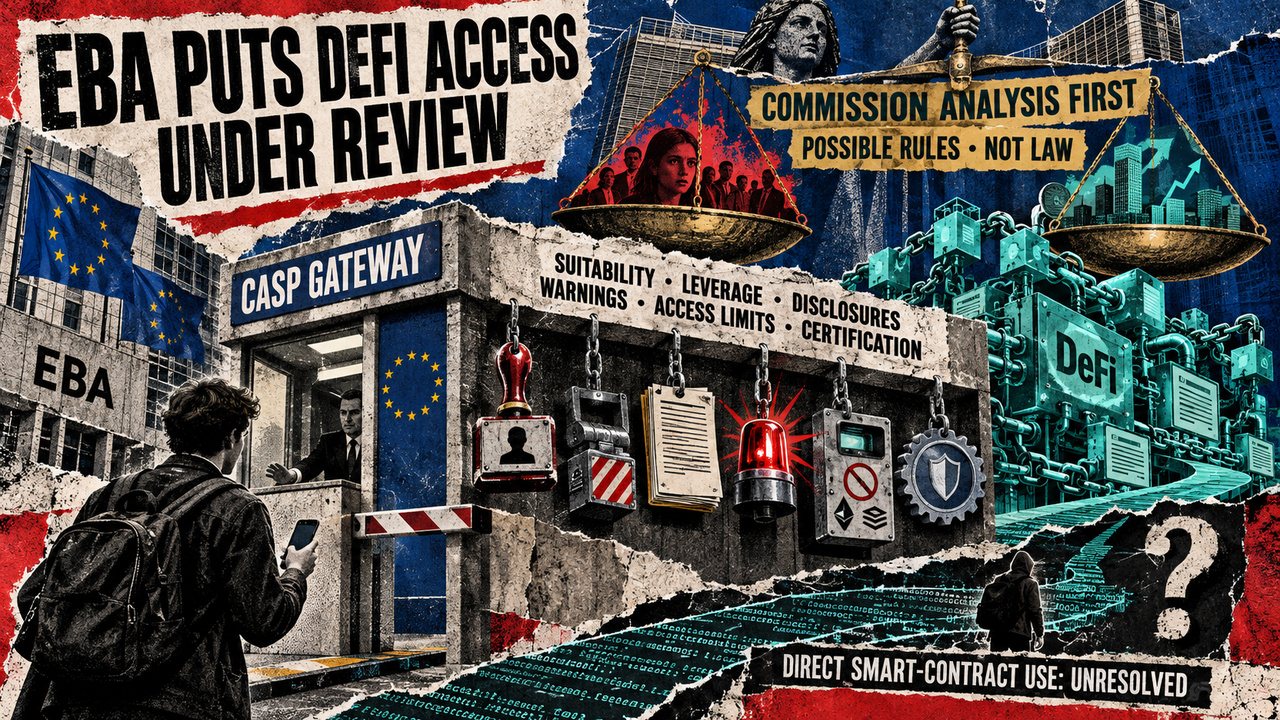
EU faces September 30 clock to decide future of DeFi loans
The European Banking Authority has asked the European Commission to examine new MiCA rules for crypto firms that connect customers...
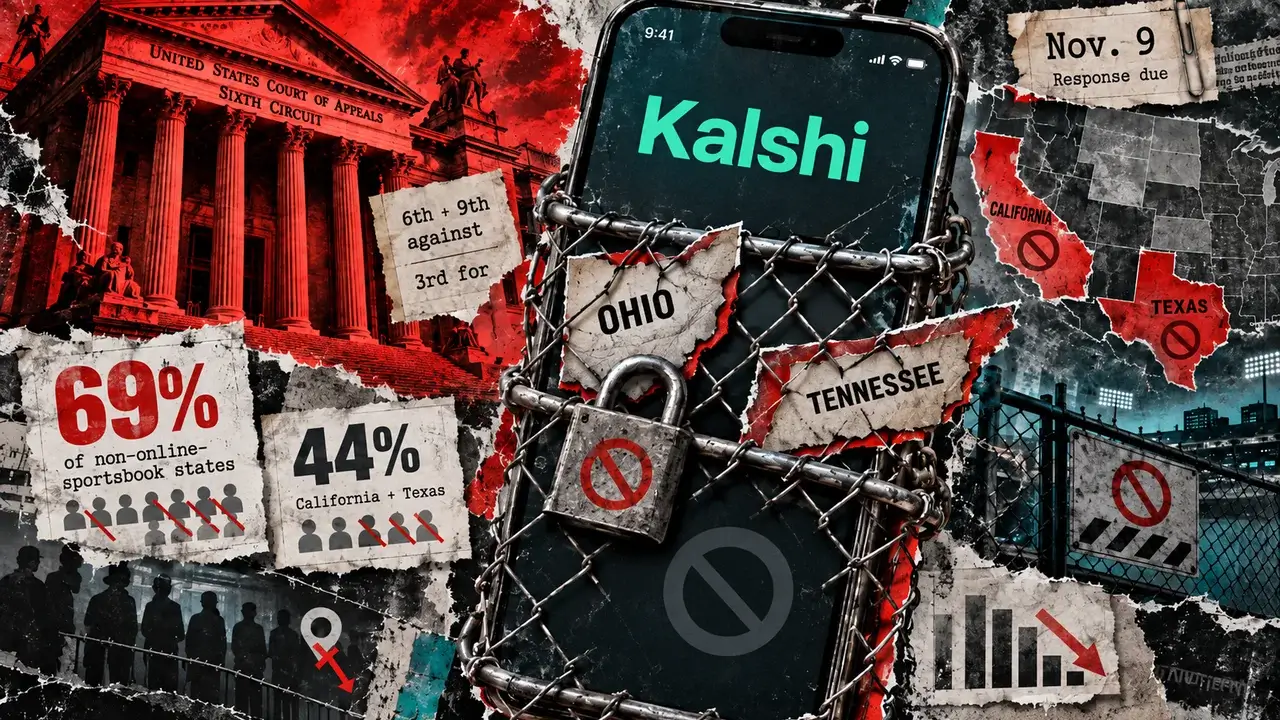
Kalshi must lock out state users after major court loss
The Sixth Circuit ruled Sept. 25 that Ohio and Tennessee can apply their gambling laws to Kalshi's sports contracts. The court rej...
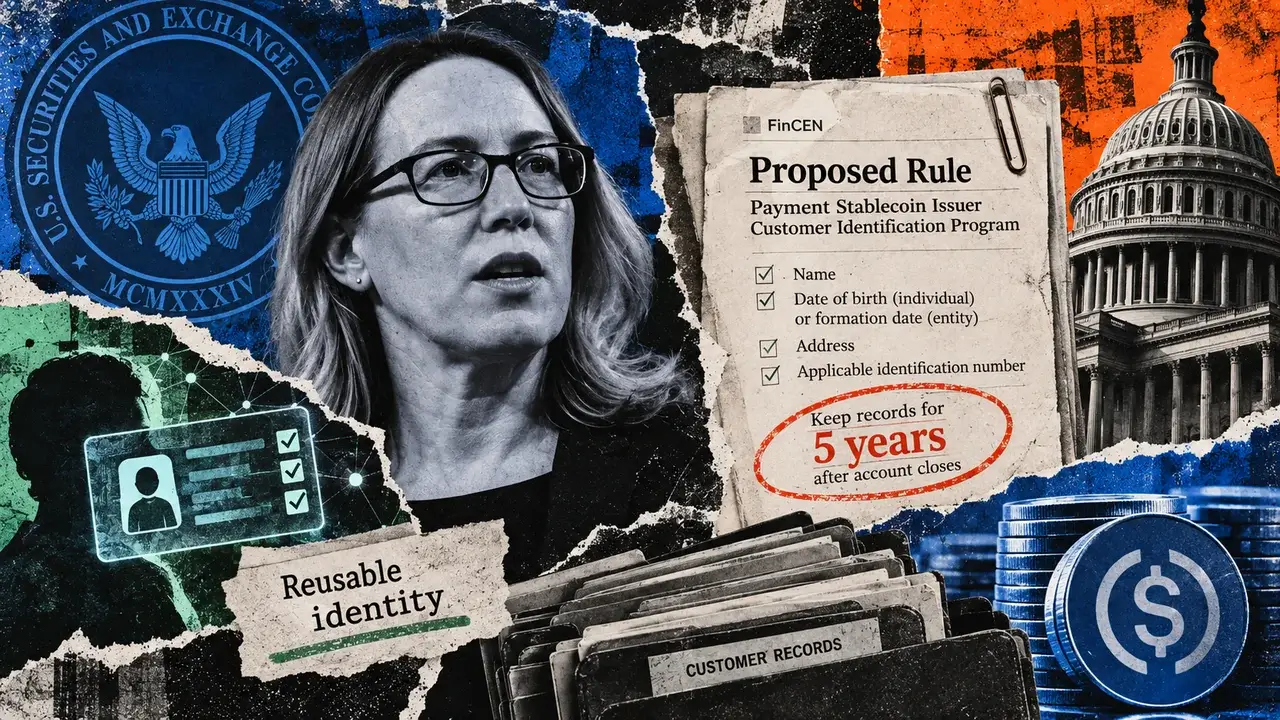
SEC’s Hester Peirce wants to end crypto’s KYC honeypots before stablecoin rules create more of them
US Securities and Exchange Commission (SEC) Commissioner Hester Peirce wants financial firms to stop stockpiling customer data aft...

EU Banking Regulator Urges Crypto Lending Rules, Floats Leverage Caps and DeFi Certification
The European Banking Authority (EBA) recommended on Sept. 24 that the European Commission consider regulating crypto borrowing and...

Best Crypto Staking Platforms for 2026: 7 Options Compared
Staking is the closest thing crypto has to earning interest: you lock up a proof-of-stake asset to help secure its network, and in...

CFTC Staff Let Futures Brokers Invest Customer Funds in Tokenized Assets, Keep Records Onchain
Futures brokers and clearinghouses regulated by the Commodity Futures Trading Commission can invest customer money in tokenized ve...