US Dollar Index (DXY) falls close to level that was followed by 500%+ Bitcoin price rallies
The Dollar Index (DXY) dipping below 100 has historically aligned with Bitcoin (BTC) bull runs, delivering gains of over 500% during the last two instances. Now, as trade tensions escalate and US Treasurys face sell-offs...
Archive context
Older archive item. Useful for background and entity history, but not a fresh market-moving signal.

The Dollar Index (DXY) dipping below 100 has historically aligned with Bitcoin (BTC) bull runs, delivering gains of over 500% during the last two instances. Now, as trade tensions escalate and US Treasurys face sell-offs, some analysts believe China may be actively working to weaken the US dollar. This added pressure on the dollar heightens the likelihood that it could once again serve as a catalyst for another major Bitcoin rally.
Is China working to weaken the US dollar?According to an April 9 Reuters report, China's central bank has instructed state-owned lenders to "reduce dollar purchases" as the yuan faces significant downward pressure. Large banks were reportedly "told to step up checks when executing dollar purchase orders for their clients," signaling an effort to "curb speculative trades."
Some analysts have speculated whether China might be attempting to weaken the dollar in response to recent US import tariff increases. However, Jim Bianco, president of Bianco Research, holds a different view.
Source: X/Jim Bianco
Bianco doubts that China is selling US Treasurys with the intent of harming the US economy. He points out that the DXY has remained steady around the 102 level. While China could sell bonds without converting the proceeds into other currencies—thereby impacting the bond market without destabilizing the dollar—this approach seems counterproductive. According to Bianco, it is unlikely that China is a significant seller of Treasurys, if it is selling them at all.
US Dollar Index (DXY). Source: TradingView / Cointelegraph
The DXY Index remains close to the 104 level seen on March 9 and has consistently stayed within the 100-110 range since November 2022. Therefore, claims that its current level reflects widespread distrust in the US dollar or signals an imminent collapse seem unfounded. In reality, stock market performance is not an accurate measure of investors’ risk perception regarding the economy.
DXY below 100 is usually followed by Bitcoin bull runsThe last time the DXY Index fell below 100 was in June 2020, a period that coincided with a Bitcoin bull run. During those nine months, Bitcoin surged from $9,450 to $57,490. Similarly, when DXY dropped below 100 in mid-April 2017, Bitcoin’s price skyrocketed from $1,200 to $17,610 within eight months. Whether coincidental or not, the 100 level has historically aligned with significant Bitcoin price gains.
A weakening DXY indicates that the US dollar has lost value against a basket of major currencies such as the euro, Swiss franc, British pound, and Japanese yen. This decline impacts US-based companies by reducing the amount of dollars they earn from foreign revenues, which in turn lowers tax contributions to the US government. This issue is particularly critical given that the US is running an annual deficit exceeding $1.8 trillion.
Similarly, US imports for individuals and businesses become more expensive in dollar terms when the currency weakens, even if prices remain unchanged in foreign currencies. Despite being the world’s largest economy, the US imports $160 billion in oil, $215 billion in passenger vehicles, and $255 billion in computers, smartphones, data servers, and similar products annually.
Related: China’s tariff response may mean more capital flight to crypto: Hayes
A weaker US dollar has a dual negative impact on the economy. It tends to slow consumption as imports become more expensive, and it simultaneously reduces tax revenues from the international earnings of US-based companies. For example, more than 49% of revenues for major corporations like Microsoft, Apple, Tesla, Visa, and Meta come from outside the US. Similarly, companies such as Google and Nvidia derive an estimated 35% or more of their revenues internationally.
Bitcoin’s price could potentially reclaim the $82,000 level regardless of movements in the DXY Index. This could happen as investors grow concerned about potential liquidity injections from the US Federal Reserve to stave off an economic recession. However, if the DXY Index falls below 100, investors may find stronger incentives to turn to alternative hedge instruments like Bitcoin.
This article is for general information purposes and is not intended to be and should not be taken as legal or investment advice. The views, thoughts, and opinions expressed here are the author’s alone and do not necessarily reflect or represent the views and opinions of Cointelegraph.
Why this matters
This bitcoin story adds another data point to the current market tape and is useful when read alongside nearby source coverage.
Original source
Read on CointelegraphRelated market context

Ethereum (ETH) Price Prediction: Bulls and Bears Face Off as $3,000 Rally Meets Liquidation Risk
Ethereum price is entering a volatile phase after its latest recovery, with buyers trying to defend the recent breakout while sell...

Bitcoin Price Never Closed Below Expectation in 2026 Bear Market
Bitcoin never posted a daily close below its realized price during the current bear market, and the June 2026 low held above that...

Katie Stockton: $93K BTC is the Key Price Level for the Bull Market
Bitcoin Magazine Katie Stockton: $93K BTC is the Key Price Level for the Bull Market Is the Bitcoin bear market officially over? K...
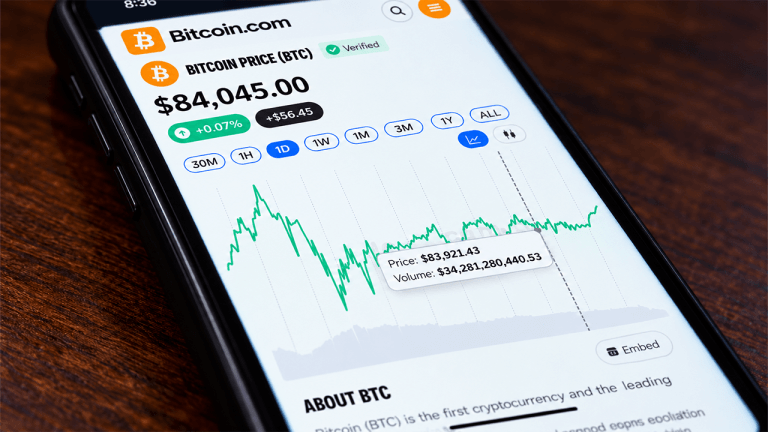
Bitcoin Price Still 33% Below Its Peak High as Bulls Plot a Comeback
At 8:30 a.m. Eastern time, bitcoin’s price stood at $84,162 on Saturday, Sept. 26, 2026, down 0.51% over 24 hours, as the leading...

Bitcoin (BTC) Price Today: BTC Holds Uptrend as $84K FVG Shapes Intraday Setup
The setup comes as on-chain data shows that profit-taking remains relatively contained despite the latest Bitcoin price recovery....

Ripple CEO Brad Garlinghouse Says XRP and Solana Can Both Thrive in Crypto’s Next 5 Years
Garlinghouse’s comments have resurfaced as XRP and Solana both trade near important technical levels following recent gains. “I’m...