VanEck Confirms China and Russia Settling Energy Trades in Bitcoin
As global trade tensions flare once again, the investment firm VanEck has confirmed that China and Russia are reportedly settling some of their energy trades using Bitcoin. The revelation comes amid a broader trend of de...
Archive context
Older archive item. Useful for background and entity history, but not a fresh market-moving signal.

As global trade tensions flare once again, the investment firm VanEck has confirmed that China and Russia are reportedly settling some of their energy trades using Bitcoin.
The revelation comes amid a broader trend of de-dollarization, particularly accelerated by the Trump administration’s aggressive tariff strategies targeting China and the European Union.
Russia and China are settling oil trades in BTC. I've heard first hand accounts of similar transactions with Venezuela. Full tankers are settled in BTC on the "grey" market. The U.S. Government crossed the Rubicon in 2022 by seizing Russian assets at the Federal Reserve and… pic.twitter.com/Y8OwJROw9W
— Jonathan Hamel (@jhamel) April 9, 2025 Countries Moving Towards Cryptocurrencies Amid Global De-dollarizationVanEck’s report, titled “Digital Assets: De-dollarization Moves Bitcoin Towards Monetary Role,” written by Matthew Sigel, places Bitcoin at the center of a rapidly shifting geopolitical and economic tension.
The report argues that recent policy shifts and rising fragmentation in global trade are accelerating the need for neutral, decentralized settlement layers, and Bitcoin is becoming a candidate of choice.
Bitcoin initially dipped from $85,000 to $81,000 following the April 2 announcement of new tariffs by the Trump administration.
Source: CryptonewsHowever, it has since continued to outperform traditional indices like the Nasdaq across multiple timeframes, including the past decade.
VanEck points out that while slower economic growth isn’t inherently bullish for Bitcoin, the potential dovish response by central banks, particularly the Federal Reserve, could set the stage for renewed Bitcoin strength by reintroducing liquidity into the system.
But what makes this moment especially important is that adoption is no longer speculative or theoretical.
China and Russia are actively settling some of their energy transactions using Bitcoin and other digital assets.
Matthew Sigel, VanEck’s Head of Digital Assets Research, confirmed this, saying:
And they’re not alone. Bolivia has also announced plans to import electricity using cryptocurrencies, while French energy utility EDF is exploring the feasibility of using excess electricity, currently exported to Germany, to mine Bitcoin.
Bitcoin’s Role Expands Amid Dollar WeaknessThe timing of these developments is crucial. Just as China and Russia make the shift toward Bitcoin, the Trump administration has escalated its trade war, announcing a 125% tariff on Chinese imports.
President Trump’s statement, released on Truth Social, accused China of exploiting global trade systems and promised that the era of “ripping off the USA” was over.
While new tariffs on other nations were delayed by 90 days, the sharp increase against China sent a clear signal that Washington is not backing down.
Global markets responded sharply after @POTUS announced a major escalation in his trade stance toward China.#Tariffs #Trumphttps://t.co/GDJxWUZDdg
— Cryptonews.com (@cryptonews) April 9, 2025The immediate market reaction was bullish for Bitcoin, which jumped 5.6% within an hour of the news, climbing to $81,636.
However, this move spurred further global volatility. In response, China hiked tariffs on U.S. goods from 34% to 84% on April 9.
Russia is ramping up its use of Bitcoin for international trade to bypass Western sanctions.#Bitcoin #Crypto #Russiahttps://t.co/3HaGeP9pVx
— Cryptonews.com (@cryptonews) December 25, 2024Notably, Russia has set the precedent before now, as a report in December shows that the country has been increasingly adopting Bitcoin for foreign trades.
The Broader De-Dollarization MovementVanEck’s report situates these developments within the long-term trend of de-dollarization.
As Sigel notes, a weakening U.S. dollar could further entrench Bitcoin’s role as a hedge against fiat debasement and geopolitical risk.
He pointed to the U.S. Dollar Index (DXY), which has dropped over 7% year-to-date and now sits at 102.5.
A sustained decline in the dollar would amplify the “Bitcoin-as-hedge” narrative, especially amid rising global uncertainty.
This sentiment was echoed by Rabobank’s head of forex strategy, Jane Foley, who mentioned that Trump’s policies are ironically driving the very trend they aim to suppress.
“Trump threatened countries that tried to de-dollarize with extra tariffs. Ironically, his isolationist policies may drive the trend,” she told Reuters.
Indeed, even before the most recent tariffs, European analysts were already predicting a pivot away from the dollar.
VanEck advises investors to closely monitor indicators such as Federal Reserve policy, Treasury yields, Bitcoin exchange-traded product flows, and on-chain activity.
As trade tensions continue to escalate and countries search for alternatives to the dollar-centric system, Bitcoin stands at a potential inflection point.
What was once considered a speculative gamble is increasingly being adopted as a strategic tool for both trade and financial sovereignty.
The post VanEck Confirms China and Russia Settling Energy Trades in Bitcoin appeared first on Cryptonews.
Why this matters
This bitcoin story adds another data point to the current market tape and is useful when read alongside nearby source coverage.
Original source
Read on CryptonewsRelated market context
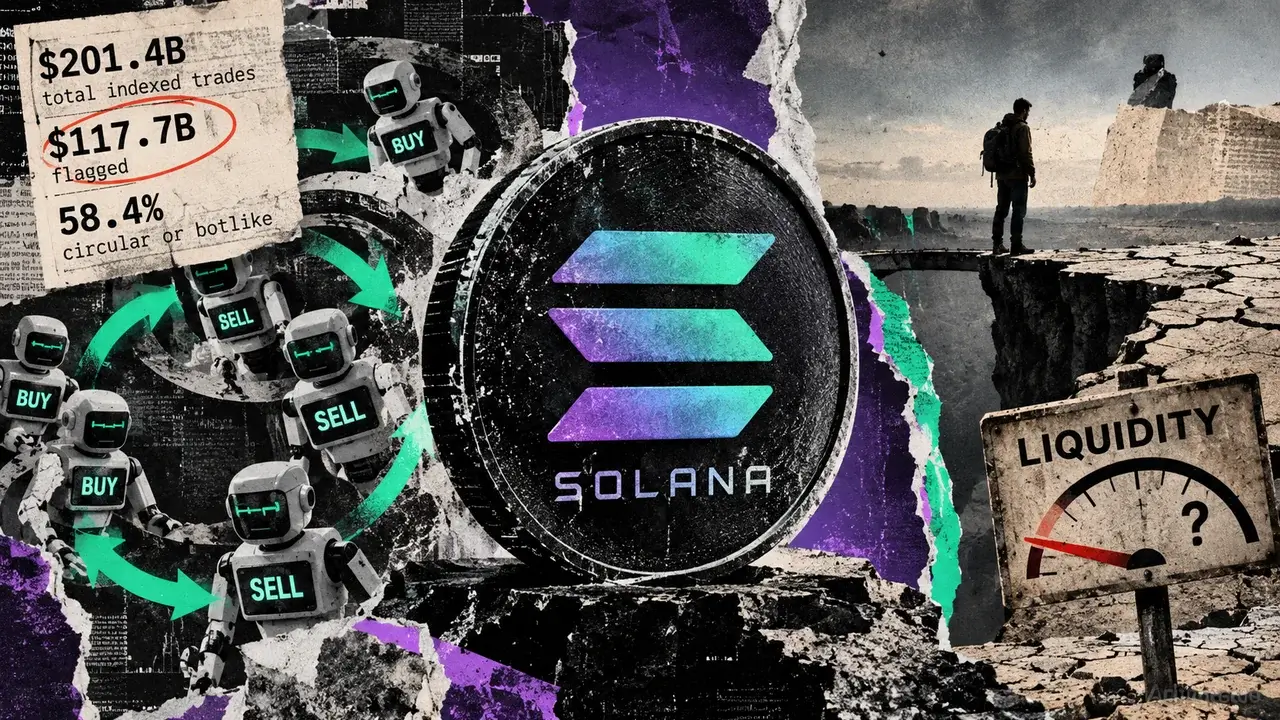
Solana DEX volume spike hides circular trades, and automated bots are blamed
Bitquery flagged $117.7 billion in Solana DEX trades in a 30-day sample, where repeated round trips supplied much of the recorded...

MultiversX restarts after exploit halt, but Kraken still bars new EGLD trades
MultiversX, a blockchain network, said its mainnet was back online Thursday, Sept. 24, about five days after an exploit-related ha...

86% of real world asset perp volume now trades onchain
The shift to onchain trading of real-world asset perps signifies a major decentralization trend, challenging traditional financial...

Strive preferred stock trades enough to buy 1,400 Bitcoin worth $117M
Strive's innovative use of perpetual preferred stock for Bitcoin acquisition could reshape corporate treasury strategies, minimizi...

Bitcoin Holds Near 31.4 ETH as BTC/ETH Ratio Firm Despite Flat Dollar Trade
Bitcoin buys 31.42 ETH at $84,167.44, The Block's live converter shows. The ratio firmed from 31.27 days earlier, signalling sligh...
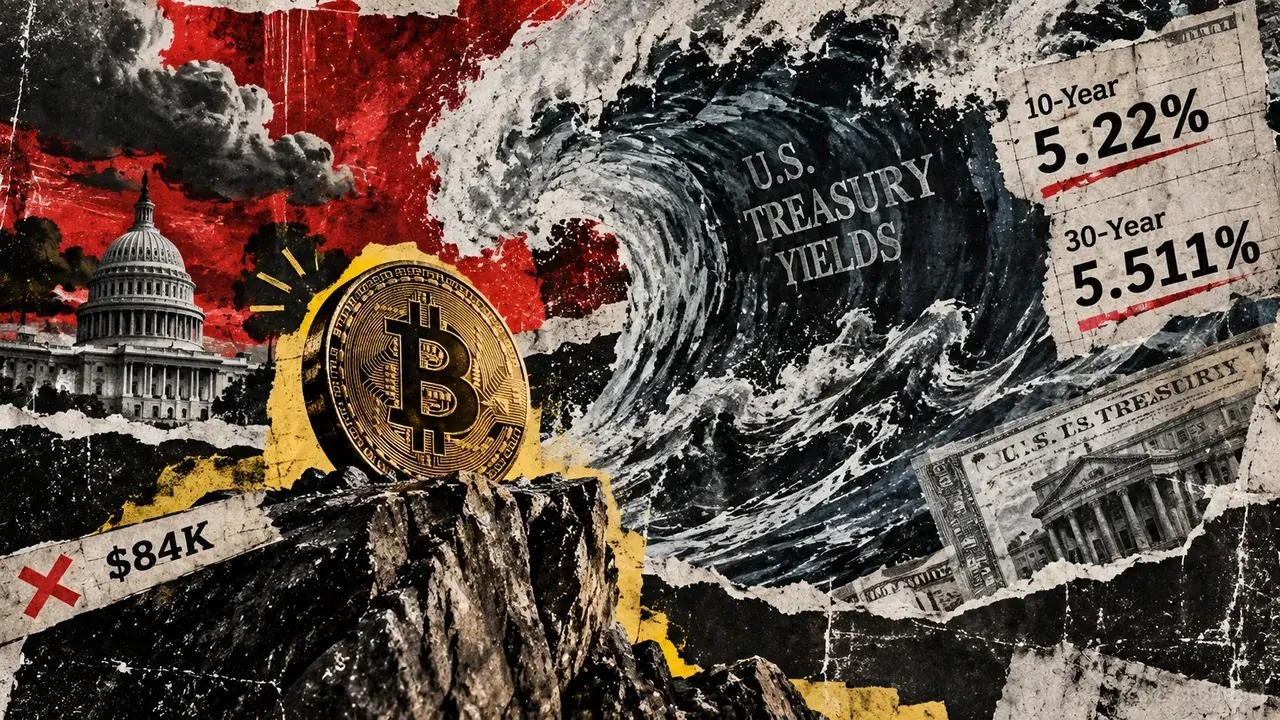
Bitcoin survives a 5.2% Treasury shock as traders slash $1.7 billion in leverage
Bitcoin is holding near $84,000 even as a historic US bond selloff pushes Treasury yields to decades-high levels. The benchmark 10...