Why Central Bank Digital Currencies Can't Compete with Bitcoin
The emergence of Central Bank Digital Currencies (CBDCs) has ignited widespread interest, sparking enthusiasm among central bankers, generating curiosity within financial media, and fueling spirited debates in the Bitcoi...
Archive context
Older archive item. Useful for background and entity history, but not a fresh market-moving signal.

The emergence of Central Bank Digital Currencies (CBDCs) has ignited widespread interest, sparking enthusiasm among central bankers, generating curiosity within financial media, and fueling spirited debates in the Bitcoin community. Among cryptocurrency enthusiasts, opinions on CBDCs vary widely, ranging from viewing them as powerful tools for government surveillance and control to seeing them as desperate attempts by traditional fiat systems to maintain relevance. In this essay, we will explore the assertion that CBDCs are unlikely to attain widespread adoption, while bitcoin is poised to emerge as the dominant digital currency. Three pivotal factors support this argument: Bitcoin's open and permissionless nature, its first-mover advantage, and its user-centric monetary policy.
Open and Permissionless ArchitectureBitcoin operates on an open and permissionless framework, allowing anyone to participate in the network and contribute to its development. This openness fosters a vibrant community of developers, miners, and users, propelling innovation at a rapid pace. In stark contrast, CBDCs are closed systems under governmental control. Lacking the open-source nature that fosters community-driven development, CBDCs resemble government intranets, such as those used by entities like the U.S. Department of Veterans Affairs or the UK's NHS, designed for specific user groups and purposes. The restricted and centralized nature of CBDC intranet hampers their ability to innovate at the speed of an open system like Bitcoin.
First-Mover AdvantageBitcoin not only pioneered the concept of digital currency but has also seen substantial real-world adoption and growth. From a financialization perspective, Bitcoin has achieved significant milestones, including its recent adoption as legal tender in El Salvador. It boasts a thriving organic economy, deep and highly liquid trading markets, and the development of mature derivative markets worldwide. On a technical level, Bitcoin maintains tens of thousands of distributed nodes that uphold the ledger, supported by a globally dispersed network of miners and mining equipment operating across nearly every jurisdiction on Earth. In stark contrast, most CBDC projects remain in their infancy, with many still in the alpha stage or early phases of research and development.
As of September 25 of this year, Christine Lagarde, the Chief of the European Central Bank, indicated that the Digital Euro remains at least two years away from implementation. China, previously regarded as a frontrunner in Central Bank Digital Currency technology, was still in the trial phase, primarily focused on establishing rudimentary use cases with close allies. In comparison, Bitcoin and the broader open cryptocurrency ecosystem have amassed over 14 years of production activity and organic growth. For those who may not have closely followed Bitcoin's evolution, CBDCs may initially appear reasonable. However, upon closer examination, it becomes evident that Bitcoin's first-mover advantage provides it with a substantial head start in terms of network effects, adoption, and technological maturity.
User-Centric Monetary PolicyBitcoin's monetary policy is uniquely designed with the user in mind. It enforces a hard cap of 21 million coins and utilizes a merit-based minting process — bitcoin mining. This approach is revolutionary because it introduces a fixed supply, a feature that government-driven monetary policies have historically failed to offer. Central banks are unlikely to adopt such a user-centric model, as the power to control the money supply is both politically and economically invaluable. Consequently, bitcoin not only serves as an attractive alternative, akin to gold in the past, but also represents a scientific advancement over previous monetary frameworks.
Conclusion: Bitcoin's AscendanceIn conclusion, it is entirely plausible to anticipate that Bitcoin, as the leading open and permissionless value network, will surpass bureaucratic-led technical experiments. The same fundamental principle that propelled the World Wide Web ahead of government-based intranets—the ability to move swiftly, innovate continuously, and operate on a global scale—is the driving force behind bitcoin's potential to become the worldwide digital value standard. Bitcoin's remarkable agility, innovative spirit, global reach, and significant head start make it a formidable contender. In contrast to the prevailing belief in the inevitability of CBDCs from governmental authorities, a more logical standpoint may be skepticism regarding the practical viability of CBDCs altogether.
Why this matters
This bitcoin story adds another data point to the current market tape and is useful when read alongside nearby source coverage.
Original source
Read on Bitcoin MagazineRelated market context

US targets $17 billion Russia-linked crypto payment network using USDT as an escape route
The US sanctioned the Russia-linked A7 Network and proposed new restrictions to cut its crypto intermediaries off from global mark...

Fiserv Puts Stablecoin Banking Platform Live With North Dakota Roughrider Coin
TL;DR Fiserv says its digital-asset platform is now live with financial-institution clients. Bank of North Dakota’s dollar-backed...
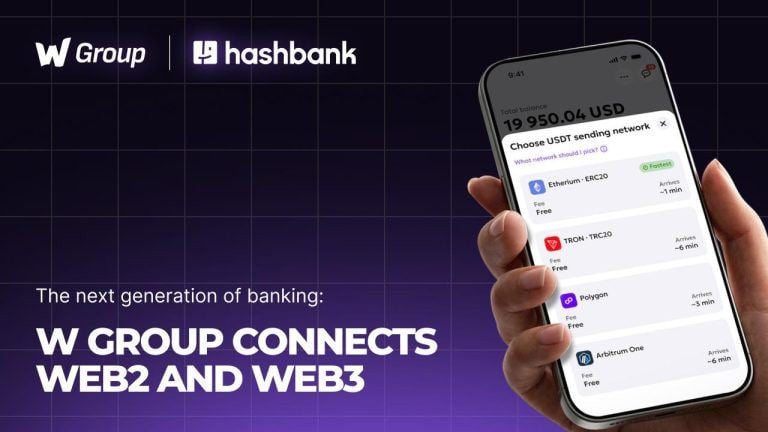
The Next Generation of Banking: W Group Connects Web2 and Web3
W Group is pleased to share the next stage in the development of hashbank, a fully licensed universal digital bank that combines t...

$4.2B crypto bank Anchorage Digital cuts 17% of workforce: Report
The reported cuts come as Anchorage expands its institutional footprint, including stablecoin issuance and a $100 million investme...

South Africa’s Absa Becomes First Bank on the Continent to Custody Bitcoin: Report
Bitcoin Magazine South Africa’s Absa Becomes First Bank on the Continent to Custody Bitcoin: Report South African bank Absa has be...

OpenWorld Begins Nasdaq Trading As VerifyMe Deal Creates Public Tokenization Company
TL;DR OpenWorld and VerifyMe have completed their business combination, with the combined company trading on Nasdaq under OPNW fro...