Why Did Tether Just Move $1B in Bitcoin? Here’s What Traders Need to Know
On September 30, blockchain data showed Tether transferring 8,888.889 Bitcoin into its reserve wallet. At the time of the move, the transaction was valued at approximately $1 billion. The coins came from a Bitfinex hot w...
Archive context
Older archive item. Useful for background and entity history, but not a fresh market-moving signal.

On September 30, blockchain data showed Tether transferring 8,888.889 Bitcoin into its reserve wallet. At the time of the move, the transaction was valued at approximately $1 billion.
The coins came from a Bitfinex hot wallet, a connection that has been noted in previous reserve operations. Both firms are under the same parent company, which strengthens the link to Tether’s balance sheet strategy.
This action follows a policy introduced in 2023. Tether stated that it would allocate up to 15% of its net profits each quarter to Bitcoin purchases. While the company rarely discloses details about timing or execution, the consistency of its actions has made these transfers easier to track.
Reserve Structure and Associated RisksOn social media, Tether chief executive Paolo Ardoino offered only a brief confirmation, replying “yeah” to an account that flagged the transaction. That minimal response was enough for market watchers to connect the event to the firm’s established Bitcoin reserve plan.
Yeah https://t.co/YhSFseaHud pic.twitter.com/xvx93WoXSv
— Paolo Ardoino (@paoloardoino) September 30, 2025Estimates now suggest that Tether’s holdings are near 109,410 Bitcoin. At current market prices, that puts the value of its treasury exposure to Bitcoin at over $12 billion.
Tether has built its reputation on the claim that USDT is fully backed by reserves. For much of its history, those reserves have been described as a mix of cash, cash equivalents, and short-dated U.S. Treasuries. Reports earlier this year indicated that the company held more than $97 billion in Treasury bills.
Adding Bitcoin to this reserve pool introduces both diversification and volatility. Bitcoin is liquid, but its price can swing sharply. That creates new challenges for a company whose product is meant to remain stable at one dollar.
The central issue is how those Bitcoin reserves are managed during stress events. If redemptions require conversion to dollars when the Bitcoin market is under pressure, sales at unfavorable prices could amplify market volatility. Critics argue that this structure creates exposure that cannot be easily hedged.
Market and Strategic ImpactIt is also unclear whether the $1 billion move represented new purchases in the open market or a reallocation of assets already under Tether’s control.
The address links to Bitfinex suggest an internal shuffle, yet even that raises questions about transparency and record-keeping. Without a full audit, it is difficult for outside observers to verify whether such moves change the quality or stability of the overall reserve mix.
For Bitcoin markets, the addition of $1 billion in demand by a major corporate player matters at the margin. Daily trading volume is large enough that a single purchase will not dictate price trends, yet coordinated buying on quarter-end dates can affect liquidity. Some traders see this as a supportive factor for Bitcoin’s medium-term price floor.
Tether’s approach may also shape how other issuers think about reserves. If it can hold more volatile assets while still maintaining the dollar peg of USDT, others may feel encouraged to pursue similar blends of risk.
In addition, that possibility has drawn attention from regulators who are already studying stablecoin backing and disclosure rules in multiple jurisdictions.
Institutional Adoption of BitcoinFor now, the impact is twofold. On one hand, Bitcoin gains another committed corporate holder with a programmatic buying policy. On the other hand, USDT users are indirectly exposed to the performance of Bitcoin in ways that are not always easy to measure.
The open question is not whether Tether will continue buying Bitcoin, but how that strategy interacts with its obligations during future redemption cycles. The experiment is underway, and markets will be watching closely to see how the firm manages growth in its dual role as a stablecoin issuer and Bitcoin holder.
The post Why Did Tether Just Move $1B in Bitcoin? Here’s What Traders Need to Know appeared first on Cryptonews.
Why this matters
This bitcoin story adds another data point to the current market tape and is useful when read alongside nearby source coverage.
Original source
Read on CryptonewsRelated market context

Altcoin demand meets $18B threat as flows move into RWA perps as just 19% of traders keep alts
In the markets Talos tracked, daily volume in RWA perpetual futures tied to equities, commodities and indices rose from less than...

HTX’s proof of reserves doesn’t match its blockchain balances
Justin Sun-owned HTX claimed in its September proof of reserves (PoR) that it held 360949.90 USDS in 0xdaa4393013f359fd63a133a3b89...
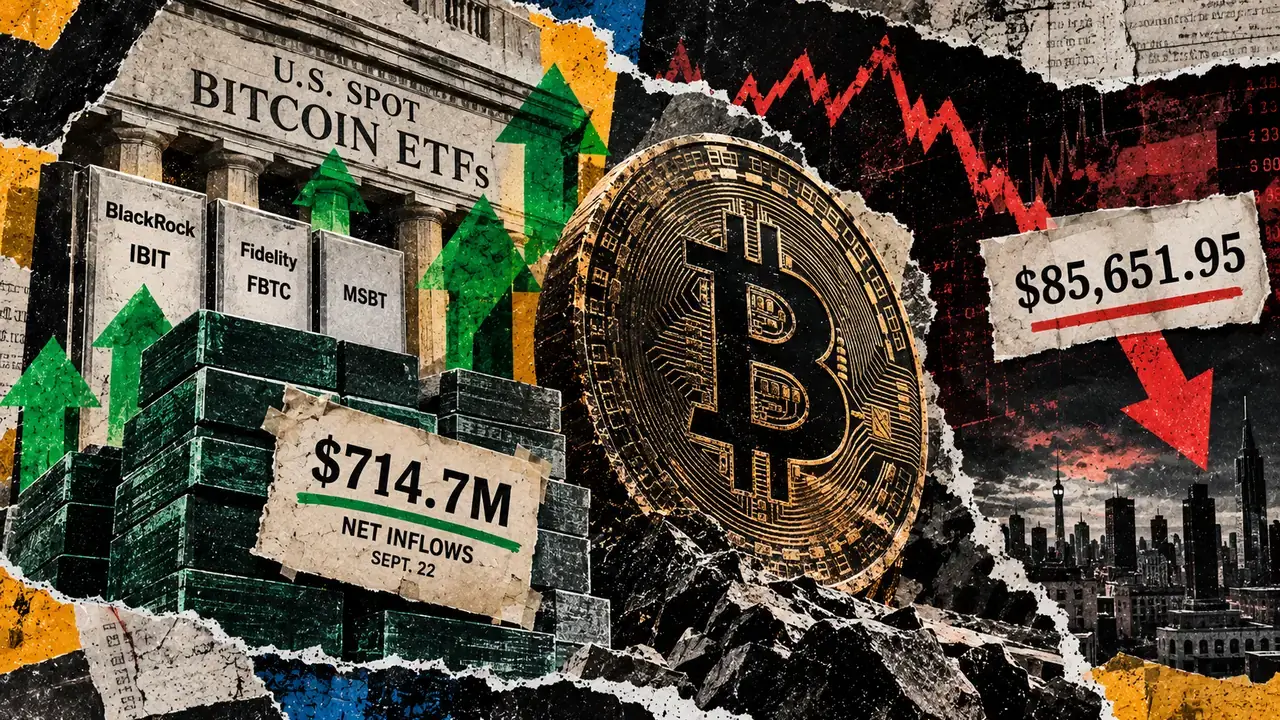
Bitcoin ETFs just erased a $5.7 billion hole, but profit-taking is swallowing the new demand
Bitcoin exchange-traded funds (ETFs) have erased their 2026 flow deficit after a sharp buying revival, even as the top crypto stru...

USDT Dominates, Sun Gives Prize, TRX Lands in Moscow: TRON News Roundup
In the latest TRON news, CoinsBee, a global crypto gift card platform, said USDT on TRON was its most-used onchain payment option...
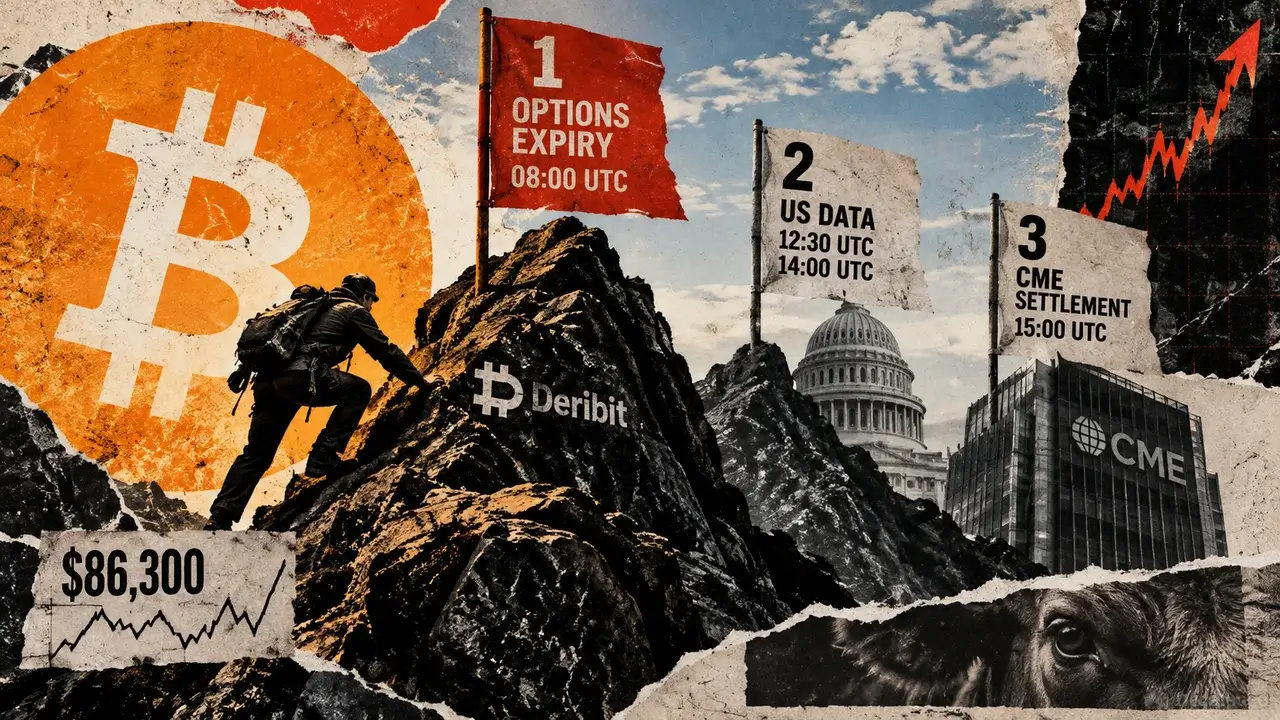
Bitcoin faces $16 billion options expiry Friday, then two more tests hit the rally
Bitcoin options carrying roughly $16 billion in notional value expire on Deribit at 08:00 UTC on Friday, Sept. 25. Calls account f...

EU central banks attack MiCA rules and stablecoin runs are blamed
Europe’s central banks want the European Union to rethink a rule designed to make stablecoins safer, but that can also link a toke...