Why Regulation Can And Should Still Apply To Bitcoin
As Bitcoin becomes increasingly prominent around the world, nations will seek to apply regulations in order to clarify the legal usage of bitcoin.Two weeks ago, Ukraine adopted a new law on virtual assets. It is a fundam...
Archive context
Older archive item. Useful for background and entity history, but not a fresh market-moving signal.

As Bitcoin becomes increasingly prominent around the world, nations will seek to apply regulations in order to clarify the legal usage of bitcoin.
Two weeks ago, Ukraine adopted a new law on virtual assets. It is a fundamental law, and it establishes the principles of how the crypto market will be regulated. The law does not contain any specific requirements and direct obligations. Nevertheless, the existing opinions that cryptocurrencies do not need any regulation, even that it harms them, have stirred up the Ukraine crypto community.
It should be understood that the crypto-anarchist movement is quite strong in Ukraine. Historically, one of the first anarchist republics in the world was proclaimed in these lands a hundred years ago — the Free Territory. If you’ve never heard of this, I highly recommend reading about this period of history. It is an exciting experiment. But these thoughts got me thinking about how much regulation really harms bitcoin.
The idea that bitcoin exists out of legal regulation is also wrong. I will give another analogy here. We may treat the air differently, but atmospheric pressure applies to all of us. The laws of physics apply to us regardless of our views and beliefs. We are all the same object of the Earth’s attraction, and we are in its atmosphere. In the same way, when we are in a particular society, we have to follow its laws, regardless of what we think of them. Now, if we have new relationships happening or arising, they are not placed in a legal vacuum. The ground rules apply to them, but most probably — especially with laws and regulations written before any digital asset (or even the internet) existed — they just fit in so poorly that they cause only harm.
That is why all this mess with regulation is happening. If you look closer, almost no new laws are passing, but new rulings are issued. All this works quite poorly when the foundation (the old law) is out of touch.
Let's try to look at this situation from the technical side. If we consider any social relations as a social construct, then it turns out that laws are simply a kind of protocol describing the establishment of social relations. Bitcoin uses its protocol to implement transactions and to establish links between the various participants. But there will always be people behind these wallets, and the “Bitcoin White Paper” dominates the code of Bitcoin — not people. Consequently, we have two different protocols. It is a protocol of the law and the Bitcoin protocol.
Bitcoin is permitted as long as it has not been prohibited. Adopting a law does not necessarily mean that bitcoin has become regulated or legalized. It's simply a matter of this object getting its own unique and, consequently, more comfortable working rules. So, when analyzing community views, just as the community is working to improve the Bitcoin protocol, we need to realize that we also need to work to improve the law. The Bitcoin protocol has not been perfect from day one and is still improving — the laws regarding Bitcoin work just the same.
This is a guest post by Artem Afian. Opinions expressed are entirely their own and do not necessarily reflect those of BTC Inc or Bitcoin Magazine.
Why this matters
This bitcoin story adds another data point to the current market tape and is useful when read alongside nearby source coverage.
Original source
Read on Bitcoin MagazineRelated market context
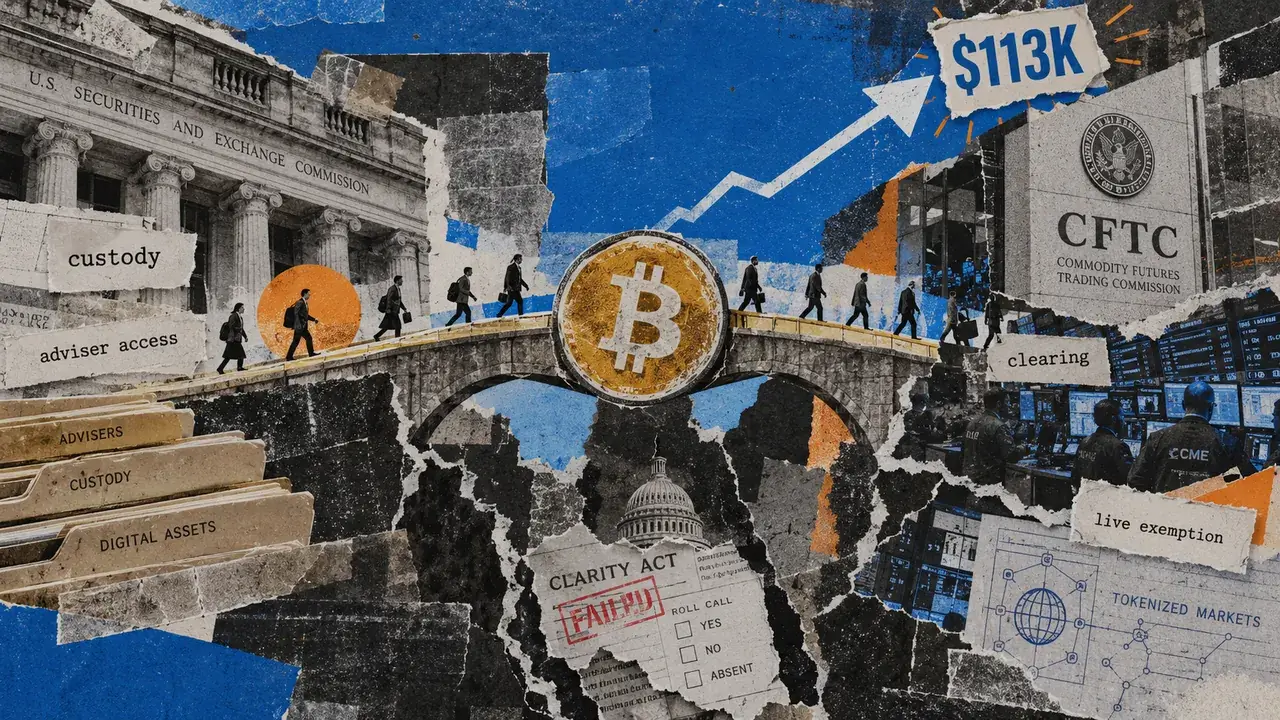
Bitcoin’s $113,000 case strengthens as US regulators push 9 crypto actions
The US Securities and Exchange Commission (SEC) proposed a custody framework on Oct. 1 that would let investment advisers and regu...

Coinbase completes Deribit switch, ending International Exchange trading
Coinbase completed the migration of Coinbase International Exchange to Deribit on Oct. 1, ending trading on its former internation...

Frank Holmes: They Will Print $100 Trillion – Why to Buy Bitcoin & Gold
Bitcoin Magazine Frank Holmes: They Will Print $100 Trillion – Why to Buy Bitcoin & Gold Bitcoin miners already have the power, th...
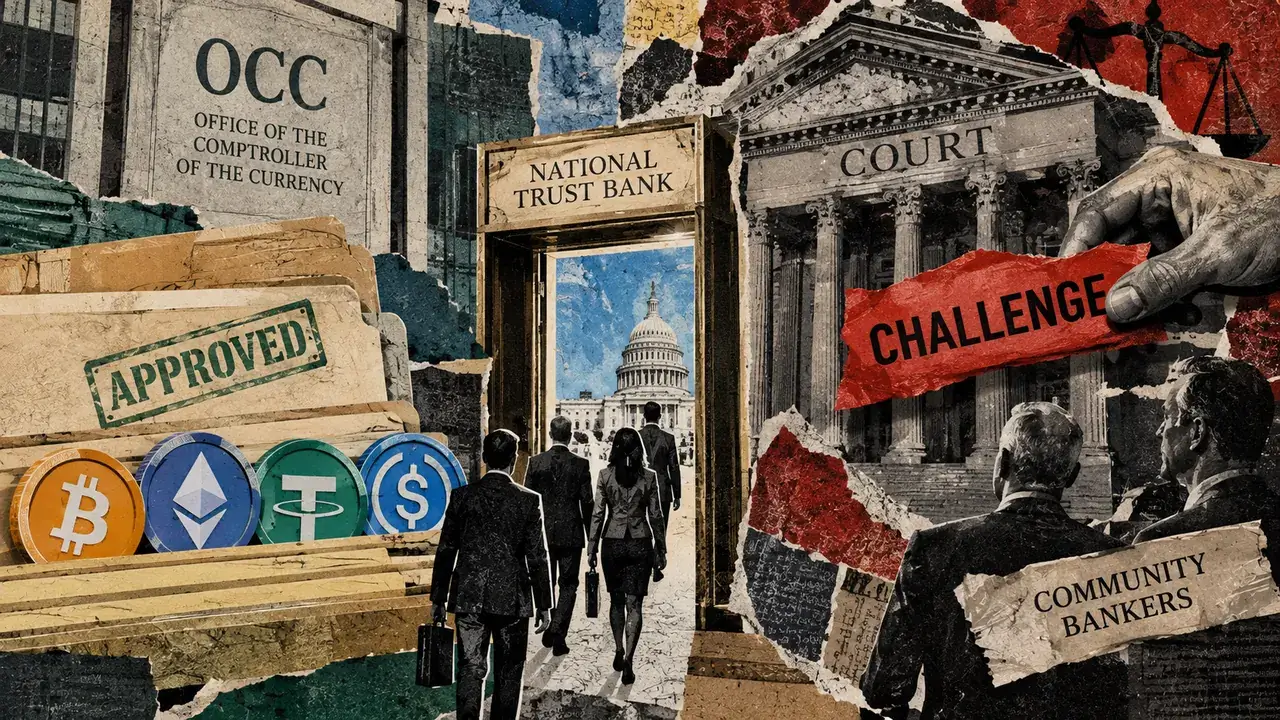
Bankers sue to overturn OCC trust-bank rule used by crypto firms
The Independent Community Bankers of America sued the OCC in federal court in Washington on Oct. 2, two weeks after the agency app...
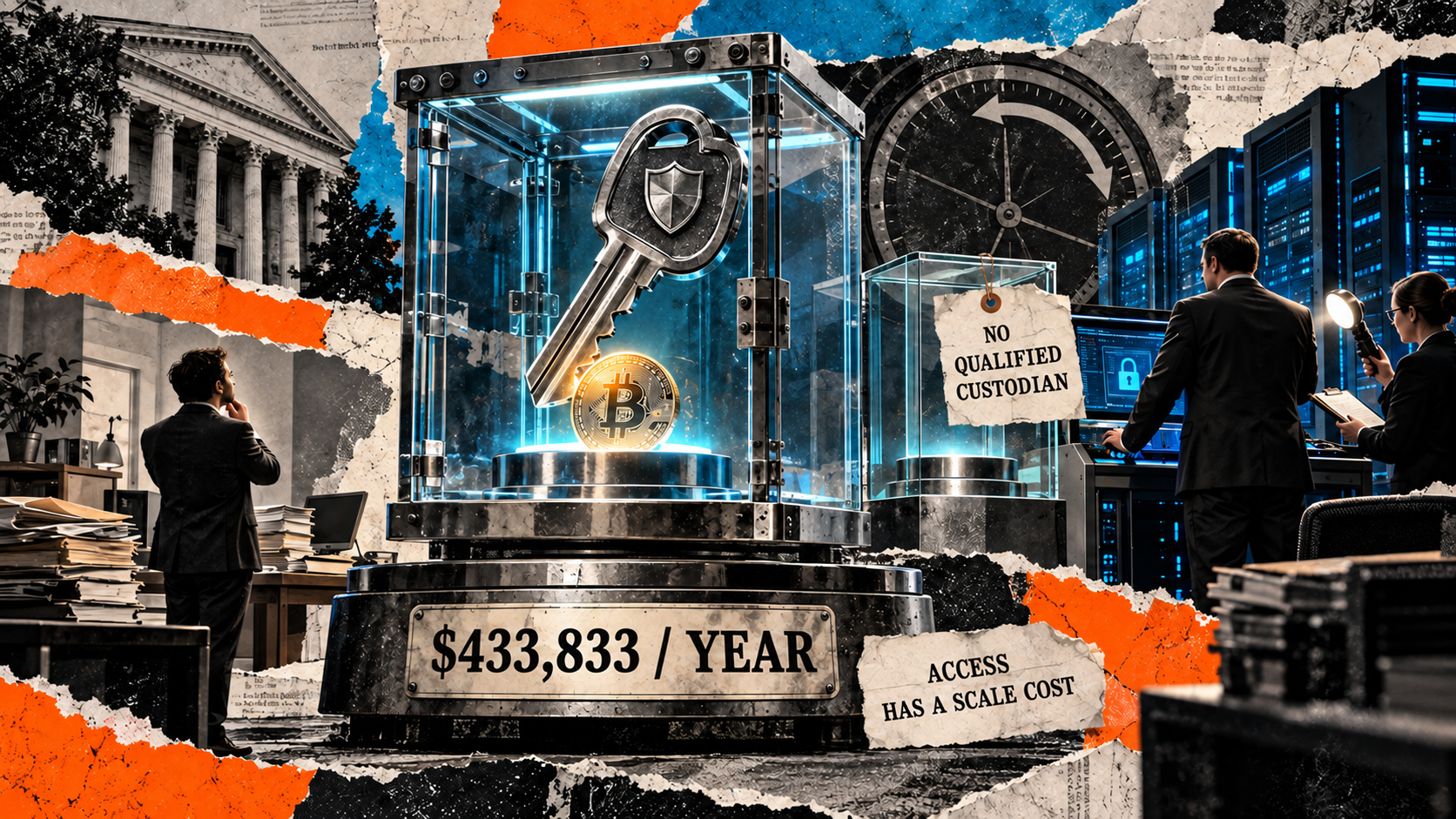
New SEC crypto rules threaten small advisers, but big firms win
The US Securities and Exchange Commission’s proposed crypto custody fallback could broaden investment choices while making them ea...

Stablecoin issuers have replaced 40% of China’s lost US Treasury demand
Stablecoin issuers are emerging as a new source of demand for US government debt as foreign official holdings lose ground. Tether...