$50M Vanishes in Seconds: Copy-Paste Wallet Error Triggers One of Crypto’s Costliest Address Scams
Key Takeaways: A crypto user lost nearly $50 million in USDT after copying a spoofed wallet address from transaction history. The attack used address poisoning, exploiting wallet interfaces that hide the middle of addres...
Archive context
Older archive item. Useful for background and entity history, but not a fresh market-moving signal.
Key Takeaways:
- A crypto user lost nearly $50 million in USDT after copying a spoofed wallet address from transaction history.
- The attack used address poisoning, exploiting wallet interfaces that hide the middle of addresses.
- Funds were quickly swapped and routed through multiple wallets, with portions sent to Tornado Cash, limiting recovery options.
A single copy-paste mistake has resulted in one of the most expensive user errors ever recorded on-chain. The incident highlights how simple interface habits can override otherwise cautious behavior and lead to irreversible losses.
How a Routine Test Transfer Turned Into a $50M LossAccording to on-chain investigators, including Lookonchain, the victim began with a step many experienced users consider best practice: a small test transaction. The user sent 50 USDT to a familiar personal wallet address to confirm accuracy before moving a much larger amount.
That test transfer, however, became the trigger.
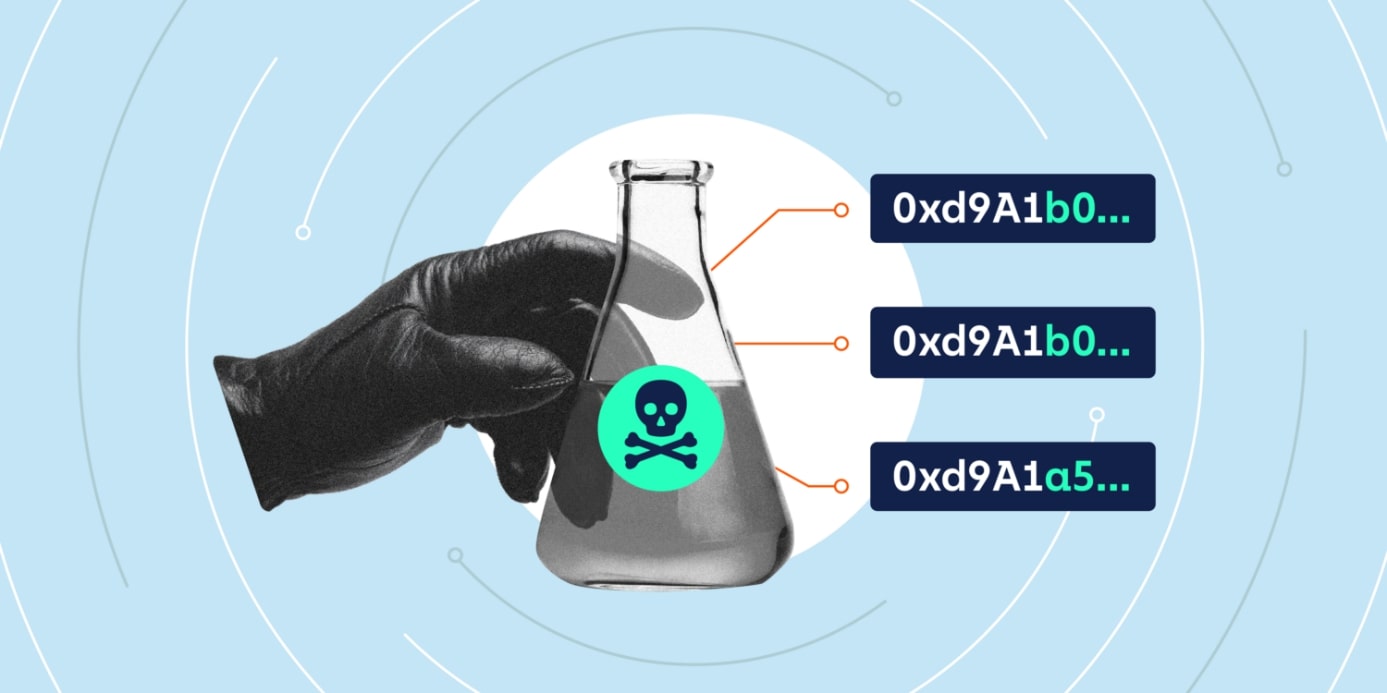
Within moments, a scammer deployed an address poisoning tactic. The attacker created a wallet address, which had the same first, and last four digits as the genuine address of the victim. A small transaction was then sent to the victim on this address which looked as the real one, making sure that it would be recorded in the wallet of the transaction history.
When the victim returned to complete the main transfer: 49,999,950 USDT, they copied the address from transaction history rather than the original saved source. Because many wallet interfaces truncate addresses with “…”, the fake address appeared legitimate at a glance. The money was transferred at once and permanently to the hacker.
Read More: Pi Network Flags Scam Wallet Amid $346M Token Risks as 60M Users Await Unlock
Address Poisoning: A Low-Tech Attack With High ImpactThere is no need to hack personal keys or to make the use of smart contracts. It is dependent on human interface and behavior.
Why This Attack Still Works at ScaleMost wallets abbreviate addresses in order to enhance readability. Transfers are frequently checked by the user by checking the first and the last address. This is abused by attackers who generate addresses that reflect such visible characters.
In this instance, the scammer did this immediately after the test transaction and it signifies automatic monitoring. The attacker made convenience hide a better reason to take caution by placing a near-identical address in the history of transactions of the victim.
This method is considered basic compared with complex DeFi exploits. Yet the outcome shows that even “simple” scams can produce catastrophic losses when large sums are involved.
On-Chain Movements After the TheftBlockchain records show that the stolen USDT did not remain idle. The attacker very swiftly exchanged the part of the funds to ETH and sent them to several wallets, which is typical to diminish the traceability.
The assets were later transferred to Tornado Cash, a privacy mixer that hides the trails of transfers. As soon as the money is invested in such services, recovery is extremely unlikely without an immediate action of the exchanges or validators.
The chain of wallets was described by analysts who claimed it was efficient and preplanned meaning the scammer was all set to make an action as soon as the big transfer was made.
Why This Case Shocked AnalystsAddress poisoning is widely known and often discussed as a nuisance scam involving small amounts. What makes this case stand out is the scale and the profile of the mistake.
The victim followed a common safety step by testing with a small transfer. Ironically, that action gave the attacker the signal needed to deploy the spoofed address at exactly the right moment.
On-chain observers noted that just seconds spent copying the address from the original source, rather than transaction history would have prevented the loss entirely. The speed of blockchain finality left no window for reversal.
Read More: Shenzhen Issues Crypto Fraud Alert as Stablecoin Scams Multiply Across China
Wallet Design and the Human FactorThis incident raises questions about wallet UX choices. Truncated addresses improve visual clarity but reduce security for users handling large sums.
Some wallets now warn users about address poisoning or flag addresses that closely resemble known ones. Others offer address whitelisting, where transfers are restricted to pre-approved addresses. Adoption of these features, however, remains inconsistent.
For high-value transfers, reliance on visual checks alone has proven insufficient. The case shows how even experienced users can fall into predictable patterns under time pressure.
The post $50M Vanishes in Seconds: Copy-Paste Wallet Error Triggers One of Crypto’s Costliest Address Scams appeared first on CryptoNinjas.
Why this matters
This blockchain story adds another data point to the current market tape and is useful when read alongside nearby source coverage.
Original source
Read on CryptoNinjasRelated market context

Samsung Wallet adds USDC transfers on Solana for US Galaxy users
Samsung's integration of USDC on Solana into its Wallet app could accelerate mainstream crypto adoption by simplifying cross-borde...

UK tax rules raise fears of linking Bitcoin users to their home addresses
The new UK tax rules could compromise user privacy, potentially exposing Bitcoin users to security risks and international data sh...
Ledger Says Organized Crime Group Spent Millions Targeting Hardware Wallet Users
Bitcoin Magazine Ledger Says Organized Crime Group Spent Millions Targeting Hardware Wallet Users Ledger has issued a statement fo...
Russia’s central bank bans Bitcoin transfers to self-custody wallets
The Bank of Russia bans transfers from regulated accounts to self-custody wallets as Sberbank wins approval to offer crypto exchan...
Criminals steal an estimated $90M in crypto using tampered hardware wallets
The incident highlights vulnerabilities in supply chains and raises concerns about the security of crypto assets, impacting user t...

Coinbase’s x402 Records 138.5M Transactions: Chainalysis Shows AI Agents Reshaping Crypto Payments
According to blockchain analytics firm Chainalysis, activity has expanded sharply since the protocol’s early stages, as autonomous...