$55 million Aave stablecoin pool sees just $4.4 million available for withdrawals
Aave's USDT0 stablecoin lending pool on the Monad network displayed a 6.10% annual percentage rate over the weekend, but only about $4.4 million of its $55.9 million supplied balance was unborrowed. For a lender weighing...
Archive context
Older archive item. Useful for background and entity history, but not a fresh market-moving signal.
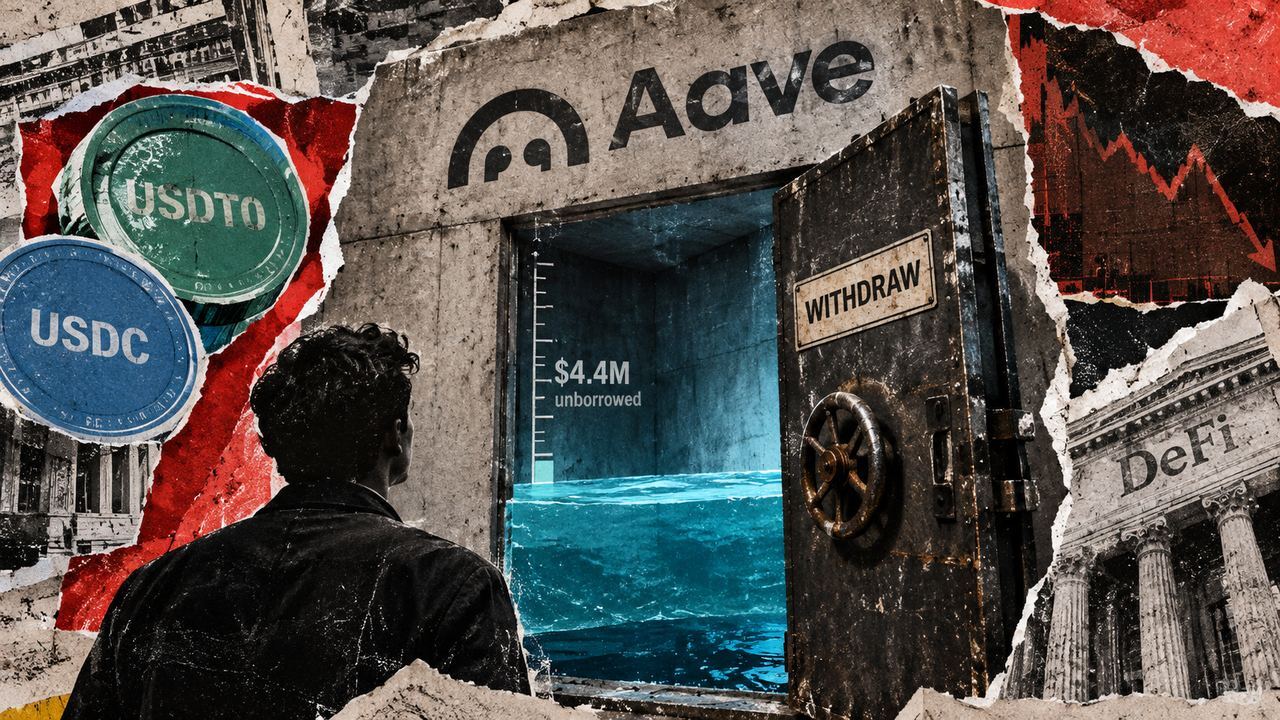
Aave's USDT0 stablecoin lending pool on the Monad network displayed a 6.10% annual percentage rate over the weekend, but only about $4.4 million of its $55.9 million supplied balance was unborrowed. For a lender weighing a large withdrawal, that smaller number mattered more than the headline yield.
Aavescan snapshot showed $51.5 million borrowed from the reserve. It followed a Sept. 11 analysis in which Aave service provider TokenLogic documented an earlier sharp retreat in USDT0 deposits. Together, the figures show how an attractive lending rate can coexist with limited room for a cash exit.
That is a consequence of how lending pools work. When suppliers remove tokens while loans remain outstanding, a greater share of the remaining pool is borrowed. Aave's interest-rate curve can then raise returns for the lenders who stay. The rising rate may reflect a shrinking cash buffer even without an increase in borrowing.
The withdrawal balance behind the yieldAave's withdrawal rules limit suppliers to underlying tokens that are available and have not been borrowed. Cash access here means receiving those stablecoin tokens, rather than redeeming them for fiat currency. A depositor using the position as collateral may face another constraint: withdrawing must leave enough collateral to support the depositor's own loans.
Subtracting the rounded USDT0 supplied and borrowed balances gives approximately $4.4 million, or 7.9% of supply, left unborrowed. That is a pool-wide estimate from a dashboard capture, not an exact transaction quote or cash reserved for one account.
A hypothetical $5 million direct withdrawal would exceed that buffer if no fresh deposits or repayments arrived first. This does not establish that anyone attempted such a withdrawal or that a transaction failed. It shows why the size of an intended exit belongs beside the yield when assessing a lending position.
The same snapshot also shows why the finding should stay specific to the reserve:
Aave V3 Monad reserve Supplied Borrowed Estimated unborrowed balance Total supply APR USDT0 $55.9 million $51.5 million $4.4 million 6.10% USDC $197.3 million $180.0 million $17.3 million 6.10%Source: Aavescan, Sept. 12, 2026, 21:09 UTC. Estimated unborrowed balances are calculated from rounded supplied and borrowed figures.
USDC offered the same displayed APR with a larger absolute cash buffer, although both reserves had more than nine-tenths of their supplied funds lent out. The difference matters for a withdrawal of a fixed dollar amount. USDC's supplied balance also exceeded the $163.7 million in TokenLogic's earlier reserve table. That larger later balance tempers any suggestion of a uniform retreat across Monad's stablecoin markets, although the observations do not establish what caused the additional supply.
In its Sept. 11 report, TokenLogic said USDT0 supply peaked at $167.3 million on Aug. 15 and fell to about $57.2 million over the following roughly three weeks, while debt stayed between $53 million and $62 million. Those are its historical observations, separate from the Sept. 12 snapshot.
Its hourly analysis covered Aug. 8 through Sept. 7. USDT0 spent 261 of 721 hours above its 92% optimal utilization threshold, including 13 hours above 98%. The peak hourly borrowing APR was 27.21%. That was an annualized borrower rate at a point in time, not a lender's realized annual return.
Aave's interest-rate model uses one slope below the optimal utilization point and another above it. As the reserve approaches full utilization, the curve makes borrowing more expensive. The higher rate is intended to encourage borrowers to repay and suppliers to add funds, either of which can restore withdrawal liquidity.
The distinction is consequential. New borrowing can support a higher rate, but withdrawing deposits can also push the rate up by reducing the cash supporting existing loans. A yield increase alone cannot distinguish those paths.
Related Reading Aave’s proposed interest rate hike threatens to crush Ethena’s most popular yield loopLlamaRisk's later Sept. 11 review recommended raising the USDC and USDT0 Slope1 parameter from 4.40% to 5.00%, a 60-basis-point increase. It kept their 92% optimal utilization point, base rate and second slope unchanged.
A higher curve can improve what suppliers earn, but changing a rate parameter does not itself put cash into the reserve. Execution of the recommendation was unconfirmed at reporting time. TokenLogic's roughly 6.28% projected displayed rate also depended on rebasing incentive campaigns after execution; the Sept. 12 observed total was 6.10% APR.
TokenLogic discloses that it is an active Aave DAO service provider. LlamaRisk says it independently prepared its review and receives part of its funding from the Aave DAO.
Interest and incentives buy different thingsThe 6.10% headline contained two components. In the Sept. 12 snapshot, USDT0's displayed components were 4.34% protocol APR plus an estimated 1.76% WMON reward APR. USDC's total consisted of 4.07% protocol APR and 2.03% in WMON rewards.
The protocol component comes from lending activity; the reward component comes from an incentive campaign. TokenLogic proposed shifting more compensation toward interest paid by borrowers. It also described an alternative in which the earlier 5.70% target stayed in place while subsidy spending fell. A change in the mix therefore need not translate into the same change in the displayed total.
Morpho offers a useful comparison of that mix. In TokenLogic's Sept. 7 comparison, the Ethereum PayPal USD Main V2 vault showed 2.62% organic APY and 2.96% incentive APR. Sentora RLUSD Main V2 showed 2.53% organic APY and 3.57% incentive APR. The incentive component was material in both examples.
Those historical figures describe different stablecoins and should not be treated as Sept. 12 alternatives to the Monad quote. APR annualizes a rate without compounding; APY includes compounding assumptions. Neither a mixed display nor a past average promises the return a depositor will ultimately receive.
Morpho's reward documentation separates native vault APY, direct and forwarded reward APR, and fees. Its V2 architecture can route assets into Morpho lending markets and other approved yield sources, so native vault yield should not automatically be equated with borrower interest.
Averages introduce another complication. Coin Metrics' Sept. 1 study reported a 4.79% median yield and approximately 5.31% average among Morpho USDC vaults over its preceding 90-day window. Higher-yield outliers lifted the average. That describes a historical distribution across vaults, not a rate available to every USDC lender.
Comparing returns therefore requires the same asset, observation window and treatment of rewards and fees, as well as the underlying exposure. These historical examples explain the components of yield; they do not rank today's withdrawal capacity.
Related Reading Tether is putting $400 million into a $3 trillion Wall Street debt market just as defaults hit a 5-year high Leaving a vault can still leave money lent outAave pools liquidity by asset within a market. Morpho's variable-rate markets pair individual collateral and borrowing assets, while vault curators choose where to allocate deposits. That additional allocation layer makes the withdrawal route part of the comparison.
Morpho's liquidity documentation describes a V2 configuration that draws ordinary withdrawals first from idle tokens and then from one selected market. If idle assets are empty and that market is fully utilized, the withdrawal can revert. This is a documented condition, not evidence that a named vault currently faces it.
There are countermeasures. An allocator can switch the selected market or reallocate funds, and a permissionless mechanism can move available liquidity from an adapter into the vault. These routes depend on the cash available and the vault's configuration.
The in-kind redemption route addresses a different problem. It can replace vault shares with a direct position in an underlying protocol, even when that position remains illiquid. The holder has left the vault but may still lack spendable stablecoins. Penalties and access controls can also affect the route.
Related Reading SEC warning over crypto yield vaults puts DeFi’s secret human controllers in the crosshairsFor Aave's Monad USDT0 reserve, the next useful signals are therefore deposits, repayments and the unborrowed balance alongside the rate. More cash entering or debt being repaid would make a given withdrawal easier to accommodate. A rising APR alongside a shrinking cash buffer would tell a different story.
The yield breakdown explains who pays the lender. The unborrowed balance and withdrawal route explain immediate cash access. Even borrower-funded interest can rise because other suppliers have left, so a larger organic component alone does not establish more durable demand.
The post $55 million Aave stablecoin pool sees just $4.4 million available for withdrawals appeared first on CryptoSlate.
Why this matters
Aave is showing up inside the Stablecoins theme, so this story is worth tracking for follow-through rather than treating it as a one-off headline.
Original source
Read on CryptoSlateRelated market context
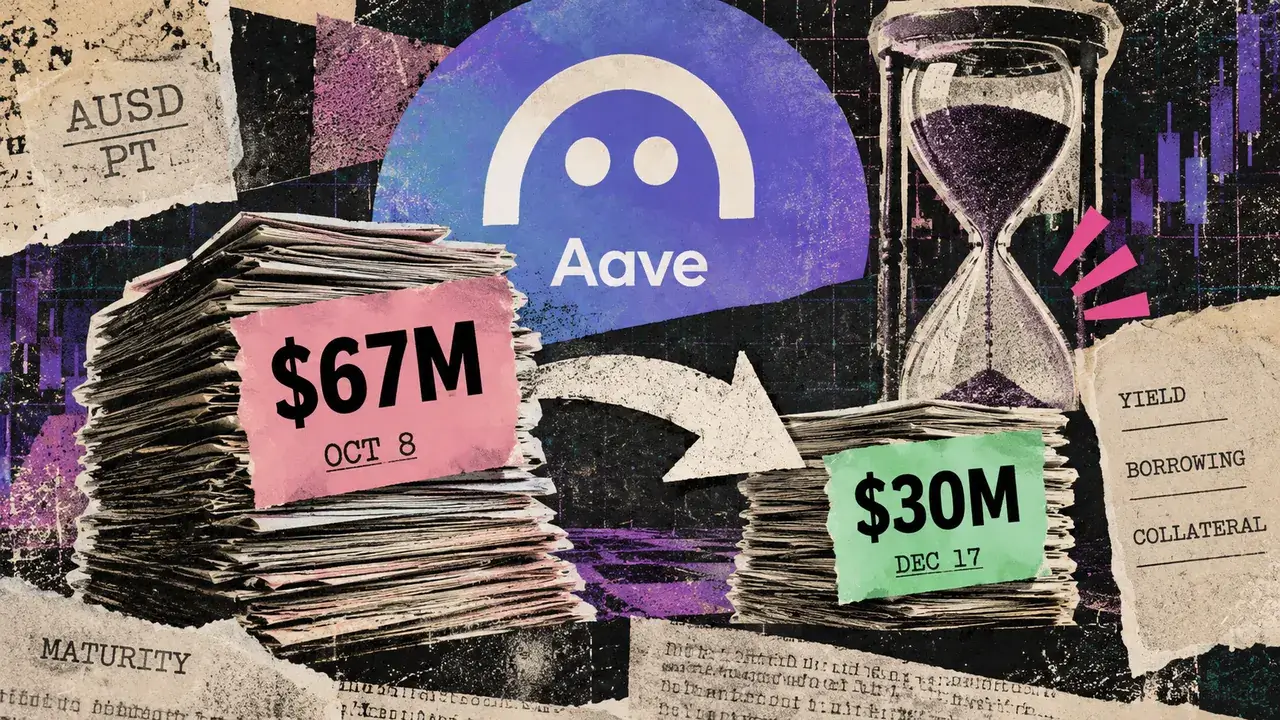
Aave and Pendle may have found a way to keep yield capital from ever leaving DeFi
Aave is approaching a $67 million collateral rollover as one of its fastest-growing fixed-yield trades reaches maturity. About 67....

Ether.fi will launch its own stablecoin on Ethena’s whitelabel infrastructure
Ether.fi's stablecoin launch could reshape its ecosystem, enhancing integration of staking and DeFi, while impacting stablecoin ma...

Tether’s tokenized gold piles into DeFi as Aave takes the lion’s share
Tokenized gold's integration into DeFi could reshape financial markets by enhancing liquidity and diversifying collateral options....

Ether.fi Is Launching Its Own Stablecoin, With Ethena Running the Reserves
Ether.fi, which started as an Ethereum liquid staking protocol and now also runs a crypto card business, is launching its own U.S....

Conduit sues Tether over $2.76 million in frozen USDT
The lawsuit highlights potential counterparty risks in stablecoin transactions, raising concerns about asset control and legal rec...

Ripple and Circle backs OKX as it targets the next wave of stablecoin users
OKX brought Circle, Ripple and Standard Chartered’s venture arm onto its cap table as the crypto exchange broadens its push into s...