A DeFi giant that once held $3 billion is now proposing to wind itself down
DeFi platform Balancer is proposing an orderly shutdown after a cost-cutting overhaul failed to revive revenue following last year’s $128 million exploit. The decentralized exchange’s Sept. 14 governance proposal would e...
Archive context
Older archive item. Useful for background and entity history, but not a fresh market-moving signal.
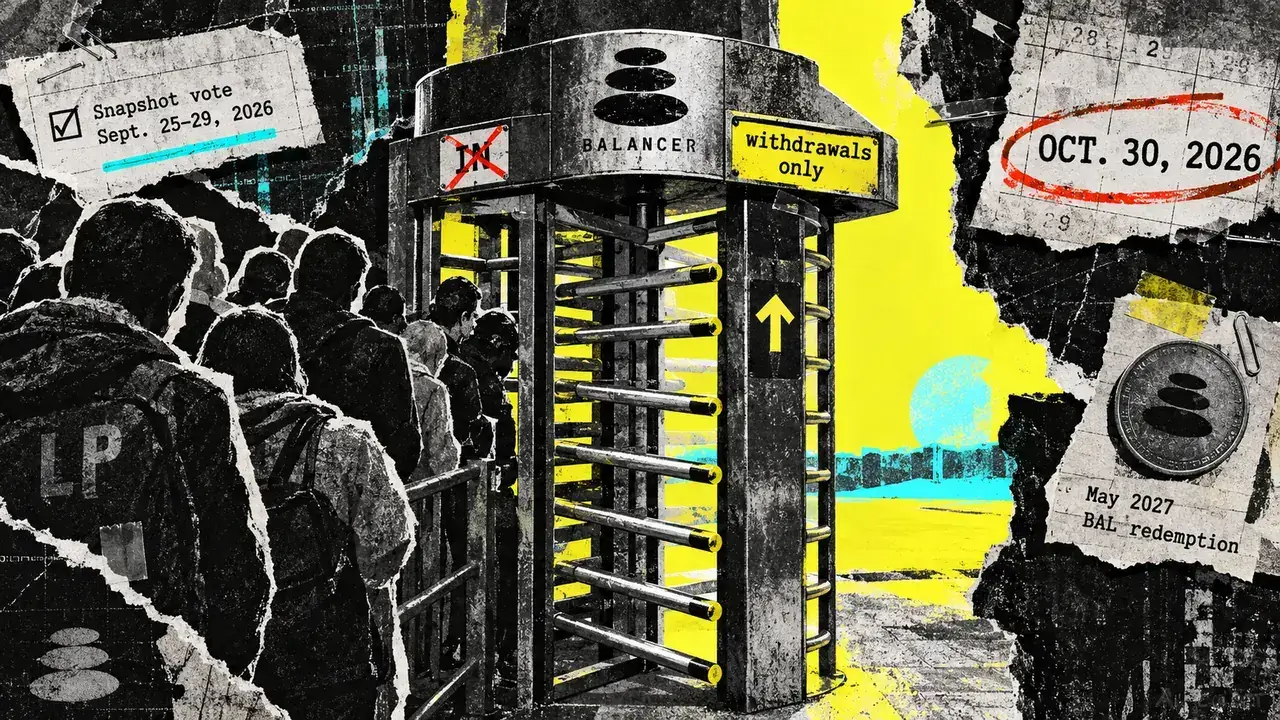
DeFi platform Balancer is proposing an orderly shutdown after a cost-cutting overhaul failed to revive revenue following last year’s $128 million exploit.
The decentralized exchange’s Sept. 14 governance proposal would end new business development, begin winding down operations, and eventually distribute the remaining treasury to BAL holders. Token holders are scheduled to vote on the plan from Sept. 25 to Sept. 29.
The proposal comes about six months after Balancer Labs, the corporate entity behind the protocol, closed following a Nov. 3, 2025 exploit that drained roughly $128 million from Balancer v2 pools across several blockchains.
Data from DeFiLlama showed that Balancer once ranked among DeFi’s largest trading venues, with more than $3 billion in total value locked at its 2021 peak. That figure has fallen to about $58 million, reflecting both a broader contraction in activity and the protocol’s struggle to rebuild after the attack.
Marcus Hardt, former Balancer Labs chief executive, said the DAO had already tried a narrower survival plan. Holders approved proposals in April that ended token emissions, redirected protocol fees to the treasury and cut operating costs while a smaller team focused on generating revenue from Balancer v3.
The restructuring reduced the team from roughly 25 people to 12.5 full-time equivalents and cut the operating budget by about a third. But the commercial recovery never followed.
“The product worked. It did not sell enough,” Hardt said.
Balancer’s v3 bet failed to replace shrinking v2 revenueThe turnaround strategy centered on v3, including Boosted Pools and AutoRange Pools, formerly known as reCLAMM. Hardt said the latter was expected to help carry the protocol toward profitability after completing security work and reaching production.
Balancer also kept pursuing integrations with other crypto projects. Some discussions progressed, but commitments remained smaller and slower than management had expected.
Most protocol revenue still came from v2, while v3 failed to grow quickly enough to replace it.
Hardt said the November exploit weighed more heavily on adoption than he initially expected. Prospective partners repeatedly raised the hack during commercial discussions, forcing the team to explain what had happened, how the protocol had changed and why v3 should be viewed differently.
Many counterparties accepted those explanations, he said, but the damage still showed up in longer decision cycles and weaker commitments.
By August, Hardt said he no longer saw a funded route that could support the level of development v3 needed.
“I do not see a funded path that changes this picture,” he said, adding that continuing to spend treasury assets on a strategy already tested would be unfair to token holders.
Aave founder Stani Kulechov described the proposed closure as a loss for the sector.
“Sad to see this coming to an end,” Kulechov said. “Balancer has been pioneering DeFi. Huge respect for the team.”
LPs face an October exit deadlineIf holders approve the proposal, liquidity providers would face the first major operational change on Oct. 30.
Pools that can be paused would move into withdrawals-only mode, with recovery mode enabled where necessary to keep exits available. Pools that cannot be paused would continue operating, though Balancer would reduce protocol fees to zero where contracts allow.
The DAO has yet to publish a pool-by-pool treatment, leaving liquidity providers with a proposed deadline but no final list of which pools will be paused, kept running, or handled differently because of contract limitations.
Funds recovered from the November exploit would remain outside the treasury distribution and be reserved for affected liquidity providers.
BAL holders would face a later process. A six-month redemption round is proposed for the end of May 2027, when holders could burn BAL in exchange for a pro-rata share of treasury assets measured at the opening snapshot.
The proposal estimates the managed treasury at at least $9 million, though the final amount will depend on asset prices, remaining expenses, third-party claims, and an audit of DAO-controlled holdings.
A second distribution would go only to addresses that participated in the first redemption round, with the later allocation based on how much BAL each address redeemed. Holders who skip the first window would lose access to that follow-on distribution.
The protocol’s code will remain open source, leaving room for developers to fork or continue parts of the technology independently. Hardt said some former team members are already considering that path.
BAL holders now make the immediate decision. If the vote passes, attention will quickly shift to the pool-level exit plan and whether remaining partners migrate liquidity elsewhere, fork Balancer’s technology, or abandon products built on top of the protocol.
The post A DeFi giant that once held $3 billion is now proposing to wind itself down appeared first on CryptoSlate.
Why this matters
Aave is showing up inside the Security Incidents theme, so this story is worth tracking for follow-through rather than treating it as a one-off headline.
Original source
Read on CryptoSlateRelated market context
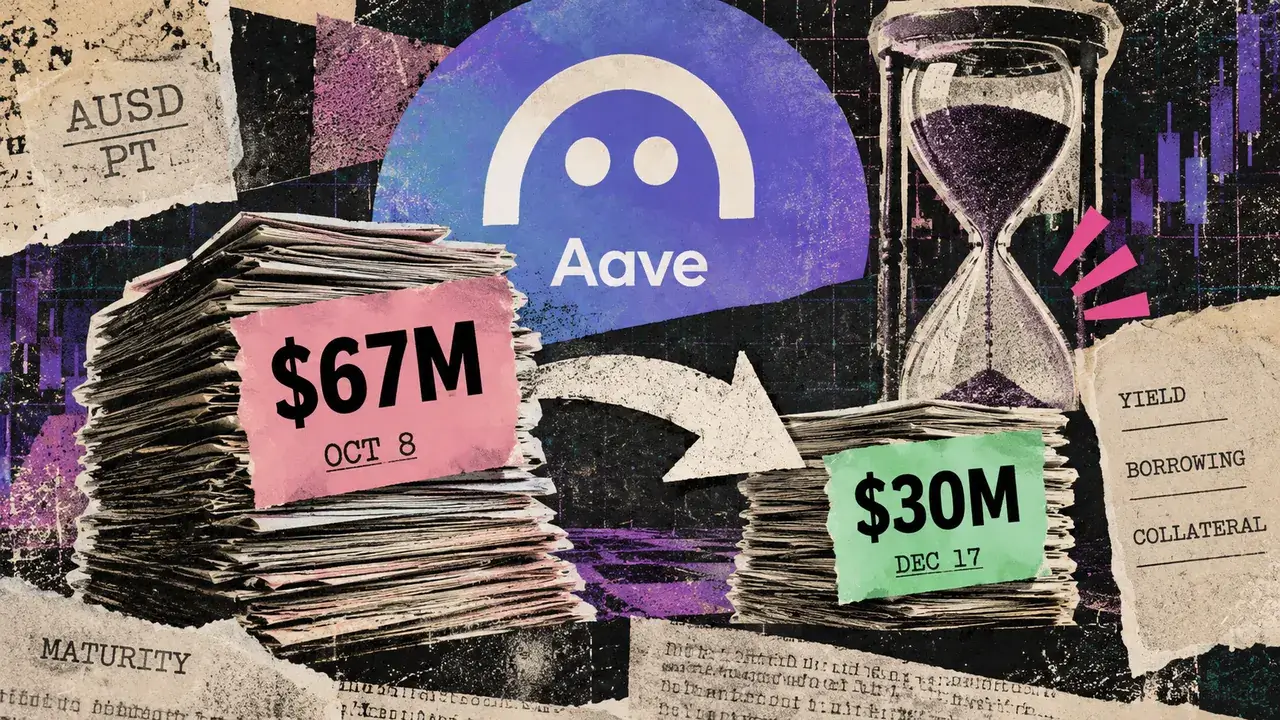
Aave and Pendle may have found a way to keep yield capital from ever leaving DeFi
Aave is approaching a $67 million collateral rollover as one of its fastest-growing fixed-yield trades reaches maturity. About 67....

TOKEN2049 Singapore Schedule Puts Institutional DeFi on the 2026 Agenda
TOKEN2049 Singapore is scheduled for October 7–8, 2026, with confirmed speakers from Nasdaq, BlackRock, and Franklin Templeton app...

Solana treasury DeFi Development authorizes CHAD preferred stock buyback program
Solana treasury firm DeFi Development approved an open-ended program to repurchase CHAD preferred stock if it trades below its $10...

Cardano just added the kind of token controls Wall Street wants and DeFi may hate
Cardano’s proposed programmable-token standard could let a freeze on one asset temporarily block unrelated tokens held in the same...

Superform Activates Earn Strategies for Tokenized Stocks on Base, Powered by Aave
New York, New York, October 6th, 2026, Chainwire Earn Stocks turns supported Coinbase Tokenized Stocks into productive collateral...

Ripple and Circle backs OKX as it targets the next wave of stablecoin users
OKX brought Circle, Ripple and Standard Chartered’s venture arm onto its cap table as the crypto exchange broadens its push into s...