Aave Opens Its First Externally Curated V4 Markets With Sentora
Aave’s first externally curated V4 markets are live on Ethereum, according to Sentora’s October 22 launch explanation. The curator says it is managing active borrowing markets for RLUSD, PYUSD and OUSD within a governanc...
Archive context
Older archive item. Useful for background and entity history, but not a fresh market-moving signal.
Aave’s first externally curated V4 markets are live on Ethereum, according to Sentora’s October 22 launch explanation. The curator says it is managing active borrowing markets for RLUSD, PYUSD and OUSD within a governance-approved deployment.
TL;DR: Aave’s first externally curated V4 markets are live on Ethereum with Sentora managing strategy and risk settings. Borrowing options include RLUSD, PYUSD and OUSD.
Sentora manages collateral rules, risk parameters, interest-rate curves and oracle configurations. Those responsibilities put practical decisions about lending conditions with an outside specialist while retaining the framework of Aave governance.
Shared Liquidity, Different Lending RulesAave V4 divides the system between hubs and spokes. The protocol’s liquidity documentation describes a hub as the central settlement and accounting layer holding assets. Spokes are specialized smart contracts through which users interact with a market’s collateral, borrowing and liquidation logic.
This arrangement lets different markets draw on an underlying liquidity pool while applying different conditions. Governance controls how much capacity a spoke receives. Credit limits constrain borrowing, and supply limits constrain additions, giving the system ways to limit activity without requiring every market to use the same collateral policy.
For a borrower, that makes the identity of the market relevant. Two markets built on the same protocol can offer different assets, borrowing capacity and liquidation conditions. A shared brand or common liquidity source alone does not establish that their positions will behave alike during a sharp market move.
For suppliers, the practical comparison is between the income offered and the market rules that produce it. A higher rate can be attractive, but it also makes it important to inspect which borrowers can access the liquidity and what happens if collateral values deteriorate.
A New Layer To MonitorSentora has also extended its Risk Radar to cover the V4 structure. The monitoring system separates hub, spoke and asset views, with tools for comparing caps against usage and showing where borrowing is concentrated. A governance tracker records changes to assets and parameters.
The company gives a practical example of how a limit works: a spoke that reaches its borrowing cap cannot draw additional funds until capacity becomes available through repayment or an approved increase. That restriction is relevant even when users can see liquidity elsewhere in the wider system.
For DeFi users assessing the new markets, the launch creates another set of decisions to examine. The curator’s collateral choices matter alongside the protocol’s contract design; the market’s allocated capacity matters alongside the total liquidity headline. Monitoring can make those differences visible, although a dashboard cannot remove losses from an unsuitable collateral policy.
The first rollout provides a live test of that division of responsibility: Sentora sets market strategy, Aave supplies the lending framework, and governance determines the boundaries within which the markets operate.
Written by the News Desk and edited by Samuel Rae.
Why this matters
Aave is showing up inside the Stablecoins theme, so this story is worth tracking for follow-through rather than treating it as a one-off headline.
Original source
Read on NewsBTCRelated market context

Ethereum Dancing on Two Fronts as Quantum Upgrade Advances and Treasury Leverage Bites
Ethereum developers want to upgrade the network to be quantum-ready by 2027, potentially accelerating one of its biggest security...

Aave Proposal Targets $3.5M in Added Annual Revenue Through Reserve-Factor Changes
TL;DR: TokenLogic proposes changes to Aave's reserve factors across 54 reserves. Its model estimates $3.5 million in additional an...
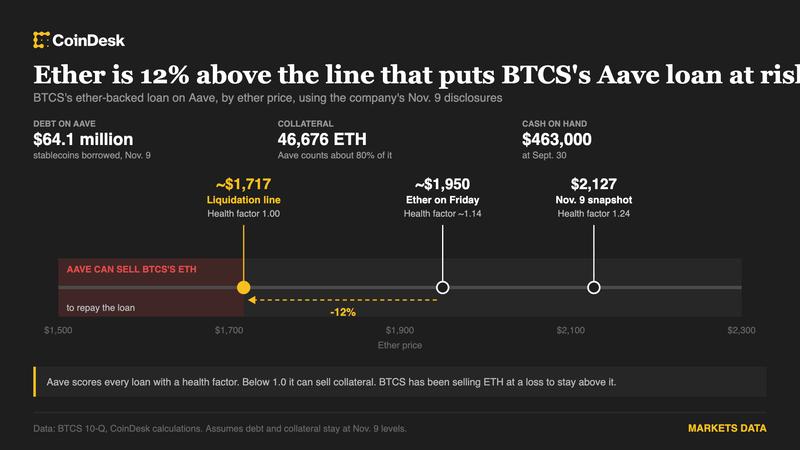
Ethereum treasury firm BTCS sold ether at a loss to keep $64 million Aave loan healthy
The Nasdaq-listed company has 46,676 ETH backing its borrowings, and the loan could become eligible for liquidation if ether slide...

Ethlabs Calls for Ethereum Quantum Protection in 2027 as Upgrade Priorities Shift
TL;DR: Ethlabs proposes quantum readiness in 2027 and plans to withdraw its quick-slots work from Hegotá. Developers still need to...

U.S. Wholesale Inflation Hits 6.5%—What It Means for Bitcoin’s Next Move
Bitcoin’s inflation problem has a fresh complication. U.S. wholesale prices rose 6.5% over the year to October, their fastest annu...

AAVE Slides 30% in Four Weeks, Trailing Bitcoin and Ether
The governance token's losses exceeded those of bitcoin and ether, while Aave's dollar-denominated locked value fell by a smaller...