Arbitrum Launches Timeboost to Reduce Congestion and Capture MEV Efficiently
Key Takeaways: Timeboost holds a sealed-bid auction to ensure high-value transactions come first. The update minimizes spam and lag competition on Arbitrum. Early results show strong adoption, with 100% auction utilizati...
Archive context
Older archive item. Useful for background and entity history, but not a fresh market-moving signal.

Key Takeaways:
- Timeboost holds a sealed-bid auction to ensure high-value transactions come first.
- The update minimizes spam and lag competition on Arbitrum.
- Early results show strong adoption, with 100% auction utilization at peak times.
Arbitrum, the second-largest Layer 2 (L2) network on Ethereum, with $2.4 billion total value locked (TVL), has rolled out Timeboost, its latest upgrade aimed at fixing long-standing issues in the L2 ecosystem, such as network congestion, transaction spam, and MEV inefficiencies.
Timeboost is a transaction ordering method that realigns the FCFS mechanism to sealed-bid, second-price auctions. It rewards high-value transactions with priority access to the network’s new “express lane,” which bypasses the usual 200-millisecond delay faced by others.
Why Timeboost? Responding to Latency and SpamOffchain Labs, the team behind Arbitrum, said that while the FCFS models of the world are good for user-friendliness and protect against harmful MEV techniques such as front-running, they incentivize off-chain latency races and spamming.
Participants often invest in faster hardware or flood the mempool in an effort to prioritize transactions. The system experiences unnecessary pressure as a result. Timeboost, instead, shifts competition on-chain — enabling entrants to bid for priority, not race against time or spam the network.
These sealed-bid auctions occur every 60 seconds, where winners receive exclusive access to submit their transactions into the express lane. The network reached 100% express lane utilization at 15:00 UTC, showing strong demand.
How Timeboost Works: Instant Processing Through Sealed-Bid AuctionsTimeboost operates through three core components:
- Express Lane: Auction winners can submit high-priority transactions to get processed immediately, skipping the 200ms wait.
- Autonomous Auction System: An off-chain system conducts a sealed-bid auction every minute to arbitrate access to express lane.
- On-Chain Smart Contract: The auction outcome and fund distribution are managed by a smart contract which provides transparency and reliability.
Net block time of the system remains fixed at 250 milliseconds, keeping the fast transaction speeds that Arbitrum users are used to. More importantly, non-express transactions aren’t deprioritized severely — they’re just delayed by a short, predictable window of time.
Timeboost: Economic Incentives for Chains and MEV SearchersOne of Timeboost’s standout features is its potential to create new revenue streams. Timeboost channels value directly into Arbitrum’s ecosystem, rather than leaking MEV profits to external actors through hardware races or arbitrage.
Within its first four hours, the protocol, according to Entropy Advisors, had generated $400 in revenue, implying a projected annual run rate of $1.6 million if sustained.
Over 50% of all auctions were won by the top bidder (wallet 0x95c). In second place was Kairos, a tool developed by the creators of Titan Builder and Titan Relay. Many more are lined up to participate as the auction mechanism matures and demand grows.
For MEV searchers, Timeboost is a more predictable and less wasteful way to gain transaction priority. To avoid inundating the network, they now vie for the chance to compete through a series of bidding among themselves.
How Timeboost Affects Users and the Ecosystem As a WholeFor everyday users, the experience is stable. Other than that, the only thing you might notice is a slightly longer processing time — up to around 450 ms for non-priority transactions. The structure of the private mempool is retained, so users are still protected against front running and sandwiching.
Chains can customize Timeboost according to their needs. Although it’s currently implemented on a centralized sequencer, Timeboost should also be compatible with future decentralized sequencer models. Adoption is not mandatory, however, Arbitrum has proposed early deployment to its DAO.
Co-founder and Chief Scientist at Offchain Labs, Ed Felten, stressed that Timeboost enables “searchers to compete more transparently” and gives builders a predictable framework within which to leverage transaction priority.
More News: Tether Partners with Arbitrum to Streamline Cross-Chain USDT Transfers
Timeboost: A Technical and Economic Evolution of ArbitrumWith Timeboost now live, Arbitrum makes a significant stride towards its mission of becoming Ethereum’s most technically sophisticated and economically aligned L2.
More News: Avalon Labs Powers Bybit’s Bitcoin Yield Product With Fixed-Rate Lending Integration
The post Arbitrum Launches Timeboost to Reduce Congestion and Capture MEV Efficiently appeared first on CryptoNinjas.
Why this matters
This blockchain story adds another data point to the current market tape and is useful when read alongside nearby source coverage.
Original source
Read on CryptoNinjasRelated market context

Safe launches Safenet Aegis security network on Ethereum, Gnosis, and Arbitrum
Safenet Aegis' launch could redefine blockchain security, balancing user costs with enhanced transaction safety and governance-dri...
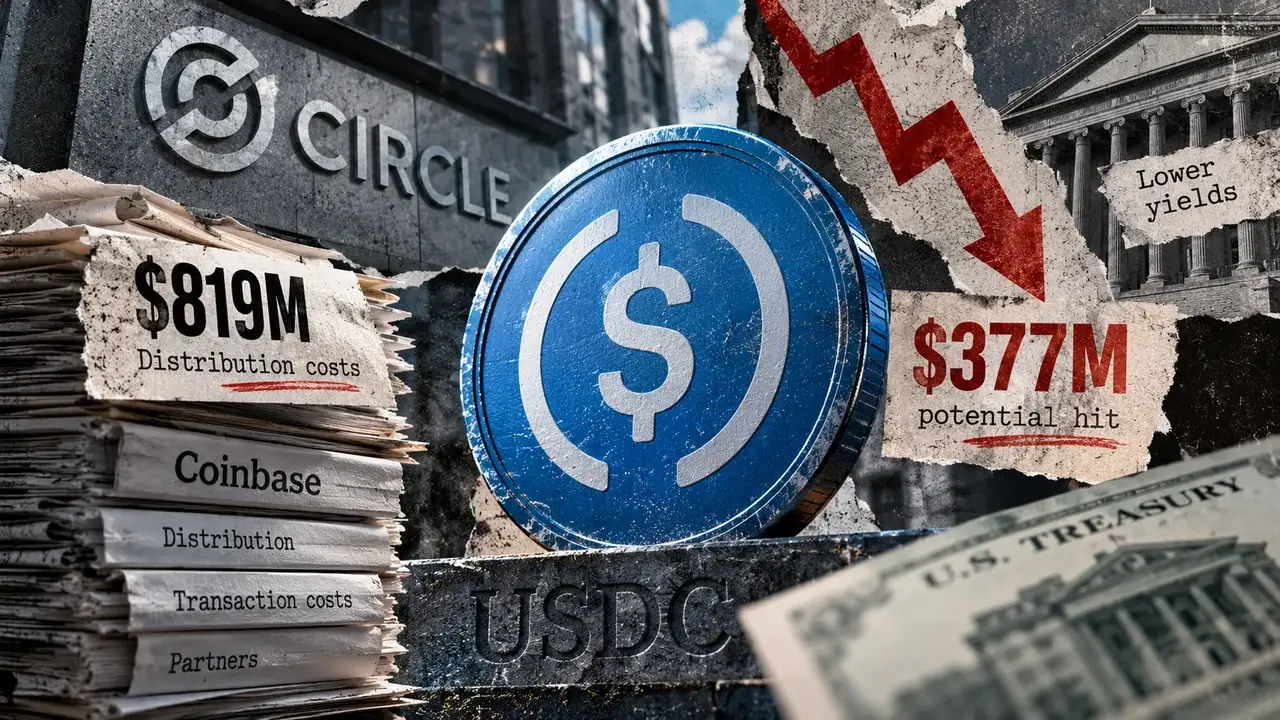
USDC processed $36 trillion in H1 transactions, but Circle kept just 7 cents of every revenue dollar
Stablecoin issuer Circle spent 93% of its first-half revenue on distribution, operations, and investment as USDC processed more th...
The 7 Best USDC on Solana to XMR Swap Platforms in 2026
Swapping USDC on Solana for Monero (XMR) offers a fast, low-cost route into a privacy-focused asset. Leading platforms in 2026 pro...

BFFS26 Denver: Joseph Kelly on Bitcoin Custody and Credit; Alan Lane on Banking Lessons
Bitcoin Magazine BFFS26 Denver: Joseph Kelly on Bitcoin Custody and Credit; Alan Lane on Banking Lessons The Bitcoin for Financial...

Circle Says 59 Cents of Each Revenue Dollar Went to USDC Partners and Transaction Costs
Circle said it paid about $819 million of its roughly $1.4 billion in first-half 2026 revenue to USDC distribution partners and tr...
Solana to enhance transaction speed with Alpenglow upgrade
The Alpenglow upgrade could enhance Solana's market appeal and utility, potentially influencing its price and attracting more user...