Best Practices For Secure Smart Contract Development In Cross-chain Applications
My journey into blockchain security started with a mistake. Back in 2019, I watched a project lose millions due to a single smart contract vulnerability. Since then, I’ve become obsessed with understanding cross-chain ap...
Archive context
Older archive item. Useful for background and entity history, but not a fresh market-moving signal.

My journey into blockchain security started with a mistake. Back in 2019, I watched a project lose millions due to a single smart contract vulnerability. Since then, I’ve become obsessed with understanding cross-chain application security.
Blockchain is a complex ecosystem where a single weakness can unravel everything. Take LI.FI, a platform that’s been pushing the boundaries of cross-chain interactions. They understand something crucial: security isn’t a feature – it’s the foundation of the crypto world.
The uncomfortable truth about cross-chain developmentMost developers think about security as an afterthought. That’s a critical error. Cross-chain applications introduce layers of complexity that traditional security models can’t handle. LayerZero has been instrumental in showing why.
When I talk with blockchain investors, I always start with a hard question: Can your contract survive in a hostile environment? Most can’t. The blockchain world is unforgiving, with attackers constantly probing for weaknesses.
What makes a smart contract truly secure?Context matters more than code. A secure smart contract isn’t just about preventing direct attacks. It’s about understanding potential interaction scenarios across different blockchain networks.
Cryptographic signatures are your first defense, but they’re not a silver bullet. Think of them like complex locks on a multi-dimensional vault. Each signature is a layer of protection, but no single layer is impenetrable.
Real-world security isn’t theoreticalSecurity is a continuous journey of vigilance, anticipation, and strategic foresight. Traditional approaches that treat security as a mere compliance checklist fundamentally misunderstand the dynamic nature of technological vulnerabilities.
The anatomy of comprehensive securityEffective security demands a proactive, multidimensional approach that integrates:
- Predictive risk assessment: Successful security strategies begin with comprehensive threat modeling. This involves meticulously mapping potential attack vectors, understanding system interdependencies, and developing nuanced scenarios that challenge conventional threat perceptions.
- Architectural resilience: True security is engineered, not appended. This means designing systems with inherent redundancy, implementing multiple layers of protection, and creating fail-safe mechanisms that can dynamically respond to emerging threats.
- Contextual vulnerability understanding: Each interaction point represents a potential breach. Security professionals must develop an almost intuitive understanding of how seemingly innocuous connections can be exploited by sophisticated threat actors.
Industry data shows that meticulously designed cross-chain contracts experience 60% fewer security incidents. Those represent real financial protection.
The human elementSecurity is psychological. Developers must think like potential attackers while building systems that remain user-friendly. It’s a delicate balance between robust protection and seamless functionality.
The blockchain ecosystem is constantly evolving. What worked yesterday might be obsolete tomorrow. Continuous learning isn’t just recommended – it’s mandatory.
A personal perspectiveYears of working with blockchain investors have taught me one fundamental truth: security is never perfect. It’s a continuous process of adaptation, learning, and improvement.
Cross-chain applications represent the future of decentralized technology. But that future depends on our ability to build systems that are not just functional, but fundamentally secure.
For developers and organizations venturing into this space, remember: every line of code tells a story. Make sure yours is one of resilience, forethought, and unwavering commitment to security.
Why this matters
This blockchain story adds another data point to the current market tape and is useful when read alongside nearby source coverage.
Original source
Read on Brave New CoinRelated market context

Senate Republicans narrow Blockchain Regulatory Certainty Act, removing criminal protections
The revised act's removal of criminal protections may deter blockchain innovation, as developers face increased legal uncertaintie...

Solana surpasses NASDAQ and NYSE combined with $200M tokenized equity volume in a single day
Solana's rise in tokenized equity trading highlights blockchain's potential to disrupt traditional financial markets with 24/7 acc...

Kraken Lets Users Earn DeFi Yield on Nvidia and ETF xStocks
Kraken has launched on-chain yield vaults for three tokenised securities, enabling qualified clients to earn variable rewards from...

Wyoming Stable Token Commission cites LayerZero security failures in switch to Chainlink CCIP
Wyoming's switch to Chainlink CCIP underscores the critical need for robust security in state-backed digital asset infrastructure....
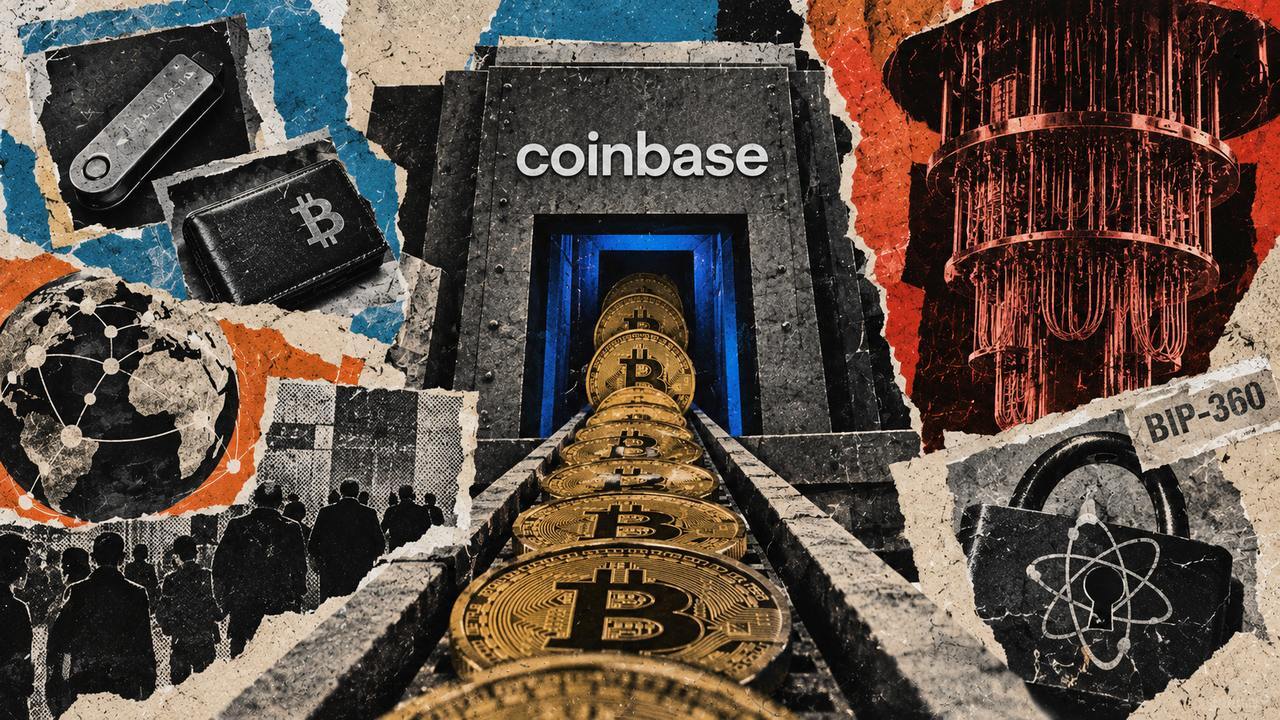
Bitcoin exchanges can reduce quantum exposure before a network upgrade
A future quantum-safe Bitcoin will have to pass through the systems that hold and move today's coins. Exchanges, institutional cus...

A Bitcoin Berkshire Model: Orange Juice
Bitcoin Magazine A Bitcoin Berkshire Model: Orange Juice The corporate Bitcoin landscape is currently dominated by a single, aggre...