Binance Spends $283 Million to Compensate Users Affected by Token De-pegging
Key Takeaways: User compensation of $283 million: Binance paid users who lost their funds due to the sudden depegging of the USDe, BNSOL and WBETH collateral in the market crash of October 10. No system failure: Binance...
Archive context
Older archive item. Useful for background and entity history, but not a fresh market-moving signal.

Key Takeaways:
- User compensation of $283 million: Binance paid users who lost their funds due to the sudden depegging of the USDe, BNSOL and WBETH collateral in the market crash of October 10.
- No system failure: Binance made it clear that trading engines and APIs were not affected during a system failure, which produced UI glitches and legacy orders that caused confusion.
- Transparency pledge & system upgrades: The exchange pledges adjustments to prevent future hiccups, one of its biggest compensation events ever.
On October 10, Binance responded to user losses from a massive market sell-off that temporarily delinked various crypto assets. What first appeared to be a system failure was a mix of UI malfunctions, inactive limit orders from 2019, and extreme liquidity gaps, prompting Binance to issue a $283 million compensation package.
What Caused the $283 Million Payout?Binance emphasized that it was an outcome of macroeconomic shocks and not a malfunction of the platform. Mass sell-offs of institutional investors and retail investors in between 20:50 and 22:00 UTC on October 10 resulted in major price declines in major cryptocurrencies.
Although there was speculation, Binance has affirmed that its future and spot matching engines, APIs, and the internal infrastructure were operational. The problems that affected the users were unique to specific tokens that were used as collateral, specifically USDe, BNSOL and WBETH, which briefly depegged leading to forced liquidation of users in leveraged positions. “This was macro-driven volatility, not a failure of our systems,” Binance emphasized.
Internal statistics indicate that forced liquidations only represented a comparatively low percentage of the overall volume of the crash, an indication that the sell-off was more organic than systematic.
Read More: Meta Financial AI Conducted an Investigation into the Historical Bitcoin Dump on Binance
Inside the Technical Glitches and Depeg Events Dormant Legacy Orders Caused Price DistortionsThe sudden triggering of historical limit orders (some of them dated to 2019) was one of the primary factors that caused confusion. Such orders were not closed on low liquidity pairs, such as IOTX/USDT and ATOM/USDT.
In times of low liquidity such as when the market crashed, these ancient orders would be executed at extreme prices, which would temporarily present the illusion of a flash crash. The existence of the buy orders was overwhelmed by the sell-side pressure due to the one-sided order book.
This resulted in temporary falling of token prices, but real quantities were not very large in these wild prints.
“Zero Price” Glitch: UI Bug, Not Real PricesTo make the situation even worse, a tick-size adjustment in a number of trading pairs generated a user interface display bug. Some signaled values were displayed on the screens, and they were zero, causing panic among the users.
This however, was a front end display problem as explained by Binance. Prices in API data, and trades were conducted in an optimal way. The bug applied to what was displayed in the UI and not real executions.
The exchange has already implemented UI fixes and committed to continuously improving it in order to avoid such display errors in the future.
Ongoing Reviews and User Claims Still in ProcessBinance has dedicated itself to further reviewing the complaints of its users and further payments of claims on compensations. The company has claimed that it would keep people informed through official channels and it would focus on the user-first strategy to address the pending problems.
Additional Measures:
- Reimbursement of delayed in-house transfers and Earn product redemption within the high volatility window.
- UI display protection to eliminate zero-price confusion.
- Continued improvement of risk management in the trading systems.
This incident has caused internal inspections in the Binance risk, UI, and trading engine teams, with the intention of enhancing resilience of the platforms in the event of similar liquidity events.
What Binance’s Crisis RevealsThis accident is a wake-up call to all the centralized exchanges that are trading in the 24/7 crypto markets. Although Binance was not guilty of the actual sell-off, the given chain of UI bugs, executing legacy orders, and poor liquidity exposure resulted in actual losses to real users.
It also emphasizes the difficulties in operating more recent forms of assets, like liquid staking tokens, in leveraged conditions. The depegs in collateral tokens, even temporarily, may lead to disastrous liquidations, especially at the moments when the market is under a high level of stress.
Unlike traditional finance, the crypto market never closes, and the real-time risk management and robust infrastructure is a requirement at all times.
Read More: PayPay Form Capital and Business Alliance with Binance Japan
The post Binance Spends $283 Million to Compensate Users Affected by Token De-pegging appeared first on CryptoNinjas.
Why this matters
This blockchain story adds another data point to the current market tape and is useful when read alongside nearby source coverage.
Original source
Read on CryptoNinjasRelated market context

Orbs – DeFi’s Next Big Users Are Banks and Bots
Why you should listen Ran came to crypto the way many lawyers of his generation did. In 2015 a university friend and future Orbs c...
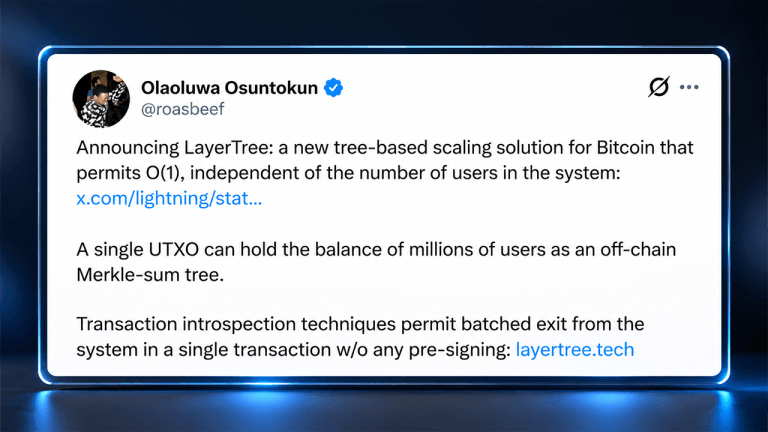
New Tree-Based Bitcoin Scaling Proposal Targets Millions of Users
Bitcoin developer Olaoluwa Osuntokun has unveiled Layertree, a proposal that could squeeze millions of bitcoin owners into a singl...

MEXC Releases October 2026 Proof of Reserves, Reinforcing User Trust Through Verifiable Transparency
Mutsamudu, Comoros, October 16, 2026 – MEXC, a pioneer in 0-fee digital asset trading, has released its October 2026 Proof of Rese...

MEXC AI Trading Report Reveals 85% of Crypto Traders Use AI, But Most Limit Its Control Over Funds
Mutsamudu, Comoros, October 16, 2026 — MEXC, a global cryptocurrency exchange, released its AI Trading Report, based on a survey o...
Binance Claims Fastest $1 Billion Sprint in bStocks With $6 Billion in Share Conversions
Binance has reported that its bStocks product crossed $1 billion in assets faster than any competing tokenised equity offering. Un...

Binance’s bStocks Lead Tokenized Stocks After Crossing $1 Billion
Binance’s tokenized U.S. equities product, bStocks, now holds more than $1 billion in assets under management, the exchange announ...