Blockchain to Become More Relevant in Payments This Year, Sberbank Exec Says
Blockchain technology can help solve current issues with settlements, according to the deputy chief executive of Sberbank. Russia’s largest bank is working with other financial institutions to develop blockchain-based pa...
Archive context
Older archive item. Useful for background and entity history, but not a fresh market-moving signal.
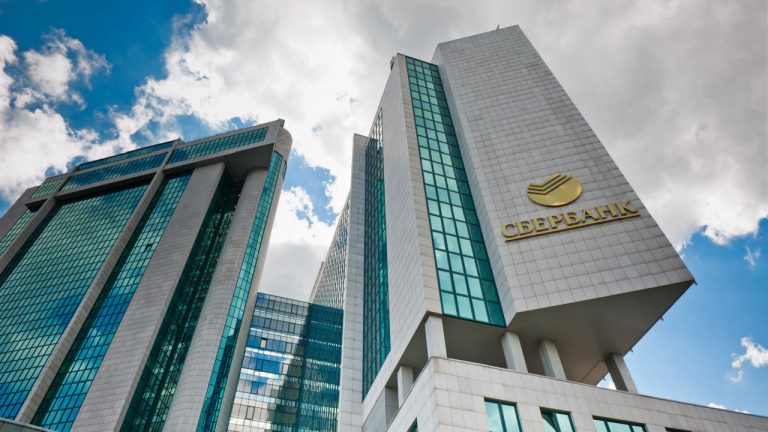
Blockchain technology can help solve current issues with settlements, according to the deputy chief executive of Sberbank. Russia’s largest bank is working with other financial institutions to develop blockchain-based payment applications, the banker revealed.
Sberbank Sees Solution to Russia’s Troubles With Settlements in BlockchainWith major Russian banks disconnected from the main global interbank payment system, SWIFT, due to Moscow’s war on Ukraine, blockchain will help to solve the problem with payments, Sberbank’s First Deputy CEO Alexander Vedyakhin is convinced.
“It is blockchain technology that will make it possible to solve this issue because this is a distributed ledger, there is no one point of decision making, no center, no knife switch that can be shut off,” Vedyakhin explained, quoted by the Interfax news agency.
“Everyone has everything recorded, there are special protocols that make it possible to do this confidentially,” the executive added during a meeting of the Budget and Financial Markets Committee of the Federation Council, the upper house of Russian parliament.
Majority state-owned Sberbank, which is Russia’s largest bank by assets, is currently conducting research on the applications of blockchain technology together with other banking institutions and the Central Bank of Russia. Vedyakhin, who believes that blockchain will become even more relevant in 2023, emphasized:
The next generation payment systems are blockchain.
Issues With Speed and Privacy Overcome in Latest Protocols, Vedyakhin SaysThe banker also noted that the crypto-related technology has developed over the past few years and highlighted some of the outstanding issues that had to be resolved. These include the capacity of blockchain platforms and the confidentiality of transactions.
“The first was speed. What we were seeing before did not allow us to process a large number of transactions. Now we believe this problem has been generally solved. The second was confidentiality… If we have a transaction, and another 10 million people see it, you are unlikely to want to make it. Now this problem has also been solved in the new protocols,” Alexander Vedyakhin elaborated.
A number of Russian banks, including Sberbank, were targeted with sanctions imposed by the U.S. and the EU after the invasion of Ukraine in late February, 2022. The financial restrictions severely limited Russia’s access to the global financial system.
Last June, the CEO of Sberbank Herman Gref said that the bank has started working on establishing an international settlements system, alternative to SWIFT, planning to complete it within a year. Russia’s manufacturing and technology conglomerate Rostec announced a blockchain-based platform with the similar purpose the same month. Legalizing crypto payments for cross-border settlements has been considered as an option, too.
Do you think Russia will try to employ blockchain technology and cryptocurrencies to circumvent sanctions? Share your thoughts on the subject in the comments section below.
Why this matters
This blockchain story adds another data point to the current market tape and is useful when read alongside nearby source coverage.
Original source
Read on Bitcoin NewsRelated market context

Fin emerges from stealth with $17M seed round to build stablecoin infrastructure for enterprise payments
Fin's stablecoin platform could disrupt traditional banking by simplifying cross-border enterprise payments, challenging establish...

Poland’s $424 million oil deal gone wrong puts crypto payments under the microscope
The scandal underscores the risks of crypto in international trade, prompting scrutiny and potential regulatory changes in financi...

Fin raises $20M in seed funding led by Garrett Camp’s Expa to build stablecoin payments infrastructure
Fin's funding highlights the growing importance of stablecoin infrastructure in enhancing global financial connectivity and reduci...

A new XRPL upgrade could concentrate XRP ownership inside banks instead of retail wallets
A proposed XRP Ledger (XRPL) upgrade could let banks and fintechs absorb XRP costs so customers never need to hold the token. The...

Zoth expands zPayments to Base, targeting $6B in annual cross-border stablecoin payouts
Zoth's expansion of zPayments on Base could significantly disrupt traditional cross-border payment systems, enhancing speed and re...

USDT payments feature in Polish energy giant’s failed $230M oil deal: FT
Tether’s USDT stablecoin was part of a failed oil trade that reportedly cost a Polish energy giant $230 million in late 2023.