Can Blockchain Technology Succeed without Crypto?
Although cryptocurrencies and blockchain technology are closely related, they are not synonymous. Cryptocurrencies are a subset of blockchain technology, whereas blockchain is a broader term that covers a wide range of p...
Archive context
Older archive item. Useful for background and entity history, but not a fresh market-moving signal.

Although cryptocurrencies and blockchain technology are closely related, they are not synonymous. Cryptocurrencies are a subset of blockchain technology, whereas blockchain is a broader term that covers a wide range of potential uses and applications.
Do Cryptocurrencies Matter for the Long-Term Success of Blockchain?
To answer the question of whether cryptocurrencies are required for blockchain technology to succeed, it is necessary to consider blockchain's potential beyond cryptocurrencies.
Blockchain technology was created as the foundation for Bitcoin, the first decentralized cryptocurrency. However, blockchain's potential applications go far beyond cryptocurrencies.
Some of the most important characteristics of blockchain technology are its decentralized nature, which eliminates the need for intermediaries and reduces the risk of fraud or hacking.
Given its secure and transparent nature, which makes it well-suited for a variety of applications such as supply chain management and voting systems, and its ability to facilitate secure and efficient data and value transfer.
Advantages of Cryptocurrencies
There are certainly advantages to using cryptocurrencies as a means of value transfer and exchange. Cryptocurrencies, for example, are designed to be decentralized and secure, making them well-suited for use in cross-border transactions where traditional financial intermediaries may not be available or trusted.
Cryptocurrencies are also intended to be quick and efficient, which can be a significant advantage over traditional payment methods, especially for international transactions.
The success of blockchain technology, on the other hand, is not necessarily dependent on the success of cryptocurrencies. Supply chain management, voting systems, identity management, and data management are just a few of the other potential applications for blockchain technology.
Are Cryptocurrencies Holding Blockchain Technology Back?
In these cases, the advantages of blockchain technology may be obtained without the use of cryptocurrencies. Without the use of a cryptocurrency, a blockchain-based supply chain management system could use smart contracts to automate processes and ensure the transparency and security of supply chain data.
It is also worth noting that cryptocurrencies are still in their infancy, and the regulatory environment for cryptocurrencies is rapidly evolving.
While cryptocurrencies have the potential to disrupt traditional financial systems, they also come with significant risks, such as market volatility, the risk of hacking and fraud, and the risk of regulatory intervention. These risks may limit the widespread adoption of cryptocurrencies, and thus the overall potential of blockchain technology.
Wrapping Up
To summarize, while cryptocurrencies are an important application of blockchain technology, they are not required for the technology's success.
Beyond cryptocurrencies, blockchain has a wide range of potential applications, and the success of blockchain technology will be determined by the ability to effectively address the challenges and limitations associated with these applications.
It remains to be seen whether cryptocurrencies will play a role in the future success of blockchain technology, but it is clear that the potential of blockchain extends far beyond cryptocurrencies.
Blockchain FAQ
What is blockchain technology?
Blockchain technology is a secure, decentralized digital ledger that records transactions across a network of computers. Each block in the chain contains a record of multiple transactions and is linked to the previous block, resulting in a chain of blocks that are stored throughout the network.
What advantages do blockchain technology provide?
Decentralization, security, transparency, and efficiency are some of the key advantages of blockchain technology. Decentralization eliminates the need for middlemen, lowering the risk of fraud or hacking.
Cryptographic algorithms and a decentralized network ensure security, making it difficult for any single party to tamper with the data. The blockchain's public nature ensures transparency, and the elimination of intermediaries and automation of processes improves efficiency.
What are some examples of blockchain technology's potential applications?
Financial services, supply chain management, voting systems, identity management, and data management are some of the potential applications of blockchain technology. In a variety of industries, blockchain technology can be used to automate processes, reduce costs, increase transparency and security, and improve efficiency.
Is blockchain technology trustworthy?
Blockchain technology is intended to be secure and resistant to tampering, with cryptographic algorithms used to ensure the integrity of data stored on the blockchain. Furthermore, because blockchain technology is decentralized, it is more secure than traditional centralized systems because there is no single point of failure.
However, as with any technology, there is still a risk of hacking and security breaches, so it is critical to remain vigilant and use best practices to reduce these risks.
What distinguishes blockchain technology from traditional database systems?
In several ways, blockchain technology differs from traditional database systems. Blockchains, as opposed to traditional databases, which are typically centralized and controlled by a single entity, are decentralized and stored across a network of computers. Furthermore, blockchains are built to be tamper-proof, with cryptographic algorithms used to ensure the integrity of the data stored on the blockchain. Because of these characteristics, blockchain technology is well suited for use in industries where trust and security are critical.
Is blockchain useless without crypto?
While many still see the two concepts as indissociable, the truth is that blockchain technology is the entry point to many incredibly exciting applications which have absolutely nothing to do with crypto.
This means that crypto stands only at the beginning of the path towards unlocking the blockchain’s true potential.
In the future, blockchain may be useful to do things like keeping id records or boosting your online privacy.
As strange as it may seem, in terms of online privacy, blockchain networks can let you take back control of your data as your browsing history can go through the decentralized network instead of a centralized organization like an ISP.
The way the blockchain works is that you have an immutable digital record which gets split into tiny little pieces and stored in different locations.
The same would go for your data as its pieces would scatter across the entire network and any attempt to decrypt it without a decryption key would be futile.
Even supply chains could greatly benefit from blockchain technology as every transaction would show up on the public record and every single one could be traced to the source.
This, in turn, means that it would be incredibly easy to pinpoint items which come from, for example, companies which aren’t environmentally friendly. Consequently, following through and making companies accountable for these practices would be easier.
And, many still wonder if cryptocurrencies are actually holding blockchain technology back or if their speculative nature is hurting investors, it is safe to say that coins and tokens can come and go, but the blockchain is here to stay.
This article was written by Finance Magnates Staff at www.financemagnates.com.Why this matters
This blockchain story adds another data point to the current market tape and is useful when read alongside nearby source coverage.
Original source
Read on Finance MagnatesRelated market context

Binance launches ETF Wealth Management on Binance Earn, bridging crypto and traditional finance
Binance's ETF integration could redefine crypto exchanges as comprehensive financial platforms, merging digital assets with tradit...
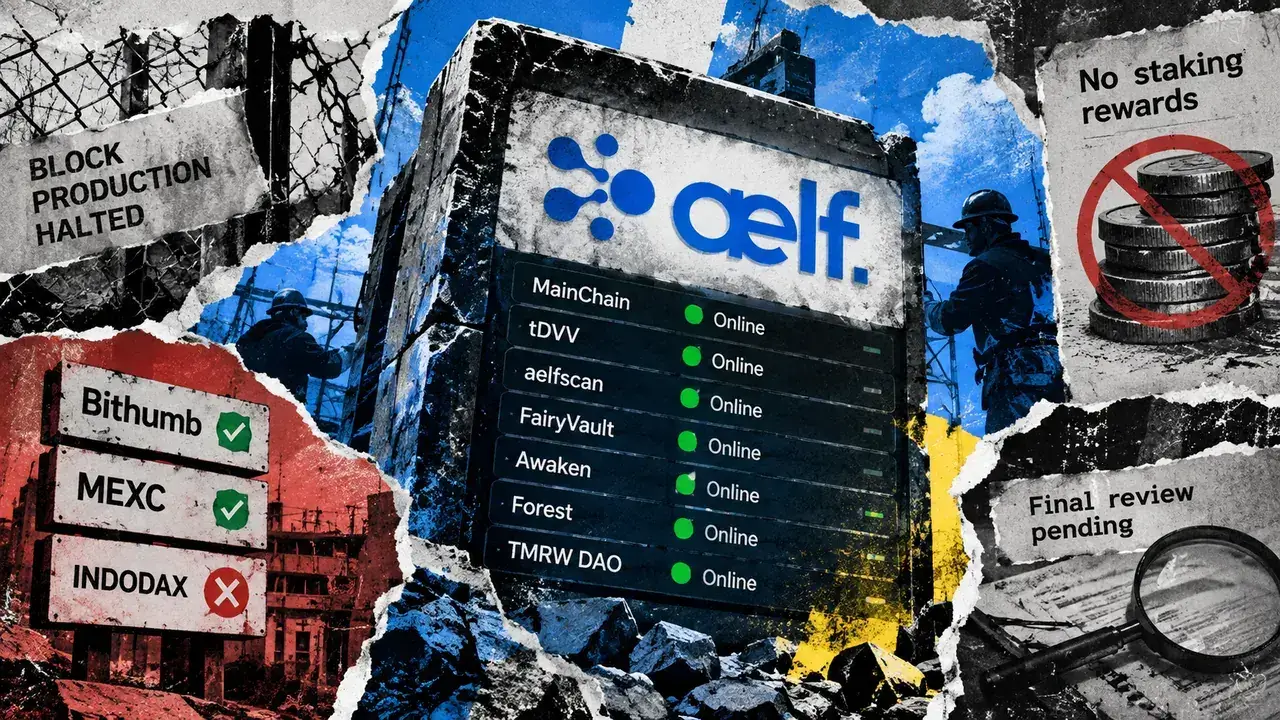
7-day blockchain outage wipes out a full week of staking rewards after emergency aelf shutdown
aelf, a blockchain network built around its AELF MainChain and tDVV dAppChain, has restored public node access and several core se...

Spark Liquidity Layer ranks as largest on-chain capital allocator with $2.5B TVL
The rise of Spark Liquidity Layer highlights DeFi's evolving integration with traditional finance, potentially increasing regulato...

A DeFi giant that once held $3 billion is now proposing to wind itself down
DeFi platform Balancer is proposing an orderly shutdown after a cost-cutting overhaul failed to revive revenue following last year...

Tonkeeper Rebrands to Keeper and Adds Bitcoin, Ethereum and Four More Chains
Tonkeeper, the wallet built for the Telegram-linked TON blockchain, has rebranded to Keeper and expanded into a multichain wallet,...

Bitcoin (BTC) Price Today: Whale Selling and ETF Outflows Put $76K Support to the Test
The Bitcoin price remains within a broader range, however, with technical support between $76,000 and $77,500 continuing to attrac...