Choosing a Crypto Payment Gateway: A Business Decision Framework
No single gateway wins for everyone: the strongest fit is dictated by the assets your buyers already use, your preference for holding coins versus converting to fiat immediately, and the laws that apply where you operate...
Archive context
Older archive item. Useful for background and entity history, but not a fresh market-moving signal.

No single gateway wins for everyone: the strongest fit is dictated by the assets your buyers already use, your preference for holding coins versus converting to fiat immediately, and the laws that apply where you operate.
What is a crypto payment gateway and how does it work?A crypto payment gateway is the software layer that lets a company take payments in cryptocurrency and collect the proceeds either in coins or in ordinary currency. Sitting between the payer’s wallet and the seller, it issues payment requests, watches the blockchain for arriving funds, and verifies that settlement has happened.
How the process runs is easy to follow. The gateway produces a one-time deposit address or invoice, the buyer transfers coins from their wallet, the system spots the transfer and waits until the network has confirmed it, and the seller gets a notification the moment the payment clears.
Most of the technical burden stays hidden from the merchant. Rather than juggling wallet addresses across Bitcoin, Ethereum, and TRON by hand, a business plugs into a single API and leaves address creation, rate locking, and confirmation monitoring to the gateway.
What sets a crypto payment gateway apart from a payment processor and a wallet?In short, a gateway takes in and checks payments, a processor relays and settles the money, and a wallet safeguards the keys that unlock the coins. The line blurs in practice because vendors often bundle all three, which is why the labels get used interchangeably.
Think of a wallet as the instrument that keeps private keys and authorizes transactions. A gateway is the front-end mechanism that asks for and confirms a payment. A processor works behind the scenes, moving value around – including swapping between crypto and fiat and releasing payouts to the business.
Element Core job Typical user Example in practice Wallet Keeps private keys, signs transfers Consumers and merchants Receiving or sending BTC/ETH Gateway Requests, spots, and verifies payments The merchant’s checkout Issuing an invoice, tracking the chain Processor Settles, converts, and disburses funds The merchant’s back office Turning USDT into fiat, batch payoutsBefore signing with any vendor, pin down exactly which of these jobs it performs. A single provider that covers crypto payment processing end to end will usually fold the gateway, processing, and settlement into one stack, sparing the merchant from wiring together several disconnected tools.
Why do SaaS, e-commerce, and iGaming companies take crypto payments?Companies switch on cryptocurrency payments to serve a worldwide customer base, cut their exposure to chargebacks, and clear funds faster than some legacy systems permit. The precise driver differs by industry, yet the shared logic is stripping friction out of international payments.
In SaaS and subscription models, accepting crypto opens the door to buyers in markets where card coverage is thin or capital controls bite. Charging recurring fees in stablecoins can also dodge the failed-card decline rates that plague subscription billing.
iGaming operators are drawn mainly by resistance to chargebacks and by speed. Once a blockchain transaction is confirmed it usually cannot be undone, which trims disputes, and winnings can land with players rapidly no matter the country.
Across every one of these verticals, crypto extends reach past the regional limits that card acquirers tend to enforce.
Which criteria carry the most weight when picking a gateway?The factors that settle the decision are the assets supported, the custody arrangement, pricing honesty, settlement choices, security posture, regulatory coverage, ease of integration, and payout mechanics. Rank each one against who your customers are and where you are legally on the hook, rather than chasing a single headline “best” feature.
Use the following checklist as a starting framework:
- Chains and coins supported – Check that the networks your buyers rely on are covered.
- Custody arrangement – Settle on whether the vendor keeps the funds (custodial) or you keep control (non-custodial).
- Pricing – Map out every charge: the provider’s cut, the network/gas cost, and any conversion margin.
- Settlement and volatility – Pick between retaining coins and converting automatically into fiat or stablecoins.
- Security – Look at how keys are managed, cold-storage practice, and login safeguards.
- Regulation – Confirm KYC/AML handling, licensing, and which jurisdictions are served.
- Integration – Judge the API, plugins, SDKs, and the quality of the docs.
- Checkout experience – Test the payment page and the range of wallets accepted.
- Payouts – Verify how fast money lands, where it reaches, and in which currencies.
The right gateway covers the networks and tokens your audience already carries – in most cases that means Bitcoin, Ethereum, and one cheap-to-use chain like TRON. Sheer breadth counts for less than a precise fit with your own buyers.
Stablecoins tend to be the category that matters most for commercial payments. USDT and USDC see heavy use because each is built to track the value of the US dollar, stripping nearly all price movement out of a payment.
The network you pick changes the bill. An identical USDT balance can travel over Ethereum as an ERC-20 token or over TRON as a TRC-20 token, and the TRON route is normally cheaper. A number of providers, 0xProcessing among them, run across several blockchains and stablecoins, letting merchants hand customers the lower-cost path.
How do custodial and non-custodial gateways differ?With a custodial gateway the provider keeps custody of your coins and private keys; with a non-custodial one, funds land straight in a wallet you own. What you are weighing is ease of use against direct control.
Custodial setups make day-to-day operations lighter, since the vendor looks after keys, conversion, and disbursements. The downside is counterparty risk – your money is parked with an outside party.
Non-custodial setups shrink that risk by depositing funds into your own wallet, though they hand you more of the work around securing keys and reconciling the books.
Arrangement Key holder Chief benefit Chief drawback Custodial The provider Lighter operations, managed disbursements Counterparty / custody risk Non-custodial The merchant Hands-on control of funds You shoulder key security How should fees and hidden charges be assessed?Judge a transaction by its all-in cost rather than the advertised processing percentage, because network and conversion charges pile up quietly. A tempting headline rate says little once gas and spread are left out of the picture.
Three layers of cost deserve a look. The provider levies a processing fee; the blockchain charges a network fee – labelled a gas fee on Ethereum and other EVM-compatible chains – to confirm the transfer; and a conversion fee kicks in whenever coins are swapped for fiat or a different asset.
Find out who absorbs each charge and how it is worked out. Providers that play it straight post flat or plainly tiered rates and spell out whether network costs fall on the merchant or the buyer.
How do settlement choices and volatility control operate?Settlement decides the form in which money reaches you – the coin as paid, a stablecoin, or fiat – and that call governs how much price risk you carry. Firms unwilling to sit with volatility generally choose automatic conversion.
Keep the coin you were paid in and you retain full exposure, gains and losses alike, to its market price. Convert on the spot into a stablecoin such as USDC or into fiat, and the value is fixed as of the payment moment.
This is precisely why many gateways provide instant conversion. Vendors like 0xProcessing can automatically turn incoming coins into stablecoins, keeping merchants from sitting on volatile assets in the gap between payment and payout.
What security features belong in a crypto payment gateway?A capable gateway shows disciplined private-key handling, cold storage for held reserves, and account defences such as two-factor authentication (2FA). This is the domain where cutting corners carries the steepest cost.
Key handling is the question that matters most. Probe how private keys are created, kept, and walled off, and whether the bulk of funds rest in cold storage cut off from the internet.
One caveat on PCI-DSS: the Payment Card Industry Data Security Standard applies to cardholder data, so it barely touches pure crypto activity, where no card numbers change hands. It only enters the picture when the same platform also runs card transactions.
Which compliance points – KYC/AML, licensing, jurisdiction – need checking?Make sure the gateway runs a proper KYC/AML program and holds the licences or registrations required in the places you trade. Slipping here can lock up your funds or land you in legal trouble.
KYC (Know Your Customer) and AML (Anti-Money Laundering) routines confirm identities and watch for suspicious activity. A credible provider will walk you through its onboarding checks and how it monitors transactions.
Jurisdiction counts because crypto rules are patchy from one place to the next. Confirm the provider reaches your customers’ countries and observes the law in the markets you serve, since that footprint differs sharply by region.
How much does integration quality – APIs, plugins, docs – matter?Integration quality dictates how fast and how smoothly you reach launch, so put clear APIs, off-the-shelf plugins, and solid developer documentation near the top. Thin docs are a concealed cost, paid later in engineering hours.
Seek a properly documented REST API, SDKs in the usual languages, and plugins for the platforms already in your stack. No-code paths or hosted checkout pages support teams that lack in-house developers.
Weigh the operational extras too: webhooks that push payment alerts, a dashboard for reconciliation, and a sandbox for rehearsing the whole flow ahead of going live.
What defines strong checkout UX and better conversion?Solid crypto checkout UX comes down to an uncluttered payment page, an accurate rate display, QR codes for wallet apps, and coverage of the wallets your buyers favour. Any snag at checkout knocks straight into completed payments.
The payment screen ought to display the sum, the networks on offer, and a timer showing how long the quoted rate holds. QR codes let shoppers settle up from a mobile wallet with a single scan.
Backing widely-used wallets and several networks trims abandonment, because customers get to pay with the coins and apps already in their pockets.
How do chargebacks and refunds behave with crypto payments?Crypto payments largely shrug off chargebacks, since a confirmed blockchain transaction cannot be reversed – but the flip side is that refunds have to be sent back by hand, by the merchant.
That missing card-style reversal is a leading reason iGaming and other high-risk sellers move to crypto. No acquirer stands ready to claw back a settled transfer over the merchant’s objection.
Refunds, on the other hand, mean the merchant must deliberately return the coins. Check that the gateway ships a clean refund workflow along with records your accounting team can use.
What is worth knowing about payout speed, reach, and currencies?Look into how quickly the provider disburses, which countries it covers, and the currencies it can settle into, since these mechanics shape both cash flow and how far you can sell. Quick, wide payouts weigh heaviest for operators serving a global crowd.
Disbursement speed ranges from near-immediate to fixed batch runs. Where a business pays out often, batch or mass-payout capability can tip the decision.
Country and currency reach mark out where you can realistically do business and how simply crypto turns into local money.
Which industry-specific angles apply to iGaming and SaaS?iGaming leans on chargeback resistance, quick payouts, and freedom from regional blocks, whereas SaaS leans on recurring billing, stablecoin settlement, and revenue it can forecast. One gateway can serve both camps, but the priorities pull in different directions.
For iGaming operators, irreversible transfers and fast player payouts are non-negotiable, and holding up under heavy transaction volume across regions is a must.
For SaaS and subscription outfits, dependable recurring or invoice-based billing tops the list – ideally settled in stablecoins so a month’s revenue is not warped by a price swing.
What does integrating a crypto payment gateway involve, step by step?Bringing a gateway online tends to follow a set order, from opening an account to switching on production. The details shift between vendors, but the shape holds.
- Sign up and clear verification – including any KYC/AML onboarding.
- Set your preferences – the coins, networks, and settlement mode you want.
- Wire in the API or drop in a plugin – leaning on the sandbox to test.
- Wire up webhooks so payment confirmations arrive on their own.
- Push test transactions through – a trial refund among them – to prove the full path.
- Flip to live and keep an eye on payments via the dashboard.
The usual missteps are fixating on the advertised fee, glossing over the custody model, and never confirming that compliance reaches your markets. Each tends to stay invisible until after launch.
Further common slips include settling on a gateway that omits the networks your customers use, ignoring how volatility is handled, and lowballing the integration effort when the documentation is weak.
One last avoidable error is skipping test runs. Proving out payments, webhooks, and refunds inside a sandbox heads off expensive breakage in production.
FAQIs a crypto payment gateway just another name for a crypto wallet?
No. A wallet holds private keys and signs transfers, whereas a gateway asks for, detects, and confirms payments for a merchant.
Must I keep cryptocurrency if I start accepting crypto payments?
Not necessarily. Plenty of gateways convert automatically into stablecoins or fiat, so you can accept cryptocurrency payments without ever sitting on volatile coins.
Which stablecoins turn up most often?
USDT and USDC rank among the most broadly supported, and both appear across several networks, Ethereum (ERC-20) and TRON (TRC-20) among them.
Do crypto payments really rule out chargebacks?
A confirmed blockchain transaction cannot be reversed, so it fends off conventional chargebacks, though the merchant still has to issue any refund manually.
Does PCI-DSS cover crypto payments?
PCI-DSS is about card data, so it generally sits outside pure crypto transactions unless the same platform also processes cards.
How do custodial and non-custodial settlement differ?
Custodial settlement leaves your funds and keys with the provider, while non-custodial settlement drops funds straight into a wallet you control.
This is a sponsored article. Opinions expressed are solely those of the sponsor, and readers should conduct their own due diligence before taking any action based on information presented in this article.
Why this matters
Ethereum is showing up inside the Stablecoins theme, so this story is worth tracking for follow-through rather than treating it as a one-off headline.
Original source
Read on Brave New CoinRelated market context
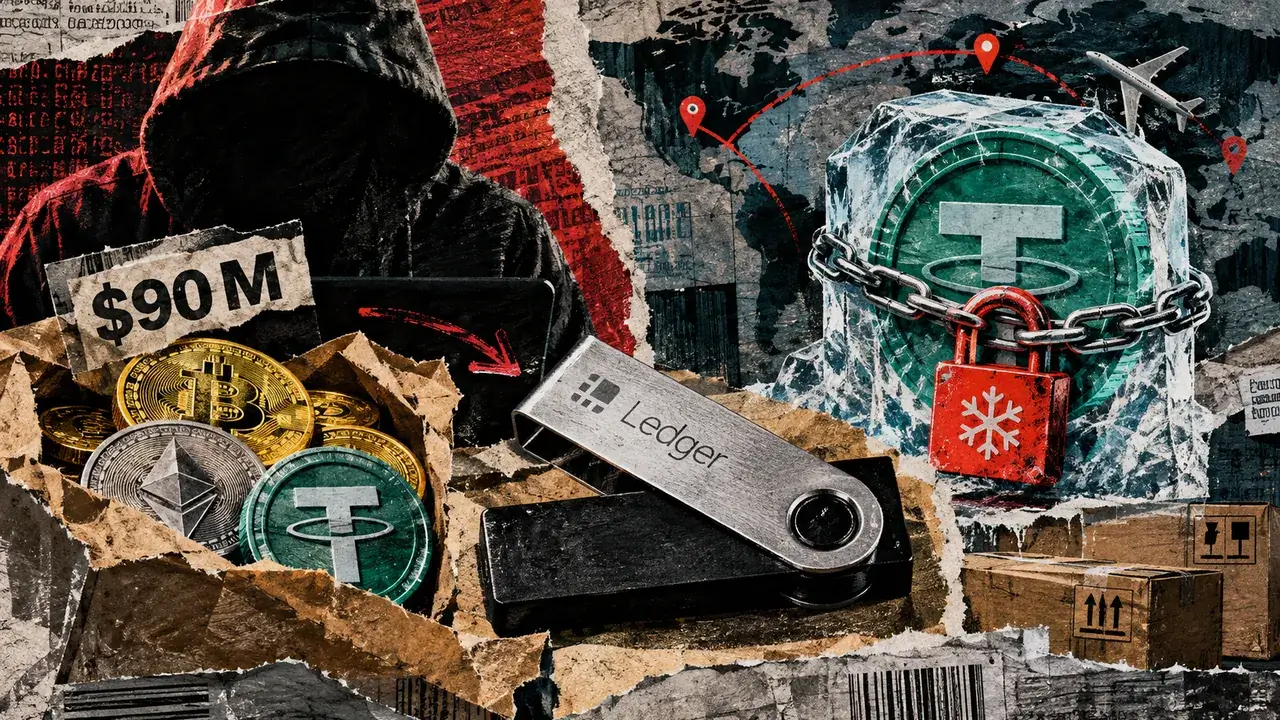
Ledger hack scare nears $90 million as Tether moves to freeze stolen USDT
Suspected Ledger wallet thefts are approaching $90 million as Tether freezes USDT stablecoin linked to the incident, according to...
Tether Freezes $1.45M in THORChain USDT Vaults, Then Reverses Blacklist Hours Later
Key Takeaways: The amount of about $1.45 million in USDT was temporarily frozen in THORChain vault addresses. According to THORCha...
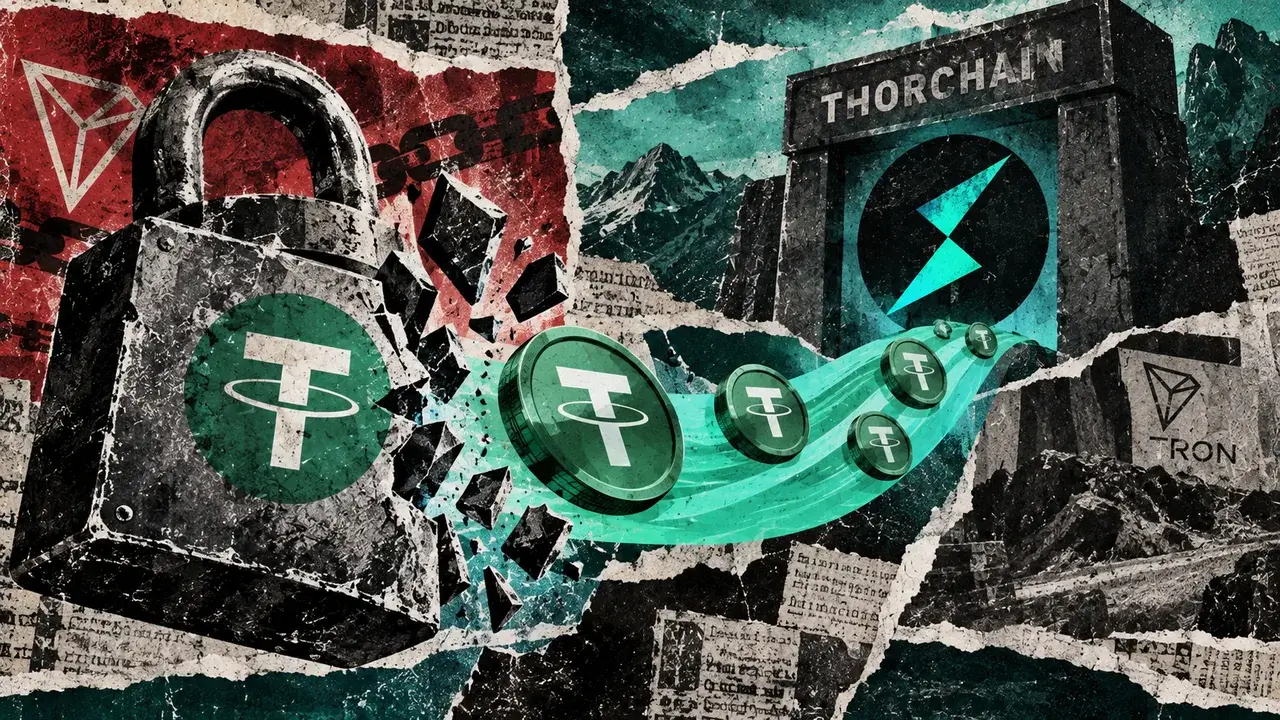
Tether freezes $1.4M in TRON vaults and THORChain stalls
THORChain's TRON operations were interrupted on Oct. 9 after a USDT vault blocklist, according to reports by its co-founder Chad B...

Stealing $1.5B in crypto is easy, cashing out is the trap
North Korean hackers stole around $1.5 billion from Bybit in February 2025. While the hack itself has been widely covered and anal...

Being right about Bitcoin won’t save your 3x leveraged ETF position
Bitcoin's next recovery could vindicate your investment thesis but leave your leveraged fund deep in the red, because the fund's d...

TRON captures 23% of stablecoin card volume in Q3 2026
TRON's significant share in stablecoin card volume highlights its growing influence in digital payments, but competition remains f...