Circle Backs UN With Stablecoins to Fix $38B Aid System, Cutting Costs by Up to 20%
Key Takeaways: Circle Foundation is also investing in the UN Digital Hub of Treasury Solutions to digitize assistance payment through blockchain and stablecoins. More than $38B in humanitarian funds still move through sl...
Archive context
Older archive item. Useful for background and entity history, but not a fresh market-moving signal.
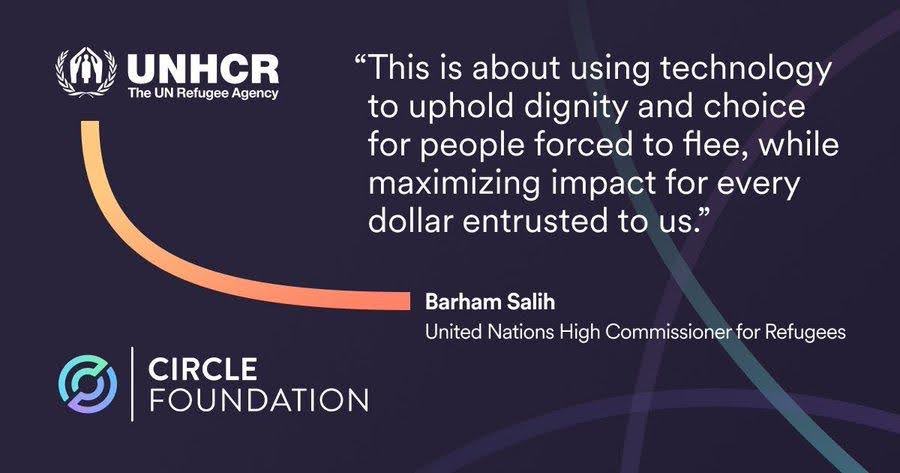
Key Takeaways:
- Circle Foundation is also investing in the UN Digital Hub of Treasury Solutions to digitize assistance payment through blockchain and stablecoins.
- More than $38B in humanitarian funds still move through slow legacy systems; pilots show digital rails can cut costs by up to 20%.
- Regulated stablecoins like USDC enable faster cross-border transfers, full traceability, and real-time transparency for global aid.
Circle is pushing the deeper integration of crypto to transaction activities in the real world. This time, the focus is humanitarian aid. Announced in Davos, this partnership shows that stablecoin is gradually moving beyond the role of transaction/trading tool, to become a part of critical global infrastructure.
Read More: Coinbase, Circle Take Bermuda Onchain as Nation Moves Toward First Fully Digital Economy
Circle’s Grant Targets the UN’s Financial BottlenecksCircle Foundation has awarded its first international grant to support the United Nations’ Digital Hub of Treasury Solutions (DHoTS), a shared platform designed to overhaul how money moves across UN agencies.
The global humanitarian system processes more than $38 billion every year, yet much of that capital still flows through correspondent banking networks built decades ago. These rails are slow, costly and opaque particularly in crisis areas where time and responsibility count the most.
The investment of Circle will help DhoTS integrate its new generation financial infrastructure, including managed stablecoin, in order to simplize cross-border transaction, reduce operational friction and increase the transperancy for the whole UN’s ecosystem.
The announcement came at the Annual Meeting of the World Economic Forum (WEF) in Davos, where the”crypto-native” tools is becoming more importatnt in official policy discussions globally.
Circle Foundation is supporting the United Nations in their efforts to modernize global aid delivery.
The humanitarian system moves more than $38B every year, yet much of that aid still relies on slow, costly legacy financial rails.
Through its first international grant, Circle… pic.twitter.com/JwWXdmh55F
— Circle (@circle) January 21, 2026
Read More: Circle Secures Full ADGM License as UAE Opens Door to Massive Stablecoin Expansion
How Stablecoins Change Aid DeliveryThe heart of the initiative is to use blockchain-based-payment-rails which are able to transfer value instantly across borders, without involving a variety of middlemen.
Conventional humanitarian transfers are usually characterized by levels of correspondent banks, manual reconciliation and slow settlement. Every step is a cost and visibility killer. Stablecoins condense the whole process into one traceable transaction.
UNHCR’s Blockchain Pilots Set the FoundationThe grant is based on previous work done by the UN Refugee Agency (UNHCR), which has been testing blockchain-based assistance since 2022.
In the case of the crisis in Ukraine displacement, UNHCR distributed USDC-based payouts to people who were recipients. Those pilots showed that digital resources could be made responsible and secure as well as on a large scale in the real conditions of humanitarian interventions.
The outcomes revealed that delivery time was quicker, there was greater responsibility, and it was less expensive than using the traditional banking channels. That experience serves in direct feed into DHoTS, which tries to standardize such capabilities into several UN agencies.
DHoTS has so far been deployed to 15 UN agencies, such as UNDP, IOM, WMO, OECD, and ICAO, with technical assistance from the UN International Computing Centre.
Regulated Stablecoins, Not Experimental CryptoOne of the major ones underlined by officials of the Circle and UN is regulation. This program is not based on unstable and unregulated tokens. Rather, it is aimed at controlled stable coins with in-built compliance, risk management, and auditing.
Circle believes that with financial protections built into its stabilized coins, it could satisfy the high demands of large institutions in the population and at the same time achieve the speed and efficiency associated with crypto.
This distinction matters. Regulated stablecoins are slowly being considered by governments and multilateral organizations as a reasonable increment to current payment infrastructure, and not a hypothetical experiment.
Transparency Becomes a Default FeatureVisibility is one of the largest structural problems in global aid. Donors would like to see evidence that money is going to the right people whereas the agencies would like to have more resources to trace the flows across jurisdictions.
Systems based on blockchain transform that dynamic. The records are maintained in an unalterable manner which establishes a common source of truth among agencies, partners and auditors.
This would reduce reconciliation gaps, streamline reporting and enhance accountability at scale to the benefit of the UN. In the case of donors, it translates to a better understanding of the way every dollar is spent.
The post Circle Backs UN With Stablecoins to Fix $38B Aid System, Cutting Costs by Up to 20% appeared first on CryptoNinjas.
Why this matters
Circle is showing up inside the Stablecoins theme, so this story is worth tracking for follow-through rather than treating it as a one-off headline.
Original source
Read on CryptoNinjasRelated market context
Circle Brings USDC and EURC Into SAP Workflows Powering 84% of Global Commerce
Key Takeaways: Circle and Tereina are introducing USDC and EURC to the SAP payment flow. USDC will process eligible dollars while...

Circle mints 250M USDC on Solana, boosting liquidity and network potential
Increased USDC supply on Solana may enhance network activity and adoption, but market caution persists regarding significant price...

Coinbase and Gennius plan ONED USD stablecoin access through Latin American banks
Coinbase's partnership with Gennius could reshape Latin American banking by integrating stablecoins, enhancing financial inclusion...

Coinbase opens full trading for DATA-USD and WHUF-USD pairs
Coinbase's expansion of trading pairs enhances market liquidity and accessibility, potentially driving increased adoption and inno...

Circle minted another 750 million USDC on Solana in the last 24 hours
Increased USDC liquidity on Solana may boost SOL demand, but its market impact depends on active circulation and broader crypto tr...

Bitcoin companies are learning that holding forever takes cash
Metaplanet sold 10,000 BTC and bought back 11,000 at a higher average price to show it was willing to sell its Bitcoin. The Japane...