Crypto Industry Heavyweights Urge Senate to Pass Clarity Act With Developer Protections Intact
Bitcoin Magazine Crypto Industry Heavyweights Urge Senate to Pass Clarity Act With Developer Protections Intact More than 60 of the most prominent CEOs and founders in the cryptocurrency industry sent a letter to Senate...
Archive context
Older archive item. Useful for background and entity history, but not a fresh market-moving signal.
Bitcoin Magazine
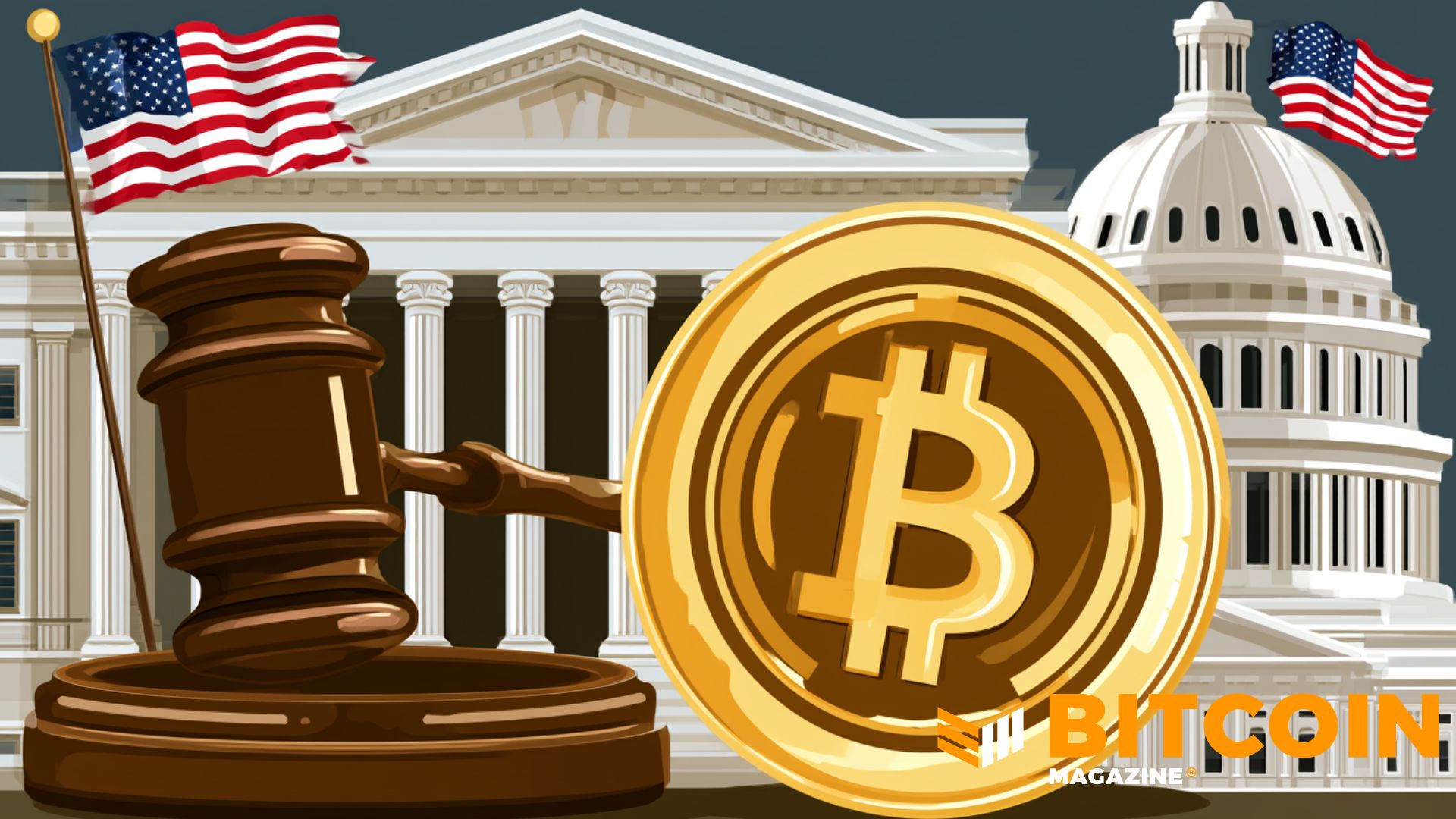
Crypto Industry Heavyweights Urge Senate to Pass Clarity Act With Developer Protections Intact
More than 60 of the most prominent CEOs and founders in the cryptocurrency industry sent a letter to Senate Majority Leader John Thune and Minority Leader Chuck Schumer on June 9, calling on the full Senate to pass the Digital Asset Market Clarity Act with its blockchain developer protections intact — a provision the signatories described as a non-negotiable condition of their support.
The letter, signed by executives from Coinbase, a16z crypto, Uniswap, Solana Labs, Kraken, Paradigm, Galaxy, Ledger, and dozens of other leading firms, focused on Section 604 of the Clarity Act — the Blockchain Regulatory Certainty Act, or BRCA — which shields non-controlling software developers from Bank Secrecy Act obligations and federal money transmission prosecution.
The signatories argued that without the BRCA, the broader market structure bill would fail to deliver the legal certainty needed to sustain blockchain innovation in the United States.
“From core Bitcoin development to novel DeFi smart contract designs, developers need clear legal certainty to openly build, maintain, and contribute to community-driven software projects,” the letter reads.
Where the Clarity Act standsThe Clarity Act, formally known as H.R. 3633 — the Digital Asset Market Clarity Act — has been years in the making. The bill passed the House of Representatives in July 2025 on a bipartisan 294-134 vote, a commanding margin that reflected broad legislative appetite for a federal framework governing digital asset classification.
The bill then stalled twice in the Senate, most notably in January 2026 when the Senate Banking Committee postponed a scheduled markup after Coinbase withdrew support over a proposed ban on stablecoin rewards.
The Senate Banking Committee cleared the legislation on May 14, 2026, by a 15-9 vote, with Democrats Ruben Gallego of Arizona and Angela Alsobrooks of Maryland crossing the aisle to join Republicans. The bill was placed on the Senate Legislative Calendar on June 1, 2026. Galaxy Research estimates the bill has a 60-75% chance of becoming law in 2026 and projects a possible presidential signature during the week of August 3, though Senator Cynthia Lummis, one of the bill’s architects, cautioned after the committee vote: “Nobody is popping the champagne quite yet”.
Similarly, over the weekend, more than 200 crypto companies and organizations, led by Stand With Crypto, urged Senate leaders to bring the Clarity Act to a full Senate vote, arguing that clear regulations are needed to keep digital asset innovation in the United States.
The Clarity Act’s long timeline aheadThe BRCA, incorporated as Section 604 of the Clarity Act, codifies a principle from FinCEN’s 2019 guidance: that developers and infrastructure providers who do not custody or control user funds are not money transmitters subject to Bank Secrecy Act registration or criminal prosecution under 18 U.S.C. § 1960.
The provision draws a firm line between intermediated financial services — exchanges, hosted wallets — and open-source protocol development. The DeFi Education Fund and Coin Center have both described the BRCA as a baseline requirement for any market structure bill, arguing that without it, developers face the threat of prosecution for building permissionless software.
The June 9 letter also urged the Senate to preserve companion protections in Clarity Act Section 601, which carves out developers from SEC registration requirements, and Section 207 of the Senate Agriculture Committee’s Digital Commodity Intermediaries Act, which does the same for commodities law.
The bill still faces a demanding path to enactment. The Senate Banking Committee version must be merged with the Senate Agriculture Committee’s jurisdiction framework before a full Senate floor vote, where the bill requires 60 votes to clear the filibuster threshold.
The Senate and House versions must then be reconciled before arriving at President Trump’s desk. Senate Democrats, led by Sen. Elizabeth Warren, have argued the bill’s anti-money laundering provisions remain too weak.
This post Crypto Industry Heavyweights Urge Senate to Pass Clarity Act With Developer Protections Intact first appeared on Bitcoin Magazine and is written by Micah Zimmerman.
Why this matters
Bitcoin is showing up inside the Regulation theme, so this story is worth tracking for follow-through rather than treating it as a one-off headline.
Original source
Read on Bitcoin MagazineRelated market context
DeFi Development Corp buys 5,346 Solana, lifting its treasury to about 2.595M SOL
DeFi Development Corp's SOL accumulation strategy could enhance shareholder value and influence Solana's market dynamics, despite...

Coinbase Institutional Co-CEO: Bitcoin’s “Second Wave” of Institutional Capital has Arrived
▶Bitcoin Magazine Coinbase Institutional Co-CEO: Bitcoin’s “Second Wave” of Institutional Capital has Arrived Seven of the largest...
Circle minted another ~4 billion USDC on Solana in the last 7 days
Circle's minting of USDC on Solana may signal strategic shifts, impacting blockchain activity and potentially influencing Solana's...

RWA WEEK Singapore 2026 Brings Together Institutional Finance and Digital Asset Leaders as Tokenization Moves Toward Mainstream Adoption
Singapore, October 2026 — RWA WEEK Singapore 2026 has successfully concluded, bringing together institutional investors, financial...

Chainlink Targets $700B Custody Market With CustodySync and Anchorage DeFi Access
Key Takeaways: Chainlink introduced CustodySync, a new solution that connects loan markets in DeFi and qualified custody. The laun...

Anthropic’s Claude AI Predicts a Huge Move for Solana by 2027
Something potentially significant could happen for Solana by January 1, 2027, as Anthropic’s Claude AI predicts that SOL could be...