Crypto.com Sparks Chaos, Pushes Vote to Re-Mint 70 Billion CRO
Key Takeaways: Crypto.com re-minted 70 billion CRO tokens that were previously burned. The controversial vote was pushed through by a last-minute surge of votes from Crypto.com-owned validators. The move has sparked an o...
Archive context
Older archive item. Useful for background and entity history, but not a fresh market-moving signal.

Key Takeaways:
- Crypto.com re-minted 70 billion CRO tokens that were previously burned.
- The controversial vote was pushed through by a last-minute surge of votes from Crypto.com-owned validators.
- The move has sparked an outcry of disappointment and charges of broken trust among the CRO community.
The entire crypto community is currently reeling from Crypto.com’s controversial decision to re-mint 70 billion CRO. That action, which is essentially an undoing of a token burn that was executed in 2021 with the goal of creating a permanent impact on the token’s supply, has drawn significant criticism and claims of trust being broken, and fueled the ongoing conversation about centralization vs decentralization in the crypto space.
A Controversial Proposal: Undoing the BurnAt the heart of the controversy is Crypto.com’s plan to reverse a major token burn that took place in 2021. Initially, this burn effectively took 70 billion CRO out of circulation and was seen as a step in a good direction, as it should help stabilize the value of the token and reward long-hold types.
According to the justification for their re-minting, the new tokens will be utilized as a strategic reserve for the Cronos blockchain and allocated for investments in Cronos projects — and even potentially a CRO-backed Exchange Traded Fund (ETF). However, the methods to realize these goals have caused considerable division in the community.
Many in the community argue that token burns are meant to be irreversible and serve as a fundamental mechanism to reduce inflation and increase scarcity. Reversing such a decision, they claim, undermines investor confidence and raises concerns about Crypto.com’s long-term commitment to its tokenomics strategy.
The Vote: A Last-Minute Power Grab Draws ScrutinyThe voting process itself has come under scrutiny. Enactment of the proposal, which ranged from March 2nd to March 16th, struggled to gain traction for a large part of its time frame. Support dipped precariously above opposition, but the critical quorum of 33.4% required for the proposal to pass remained just out of reach.
Then, in the final hours, everything changed. An unprecedented volume of 3.35 billion CRO tokens flooding into the “yes” pool caused the proposal to cross the line and was followed by a tidal wave of anger and disbelief among the community. A total of 61.18% voted for, 17.61% voted against, 20.11% abstained, and 0.11% vetoed. The turnout for the vote is 70.18%, far beyond the required minimum.
“They Pushed Their Votes”: Community Erupts in DisappointmentThe late flood of votes has been largely blamed on validators owned by Crypto.com. These validators, including Starship, Falcon Heavy, Electron, Antares, and Minotaur IV, collectively control a large majority (70-80%) of the total voting power within the Cronos network. This power center enabled Crypto.com to qualify as a validator in order to bypass smaller validators’ baskets with respect to token holders.
Critics argue that the sudden influx of votes from Crypto.com-controlled validators not only skewed the outcome but also set a dangerous precedent for future governance decisions. Some community members described the move as “governance theater,” arguing that decentralization exists in name only. If a single entity can single-handedly tip the balance in its favor, many fear that decentralized decision-making could become an illusion rather than a reality.
Final voting tally. Source: Mintscan
The Aftermath: A Token Burn with Symbolic Value and Lingering QuestionsImmediately after the vote, Crypto.com attempted to ease the backlash by swiftly announcing plans to burn 50M CRO tokens. But this was widely viewed as a cynical gesture, because of the enormity of the re-minting campaign. As one of the naysayers of the CRO validator, who went on to sarcastically comment on Telegram, burning 50 million tokens after re-minting 70 billion is nothing more than a symbolic gesture.
The incident, however, goes deeper than just its immediate financial consequences, as it leaves behind questions regarding the long-term sustainability of governance models in blockchain-based projects. Such overwhelming control by a single entity over the voting process undermines decentralization and allows the wealthiest groups to dictate the network’s future development.
More News: Crypto.com Sets Ambitious Course: Cronos ETF and Stablecoin Launch in 2025
The post Crypto.com Sparks Chaos, Pushes Vote to Re-Mint 70 Billion CRO appeared first on CryptoNinjas.
Why this matters
This blockchain story adds another data point to the current market tape and is useful when read alongside nearby source coverage.
Original source
Read on CryptoNinjasRelated market context

Institutions managing €800 billion ask what crypto tokens actually earn
Brendan Ma, head of investment strategy at the Arbitrum Foundation, said he met with representatives of institutions managing abou...
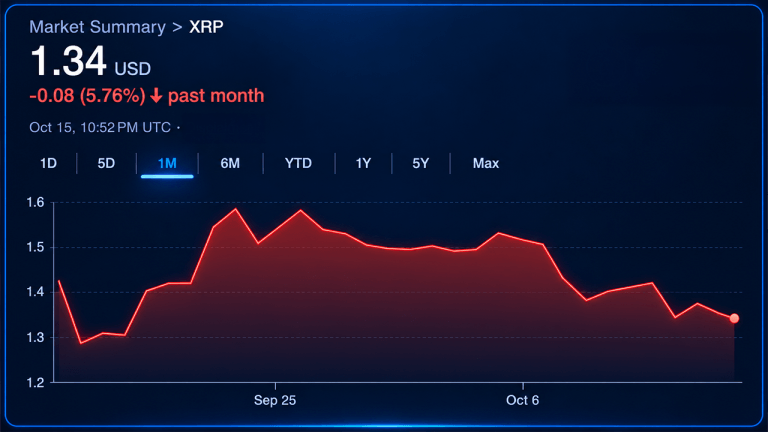
XRP Whales Move 1.67 Billion Tokens to Binance as Price Slips
Large XRP holders have transferred 1.669 billion XRP to Binance over the past 30 days, pushing the exchange’s whale inflow metric...

Binance’s bStocks Lead Tokenized Stocks After Crossing $1 Billion
Binance’s tokenized U.S. equities product, bStocks, now holds more than $1 billion in assets under management, the exchange announ...

Coinbase crypto-backed loans hit $2.3 billion as banks build tokenized deposits
Coinbase's crypto-backed loans and banks' tokenized deposits signal a shift towards blockchain integration in traditional finance...

Tokenized stocks account for 99.3% of $14.4 billion in onchain trading outside the US
The rise of tokenized stocks highlights growing global retail demand for 24/7 trading, potentially reshaping traditional market dy...

Multiliquid raises $8 million to expand liquidity in $40 billion tokenized asset market
Multiliquid's funding could enhance liquidity in tokenized markets, potentially accelerating institutional adoption and transformi...