Cryptocurrencies Threaten National Stability, Indians Doubt
Key Takeaways: India’s Supreme Court has warned that unregulated crypto is forming a dangerous “parallel economy”. Justices criticized the government for taxing crypto at 30% without providing a regulatory framework. Pre...
Archive context
Older archive item. Useful for background and entity history, but not a fresh market-moving signal.
Key Takeaways:
- India’s Supreme Court has warned that unregulated crypto is forming a dangerous “parallel economy”.
- Justices criticized the government for taxing crypto at 30% without providing a regulatory framework.
- Pressure mounts on Indian authorities to introduce clear crypto laws amid rising use and fraud cases.
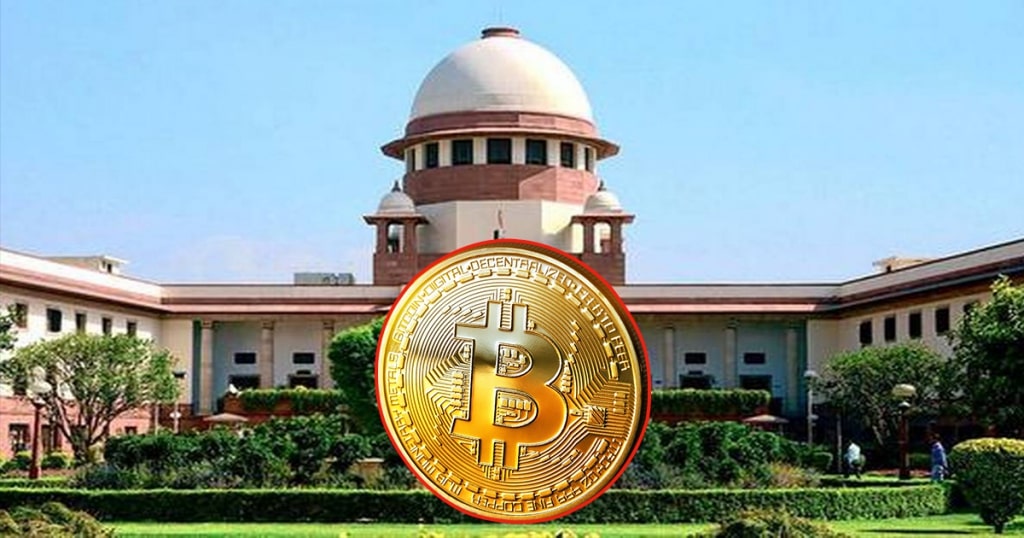
The Supreme Court of India is getting involved in the dispute over digital assets and is asking the government to quickly regulate cryptocurrencies like Bitcoin. The move follows repeated concerns over economic risks, fraud cases, and the contradiction of taxing unregulated assets.
Read More: India’s Supreme Court Registers Landmark Crypto Petition Amid Legal Uncertainties
Supreme Court Raises Alarm Over Crypto’s Economic ImpactIndia’s Supreme Court strongly condemned how the country has handled digital currency during a recent hearing about a crypto fraud case. Justice Surya Kant warned that cryptocurrencies are making a “parallel economy” and are a huge risk to the stability of the country’s economy.
The bench asked the administration, “You are taxing crypto at 30%, but there is no regulatory framework.” How can something be taxed but not run?
This mismatch has generated a lot of trouble in India’s legal and financial fields. The justices asked Additional Solicitor General Aishwarya Bhatti for more information, and she indicated she would contact policymakers for more help.This might include a prospective review.
Lack of Regulation Despite Heavy TaxationIndia imposes one of the world’s heaviest tax burdens on crypto investors:
- Flat 30% tax on capital gains from crypto trades
- 1% TDS (Tax Deducted at Source) on every transaction
- No offset allowed for crypto-related losses
Despite this, cryptocurrencies are still not legally recognized as assets or currency, nor are they banned. The result is a gray zone that has allowed fraudsters to exploit the system, while legitimate users face uncertainty.
The court emphasized that if digital assets are being taxed like legitimate instruments, there must also be accountability and oversight. The absence of a law enables illicit actors to thrive, potentially bypassing traditional financial systems entirely.
Mounting Cases Highlight Policy VacuumThe recent comments stemmed from a bail plea involving Shailesh Bhatt, a Gujarat resident accused of operating one of the region’s largest Bitcoin fraud rings. The case reflects a wider pattern: digital asset frauds are rising, while victims and law enforcement grapple with the legal vacuum.
Justice N Kotiswar Singh compared unregulated crypto activity to hawala, an informal and illegal money transfer system. He stated, “This looks more or less like hawala trading — a black box economy.”
India’s Financial Intelligence Unit (FIU) has mandated crypto exchanges to comply with the Prevention of Money Laundering Act, yet without overarching legislation, enforcement remains fragmented.
Read More: MEXC Sparks Massive Web3 Surge in India with Title Sponsorship of 2025 Blockchain Tour
India Trails Global Crypto Policy ActionGlobally, countries are advancing regulatory frameworks:
- In 2023, Europe approved the MiCA (Markets in Crypto-Assets) law, which set rigorous requirements for crypto platforms.
- The U.S. is still working hard to pass laws through both SEC enforcement and congressional bills, even if it is divided on policy.
India, however, still lacks a central crypto bill. A draft legislation has existed since 2021 but has yet to reach Parliament. The government previously pledged to release a policy discussion paper in 2023 — but that deadline passed without delivery.
Experts argue that India’s wait-and-watch approach may leave it exposed to systemic risks, particularly with the increasing volume of crypto activity shifting to peer-to-peer and offshore platforms.
RBI Pushes for Digital Rupee While Warning Against CryptoThe Reserve Bank of India (RBI) is still very much against private cryptocurrencies. It has consistently warned the public that assets like Bitcoin and Ethereum are risky and unstable.
Instead, the central bank is pushing the Digital Rupee, a central bank digital currency (CBDC) that is meant to be a safe, government-backed option. While pilot programs have launched in limited settings, adoption remains in early stages.
However, analysts argue that banning or resisting private crypto altogether is no longer viable. As Justice Surya Kant noted, “People across the world are using Bitcoin — even buying cars in Europe with one coin.” India, he implied, cannot afford to stay behind.
The post Cryptocurrencies Threaten National Stability, Indians Doubt appeared first on CryptoNinjas.
Why this matters
This blockchain story adds another data point to the current market tape and is useful when read alongside nearby source coverage.
Original source
Read on CryptoNinjasRelated market context

Morgan Stanley’s Amy Oldenburg: The Digital Gold Investment Case for Bitcoin
Bitcoin Magazine Morgan Stanley’s Amy Oldenburg: The Digital Gold Investment Case for Bitcoin Bitcoin’s digital gold case is “a pr...

Fidelity Digital Assets finds Bitcoin now moving with US Treasury real rates
Bitcoin's correlation with US Treasury real rates suggests a shift in investor sentiment, potentially altering traditional portfol...

US Hoovers up Bitcoin While the World Runs on Its Digital Dollars: Report
Bitcoin Magazine US Hoovers up Bitcoin While the World Runs on Its Digital Dollars: Report America is accumulating bitcoin while e...

The 7 Best USDC on Solana to XMR Swap Platforms in 2026
Swapping USDC on Solana for Monero (XMR) offers a fast, low-cost route into a privacy-focused asset. Leading platforms in 2026 pro...

Charles Schwab says Bitcoin still has strong fundamentals for the future
Schwab's endorsement and regulatory clarity could bolster Bitcoin's legitimacy, potentially driving broader institutional adoption...

Strategy, Metaplanet Face Exit From MSCI Indexes as the Index Provider Adopts New Test
MSCI will stop handling crypto treasury companies under a separate set of rules. The index provider announced on Oct. 15 that it i...